Audientes Divina, or Hearing God – Prayerful Tuesday

Psalm 95:7 For he is our God, . . . O that today you would hearken to his voice!

In the last couple of weeks as I have been recuperating from back surgery I have listened to a fair amount of music.  Music centers me and reduces the amount of pain I have which means I can take fewer pain meds and that means fewer side effects.

As I was listening one day to Barbers “Adigio for Strings” I realized I was practicing a form of Lectio Divina, I hadn’t noticed doing that before and since then have purposely practiced what I call Audientes (that’s Latin for hearing) Divina.  I have discovered some interesting insights and, I must admit, a greater sense of being as I went deeper into the music, or rather the music went deeper into me.

So I don’t know if anyone else has ever practiced this before, or have thought about it like this, but I am offering what I have been doing as a gift of my recuperation.  Below you will find a clip of Samuel Barber’s Adigio for Strings and the instructions for my practice. I usually listen to chants, or instrumental pieces but I am sure there are other genres that produce the same meditative moments.  If you find this useful, since this is a new way to “Hear God” as a practice at least from this perspective, please, let me know what types of music you use to enter into the quite center.  Who knows maybe I too will hear the still small voice in something I haven’t tried before.

Samuel Barber – Adagio for Strings, op.11. Uncut
Original broadcast from the Albert Hall in London September 15 2001.
Leonard Slatkin conducts the BBC Orchestra.

Instructions for Audientes Divina

  1. With your eyes closed listen to the music and let the music wash over you, entering deeply into your consciousness; what images does the music bring up for you?  Remain with the image for one to two minutes. If you would like, jot down a few words about the image.
  2. Listen for a second time, with your eyes closed, as you listen let the music carry you deeper into your center. What in the music moves your closer to your inner center? What do you feel as you listen? Engage your imagination. Where are you in the music, or has it transported you to somewhere else? What do you see from that perspective? What deeper meaning emerges?
  3.  Respond to what you are feeling and your images with prayer. Did your experience of the music remind you of, a particular experience, person or issue for which you’d like to offer thanksgiving or intercession? Or, as you listened to the music did it offer a deeper understanding of being part of the universe, life itself. Offer your thoughts to the Divine as an offering of who you, where you are at this moment and as a blessing for the journey you will continue on.
  4. Rest in your quiet center. Breathe deeply. Relax your shoulders, arms and legs. Let your body relax and set your mind free to hear what the God has to say to you words that have no sound.

May you hear the voice of the Divine in the music of life.

Ruth Jewell, ©August 4, 2015

Seeing the Divine – Prayerful Tuesday

Photo by Rabbi Yael Levy, www.mishkan.org/awi, June 29, 2015
Photo by Rabbi Yael Levy, http://www.mishkan.org/awi, June 29, 2015

This week I am offering a meditation from Monday’s FaceBook (FB) page A Way In: Jewish Mindfulness Program.  I have used these FB daily meditations, and the Rabbi Yael Levy’s Jewish Mindfulness web page, Mishkan Shalom, for my own use for some time now.  I wanted to share with you the beauty of their posts and suggest you explore Rabbi Levy’s web page as a resource for mindfulness and meditation.

Let today’s meditation be your reminder to look for the Divine in all of creation.

Fulfilled is the person who knows that in each moment she dwells in the Divine presence
Fulfilled is the person who knows that in each moment the Divine presence dwells within her.
Always she offers praise.
-Psalm 84:5

May we have the strength and humility to look for the Divine within ourselves.
May we have the courage and faith to recognize the Divine in others.

More mindfulness resources: www.mishkan.org/awi

Ruth Jewell, ©June 30, 2015

What will be, will be – Prayerful Tuesday

Psalm 131:1-2 God, I’m not trying to rule the roost,
I don’t want to be king of the mountain.
I haven’t meddled where I have no business
or fantasized grandiose plans.

I’ve kept my feet on the ground,
I’ve cultivated a quiet heart.
Like a baby content in its mother’s arms,
my soul is a baby content. (MSG)

Akaroa, New Zealand, April 9, 2015 taken by Ruth Jewell©
Akaroa, New Zealand, April 9, 2015
taken by Ruth Jewell©

One of the benefits of a sabbatical is having the time to stop and let the world go by. In fact I have begun to practice an extension of stopping that I call “what will be, will be.” On my trip I would wake in the morning and intentionally decided to let the day unfold as God intended for it to happen, making few plans, being open to opportunities to meet people or visit a place I hadn’t been before, taking the time to really listen to the person I just met, stopping and really seeing the world around me and the hardest of all, trying not to control my days events.  What I discovered was I was more relaxed and rested at the end of the day than this normally anxious introvert is.

This is more than mindfulness or being in the moment.  It is letting the Divine control the day, opening my eyes to the Good in each person I meet and greeting them with the Good within me.  This is an intense letting go of my expectations of how things ‘should’ be and seeing how they are/can be beautiful and insightful.

Of course I couldn’t do this every day.  Sometimes we had already made plans in advance so those intentional days weren’t every day, even on a vacation.  But I did make them happen often, and probably more often than I will be able to do now that I am home. However, I do wish to maintain this spiritual practice and hope my ability to let go and let God control my days increase. Here are a few suggestions to help you, and me, get started.  As I get better at this, or you, we might add suggestions or take some away, we will just have to wait and see how God unfolds this practice.

  1. Begin the day with silent prayer ending with a prayer for patience and openness
  2. As you start your day and continue through your tasks really notice what you are doing, see the people you are with, taste the food you eat, notice your surroundings, even the ugliest of areas has beauty if you look.
  3. As time allows stop for a moment and breathe deeply, if possible sit and let God into your day, your heart
  4. Let God into the moments of confusion and frustration, breathe deeply, say a prayer, let others express themselves and be aware of their hurt and pain, or joy and celebration. Recognize they too have the Divine within and welcome them.  (This is the hardest part, so do not be surprised if you fail, just keep trying)
  5. At the end of your day, sit again in silence; let your heart and mind reflect on your day, the good and the bad hold those you meet that are hurting in prayer, and offer gratitude for those who are celebrating.
  6. End by offering your own prayer of gratitude.

We all can’t take 6 weeks or even a day of sabbatical, but we all can let the Divine into our daily lives. We can offer one of our ‘normal’ busy days to God, and changing how we see our tasks and the people we interact with helps us change how we see the world.  It costs nothing to offer praise or condolences, or to sit and listen to someone’s story but the gift is priceless.

Blessings on your Journey

Ruth Jewell, ©June 2, 2015

Hope

Sermon Given at Lake Washington Christian Church
February 22, 2015


rainbow-landskape

Genesis 9:12-17  12God said, “This is the sign of the covenant that I make between me and you and every living creature that is with you, for all future generations:13I have set my bow in the clouds, and it shall be a sign of the covenant between me and the earth. 14When I bring clouds over the earth and the bow is seen in the clouds, 15I will remember my covenant that is between me and you and every living creature of all flesh; and the waters shall never again become a flood to destroy all flesh. 16When the bow is in the clouds, I will see it and remember the everlasting covenant between God and every living creature of all flesh that is on the earth.” 17God said to Noah, “This is the sign of the covenant that I have established between me and all flesh that is on the earth.”

Psalm 25:5-6 5Lead me in your truth, and teach me, for you are the God of my salvation; for you I wait all day long. 6Be mindful of your mercy, O Lord, and of your steadfast love, for they have been from of old.

1 Peter 3:21  21And baptism, which this prefigured, now saves you—not as a removal of dirt from the body, but as an appeal to God for a good conscience, through the resurrection of Jesus Christ,

Mathew 1:15-15 14Now after John was arrested, Jesus came to Galilee, proclaiming the good news of God, 15and saying, “The time is fulfilled, and the kingdom of God has come near; repent, and believe in the good news.”

Awhile back a friend asked me what was my favorite scripture and without hesitation I said Micah 6:8 “He has told you, O mortal, what is good; and what does the Lord require of you but to do justice, and to love kindness, and to walk humbly with your God?”  Then she asked the question … Why? I had to think about that for awhile.  I could have said that it was how my Father ended all of our dinner prayers and hearing it always brings back wonderful memories.  Or, I might have told her my Disciples tradition has based its mission and vision statement on it and those statements have opened the door to a witness in social justice and peace in the greater world.  But while each of those reasons are truth the real reason is this one verse from Hebrew scripture gives me Hope.

It is the hope of the rainbow that symbolizes the covenant between God, one-another and all creation.  It is the cry of the Psalmist who says “O, Lord, Teach me your paths, Lead me in your truth and teach me,” and the voice of the Gospel writer of Mark who writes “Jesus came to Galilee, proclaiming the good news of God.”

In our world today hope seems to be too little and too late.  We watch the news and it’s filled with killing, greed, anger, hate, and very little that would give us hope for a better world.  Killing, whether of the body or spirit, disrupts God’s purpose for our lives. To kill a human being  made in the divine image is to subvert our lives which were purposely created to be lived in mutuality, support and respect, to live in right relationship with each other, God, and creation.  Killing for greed, hate, and anger is to kill a little of ourselves and build a wall, brick by terrible brick, between us and God.

So what does the word “Hope” mean for us then? Those who define words say it is to expect with confidence.  For others it means to expect things will get better, not only to get us through the difficult times in our lives, but also for our world, we will have a place of peace and justice for all creation, not tomorrow, or sometime in the far future but NOW, today.  We in all of our faith communities across the globe are called to seek justice, offer kindness, and be examples of living in peace to the world, to be a living hope.

God promised the descendants of Noah, and all creation that God would no longer destroy the world.  As a covenantal symbol of God’s own self-limiting, God’s disarmament, God placed a rainbow in the sky. In Noah’s time bows were symbols of violence just as guns are for us today.  So God laid down his weapon of mass destruction and placed it in the sky and said ‘I will no longer destroy what I have created.’  I wonder what God would place in the sky today, a nuclear bomb maybe?

Don’t get me wrong, I haven’t forgotten all of the killing done in the name of God in Scripture.  And, I must admit I have difficulty with the genocidal practices of Joshua when the Israelites crossed the Jordan River into the Promised Land.  But I also know that just because a practice is in the Bible doesn’t make it an acceptable practice for today.  And, that is the reason I so firmly believe in God’s promises of hope.

You see God’s covenant of the rainbow means that we, you and I, all humans, are in a covenantal relationship with God, each other, and creation and that means that all life matters, my life, your life, white, black, yellow and brown life, furred and feathered life and (much to my discomfort) insect and spider life.  The Psalmist makes a claim of hope and trust in God and tells us that God’s protection flows from the mouths of those who have no hope or trust in systems of violence, injustice, and oppression. Not just overt physical acts of injustice but injustice and violence and oppression brought about by attitudes, social structures, and any other “isms” that threatens the peace and justice of God’s Kingdom.

God’s rainbow of hope spoken in the Good News of the Gospels goes beyond a “me-centered” interpretation of the world. God’s hope reaches out across our selfish desires to those who need hope, justice, and mercy. Where do you find God’s hope? It is placed where there is justice and peace and there you will find Kingdom of God. Jesus preached the Good News of hope. Hopeful news that leads not only to the salvation of those who accept the gift freely given, but is also the promise of something more, a new and different life for those who are the most victimized.  All faith communities are called to be participants in our own salvation by working for justice, now, in the context of our present world, thereby helping to bring the good news to those who need it, where ever and whenever it is needed.

We as believing members of our faith communities are to point the way to the kingdom breaking into our world right now. The kingdom of God isn’t a future event it is happening right now. Every time we offer a helping hand to someone who is hungry, or cold, or afraid the door to God’s Kingdom opens just a bit more.  Every time we stand up to those who would harm one of God’s children, the kingdom shines a bit brighter.  Every time we stand between victims of injustice and the perpetrators God let’s a little more light out of the door.   Every time we speak out when we see an injustice God smiles and sends another rainbow.

You know the Irish tell us that there is gold at the end of the rainbow, and I believe that is true.  Because I believe that God’s kingdom is that golden treasure and we are to seek it just as the man who sought out the pearl of great price.  What could be more beautiful than walking across the rainbow into the Golden Kingdom?

Yes, on the first Sunday in Lent, all of the Lectionary scriptures are about hope.  Whether you read Genesis, Psalm 25, 1 Peter, or Mark each of them has an element of hope for dark times, in a dark world.  Each one offers a ray of light to bring us out of darkness. The light calls us, bright and shinning, multicolored, and golden with hope and promise.  God first gave the rainbow as a promise that She would never forget any of her children.  The Psalmist tells us that God will always be there to sustain us.  And, Jesus, rekindled the hope in the hopeless that a better life was there for them.  Jesus reminds all of us that God will sustain us as we work to be the witness’ against injustice, violence and oppression.

God said, “When the bow is in the clouds, I will see it and remember the everlasting covenant between God and every living creature of all flesh that is on the earth.”  How does Micah fit into this, well Micah reminds us which path we are to take, “what does the Lord require of you but to do justice, and to love kindness, and to walk humbly with your God?”  We are called to be living communities of hope, of God’s promise in every moment of our individual and communal lives.

AMEN

Ruth Jewell, ©February 23, 2015
The Angel’s Voices

Mt. Baker, WA, from Artist Point, Photo by Ruth Jewell, 14.09.15
Mt. Baker, WA, from Artist Point,
Photo by Ruth Jewell, 14.09.15

Prepared for a Sermon at Queen Anne Christian Church, Seattle WA
January 18th, 2015

Scripture: Psalm 139:1-6, 13-18

Have you ever had that feeling you are being watched and you turn around and around to see who is there?   I have and I must admit it often feels creepy!  Someone is watching me, why, who are they, what do they want, will they hurt me?  Some might say these are the questions of a paranoid mind, but, given the status of our world today, not uncommon in these days of uncertainty, fear, and, let’s be honest, at least a little hate, ok a lot of hate.

So when I read the Psalm for this week I had to really think what it means to be “watched,” “known,” by God.  This Psalm is telling me that I am being watched, by God no less.  Is that a good thing or should I be afraid, really afraid.  As I was contemplating these verses I remembered an incident out of my childhood.  It was a memory of being known by God and knowing it was keeping me safe.

Nearly 62 years ago I was severely burnt and spent 6 months in hospital healing and having reconstructive surgery.   In reality I am blessed to be here, because I should have died that summer, but didn’t.  However, I did spend a great deal of time on a children’s ward of a Cleveland Hospital.  There were number of other children there as well, just as injured and ill as me and one little boy and I became good friends.  I do not remember his name; I do remember he was dying.   He was a little older than I was but could not walk; I could get up and walk a little but couldn’t read as well as he could.  I would get books and games to play with and he would read the harder books.

Children will often tell another child something important when they aren’t sure their parents would understand or listen.  So one day he told me that he knew he didn’t have long to live and he wanted me to tell his parents he was ok with it.  You see he had a guardian angel who stayed by his side and the angel had told him he would be going soon and no longer in pain, his parents would be sad for awhile but they would remember him forever.

One night I awoke to a great deal of crying and saw the mother holding the little boy.  I remembered what he had asked me to do so I crawled out of my bed and tried to tell them that the boy was OK, and that he was with his angel now.  However, before I got very far with that a nurse scooped me up and put me back in my bed saying something patronizing.  I never really talked about that incident again; I understood what I had to say was pretty unimportant to adults and not worth listening to. It was the thought of the time that children didn’t understand death or God and it was, and is, a wrong thought.

Being known by God, being watched by God, children understand that, after all they are always being watched.  By parents, teachers, friends, family members who want to keep them safe.  So knowing God is watching them is no big deal, just one more person on the list to keep them safe.  Besides isn’t there something comforting knowing you have a guardian angel nearby, how cool is that.

From the time they are formed in the dark, cavern of their mother’s womb they are cradled and whispered to by angels.  By 18 weeks of pregnancy the embryo begins to hear his first sounds, Mom’s heart beat, the movement of her blood, and bowel sounds.  He also hears His Mom’s and Dad’s voice, music, laughter, and tears.  To him it’s, Angels voices coming from, everywhere.  Children know they are being watched, searched out as they are being formed in the dark.

After birth we are still connected to those angels, only now they have blurry faces, but they can see the angels smile at them and hear their whispers and while breast feeding they still hear the comforting sound of Mom’s heartbeat.

It is a sad fact that as we grow we forget those connections to the mystery of our beginnings.  We let other sounds carry us away from the angel’s voices, the whispers that we are beloved and we are watched over. We, who were made so carefully, struggle to be free of the binders, free of being hemmed in from behind and before. We, who in secret were made so wonderfully and woven of star dust and love, want to run free of the restrictions of God, angels, or anyone else.

Yet there is a part of us that yearns to be known.  Oh we may fight it, rebel and run away because we want to “do it our way.”  But really, at some level, isn’t it comforting to know just how beloved we are?  The Psalmist said “My days are all inscribed in Your Ledger; Days not yet shaped—each one of them is counted.”[1] Those counted days are from the moment we are conceived in flesh to the moment we let go of this body and return to God.  Yes we still have days that God has counted that we know nothing about, yet.  But God is still watching and still planning, or more likely, revising our life plan based on our latest actions.

You see I’ve never been a big proponent of predestination, were God has planned our lives out before we are born.  No I am a firm believer in free will and our obligation to choose life over death.  We, you and I, must choose to follow one path over another and depending on our choices our life is rewritten again and again.  I know that because I have had my life rewritten all because I’ve made some rather dumb choices in my life.  My guess is we all have, because we are human, we are embodied; we are separated from that light of God and God deliberately put us on our own resources for a purpose we do not know.  (My first question for God when I return is “what were you thinking.”)

What the Psalmist tells us is even in our bad choices we are watched, cared for, beloved, held safe, and not alone.  God keeps us in God’s thoughts; we are never far from the Divine mind.  “How weighty to me are your thoughts, O God! How vast is the sum of them! I try to count them—they are more than the sand; I come to the end—I am still with you.”  “I am still with You,” God is with me.  Matthew writes that Jesus’ last words to his disciples were, “And remember, I am with you always, to the end of the age.”  We have that promise.  God has not left us alone, Jesus has not left us alone, the angels are still whispering, if, only we listen.

Rabbi Schachter-Shalomi translated verse 14 as follows, “I am overcome with thanks at Your awesome wonders, Your astonishing works, of which my soul is aware.”  Our souls know what God does, what Jesus does, even when we are unconscious to those actions.  Our souls know even when we reject God’s call that we are not alone.  That we are watched over and having our lives rewritten again and again based on whether we chose life or death.

Those angel whispers, messages of comfort from the Holy, still hold for each and every one of us.   That first sound we heard in our mothers’ wombs, the first whisper of life from the sacred, was a heartbeat.  It still is the whisper of life for all of us.  Without our hearts beating strong and level life will fade.  But it is not just the heart of our flesh that we need.  We also need the voice of the heart of our souls, our spirit, to truly live life as God intended.  Remember Moses’ last words “choose life.”  The messengers of God, the angels voices all whisper, “choose life.”

Ruth Jewell, ©January 17, 2015

[1] Schachter-Shalomi, Rabbi Zalman, Psalms in a translation for praying, Alliance for Jewish Renewal, Philadelphia, PA, 2014.

A Conversation with a Psalmist –Prayerful Tuesday

Come Lord Jesus, hear our prayer
Come Lord Jesus,
hear our prayer

As I am personally preparing for  Christmas I have been disturbed by the amount of violence and death around the world.  Peace on earth does not seem near. So as part of my morning ritual I have been doing Lectio Divina with the Psalms.  They have brought me some comfort but this Psalm struck a chord within me and I wanted to share that with you.  So this is a little different from most of my postings, as it is part of my journaling during my meditation. I am letting you in on a small part of my conversations I held with the Psalmist and God.  They are my insights of the moment, so if I say something you disagree with please be gentle, it is after all a private conversation you are overhearing.  At the end of my journaling you will find the steps for Lectio Divina.  For your own Lectio Divina meditation you may use the whole Psalm, as I did, or only a verse or two.

Psalm 10, The Message (MSG)

 1-2 God, are you avoiding me?
    Where are you when I need you?
Full of hot air, the wicked
    are hot on the trail of the poor.
Trip them up, tangle them up
    in their fine-tuned plots.

I am in the process of preparing for a Longest Night worship service and in reading this Psalm I was struck by how it matched my gut feelings this Advent.   Every day the news is filled with stories from around the world of someone killing someone one else, often many someone’s.  Just last night news came of a hostage situation in Sidney, Australia, just one more story to add to the Ferguson, New Town, Cleveland, Seattle, Portland, Houston, Afghanistan, and Iraq stories of the last number of years.  The list is too long, too many people have died, and too many children have died.  Like the Psalmist I am left wondering “where are you God.”

3-4 The wicked are windbags,
    the swindlers have foul breath.
The wicked snub God,
    their noses stuck high in the air.
Their graffiti are scrawled on the walls:
    “Catch us if you can!” “God is dead.”

This is supposed to be a time of joy and celebration but I do not feel like celebrating.  Our elected leader’s mouth words from the Bible I read every day, yet, their actions tell me they do not believe what they speak.  Are they wicked?  Are they windbags?  Well the wicked part can only be determined by God but the windbag part . . ..  Yes they are windbags, hoping that we who at least try to live a life of compassion will not notice their plans to take the last ounce of God’s abundance all for themselves.  They write bills and say “try and stop me, from denying the basic necessities to those who cannot help being poor, sick, elderly, or a child.

5-6 They care nothing for what you think;
    if you get in their way, they blow you off.
They live (they think) a charmed life:
    “We can’t go wrong. This is our lucky year!”

These insufferable, so called leaders lie and twist the truth until even the best of us are confused and dazed by the avalanche of untruths they let loose on the public. Whether they are religious fundamentalist, political leaders, in the United States, Afghanistan, Syria, Iraq, British Isles or anywhere they claim the spotlight and they believe no one can stop them.  They are on a role and the rest of us “be damned.”

7-8 They carry a mouthful of hexes,
    their tongues spit venom like adders.
They hide behind ordinary people,
    then pounce on their victims.

They mark the luckless,
    then wait like a hunter in a blind;
When the poor wretch wanders too close,
    they stab him in the back.

10-11 The hapless fool is kicked to the ground,
    the unlucky victim is brutally axed.
He thinks God has dumped him,
    he’s sure that God is indifferent to his plight.

The words they spit from their mouths cause fear in those who have minds that are weak and malleable. Letting these poor souls do the violence they pretend to abhor only to turn on them when they caught in their snares.

12-13 Time to get up, God—get moving.
The luckless think they’re Godforsaken.
They wonder why the wicked scorn God
and get away with it,
Why the wicked are so cocksure
they’ll never come up for audit.

We wait for you O God to respond, to let us know you haven’t forgotten us.  We wait and we wait.

14 But you know all about it—
    the contempt, the abuse.
I dare to believe that the luckless
    will get lucky someday in you.
You won’t let them down:
    orphans won’t be orphans forever.

The Psalmist sings of your knowledge of the violence we see every day.  But do you really hear the cries of the children who have lost limbs to bombs, to parents who have watched as their children are killed in front of them, as ISIS hangs those with different beliefs, as children shoot children?  Have we not sent enough children, parents, loved ones to you to serve as a sacrifice?  Do you care?

15-16 Break the wicked right arms,
    break all the evil left arms.
Search and destroy
    every sign of crime.
God’s grace and order wins;
    godlessness loses.

My heart wants to believe as the Psalmist did that you will intervene in the bloodletting of this world, but I know you will not.  It is not up to you, O God, to set this world back on the track of compassion, justice and peace.  That really is our job.  We are the ones who created these people who mock everything you have wanted for all.  We are the ones who must “gird up our loins” and speak out against injustice, violence, hatred, and war.  Only we who believe in justice, mercy, kindness, peace, compassion will change the lives of those who are oppressed, abused, injured, and starved by those who mock the world as you, O God, planned it.  We must stop cowering in our homes and our places of faith and become the prophets, the messengers, the hands, feet and voice that will bring down those who would enslave us to a life of poverty and misery.  Then, and only then, will the Psalmist’s dream come true.

17-18 The victim’s faint pulse picks up;
    the hearts of the hopeless pump red blood
    as you put your ear to their lips.
Orphans get parents,
    the homeless get homes.
The reign of terror is over,
    the rule of the gang lords is ended.

Gracious Spirit I thank you for this time of blessed meditation.  May the words and images I have seen transform my actions into walking with you in greater joy.  AMEN

Practicing Lectio Divina

  1. Choose the portion of the Scripture you wish to pray.
  2. Place yourself in a comfortable position and allow yourself to become silent, focus for a few moments on your breathing.
  3. Read the chosen text through, slowly and gently. Listen to yourself read, let yourself to savor each word and phrase.
  4. Read the text a second time. What words or phrases stick out for you? Remember God speaks to us in silence and in our listening. The words that pop out do so for a reason, pay attention to them.
  5. Read the text a third time. Are there any other words that speak to you?
  6. Sit now in silence, letting the words you have heard, speak to you and for you in your prayer, your conversation with God. What images, ideas, words spring forward?  Or maybe all of them are present in mediation.  Sit with those insights as you experience the presence of God.  Give your insights to God.  Do the insights give you new meaning or transformation of your actions, or prayer life?
  7. Now rest in God’s arms. Let God’s presence give you comfort. Do you feel the pull to return to your meditations? Then begin again. If not close with a prayer of gratitude for the time you have spent in God’s presence and the insights you have received.

Ruth Jewell, ©December 16, 2014

Walk in the Presence — Prayerful Tuesday

DSCF0434

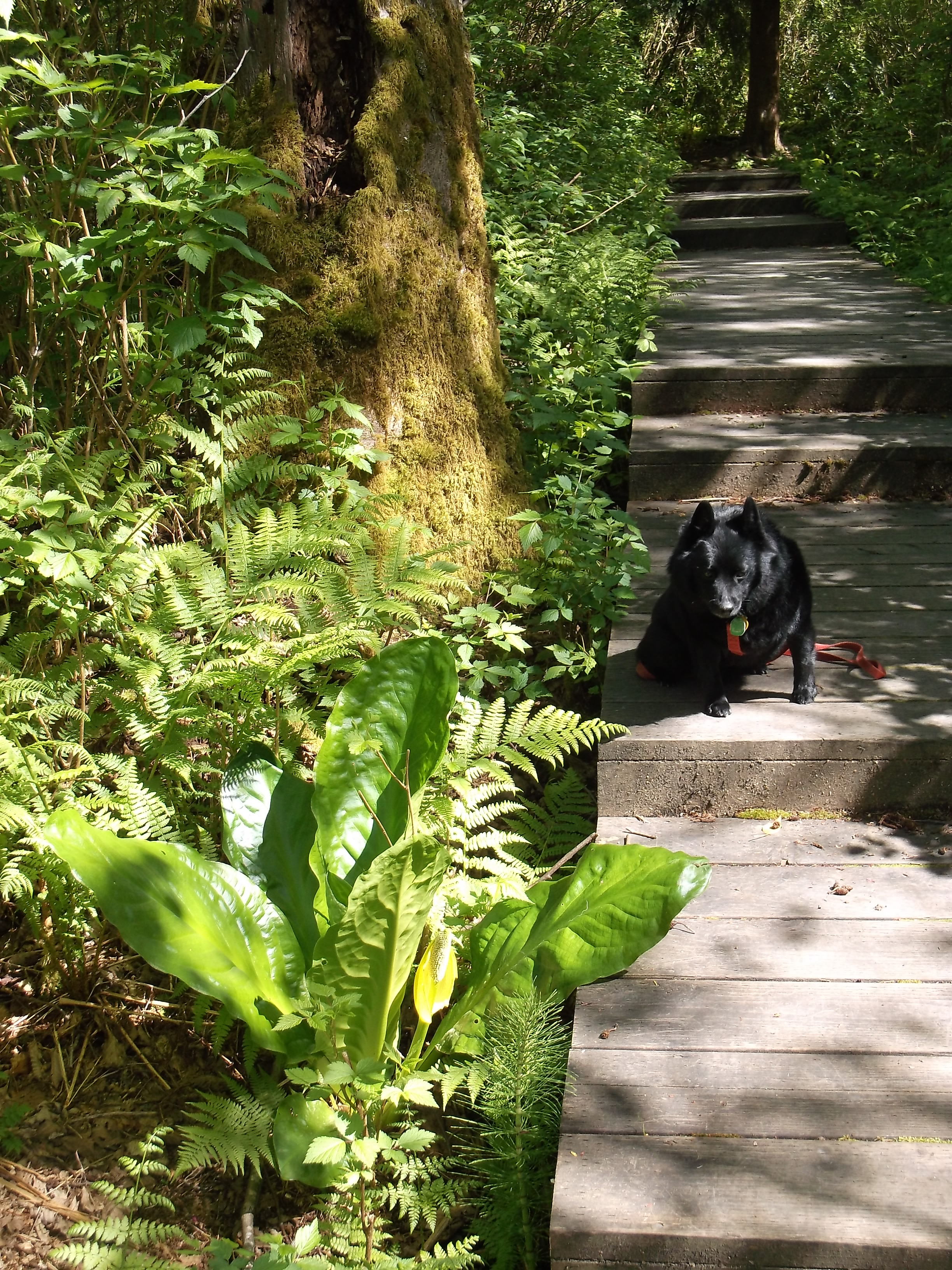
Ah summer, filled with hot days and warm nights, homemade popsicles and fresh fruit.  On hot days I love to amble over to Yost Park and walk under the tall trees in the cool shade.  I don’t want to exert myself too much; I might after all get too warm.  Therefore today as our spiritual practice for the week I offer a verse from the Psalms.  I present you with the Psalmists simple practice of walking with G-d.

Psalm 116:9 I shall walk before the Lord in the lands of the living. – The Jewish Study Bible, Tanakh Translation May your warm summer days be filled with a gentle walk with the Lord.

Ruth Jewell, ©August 12, 2014

Thank You – Prayerful Tuesday

Wordle gratitude

32 Let the afflicted see it and be glad!
You who seek God—
let your hearts beat strong again
— Psalm 69: 32 (CEB)

30 But I will give great thanks to the Lord with my mouth;
among a great crowd I will praise God! 
— Psalm 109:30 (CEB)

This past January John and I visited Boston to celebrate his and our youngest grandson’s birthdays , which fall on the same day.  And, yes I know January is not the ideal time to visit historic Boston and yes we had snow.   However, we just couldn’t miss this celebration of joint Birthdays.

Because the weather was anything but comfortable we all decided to visit the Boston Science Museum and spend the day where it was warm, dry and had lots of exciting things to do and see.  The 2 grandchildren had a great time exploring the human body, looking at dinosaurs and exploring all kinds of interactive exhibits.  For lunch we chose to take our packed lunch to the large busy café and supplement all of our goodies with a few treats.

After making our selections and paying for them I went to get the necessary napkins, forks, spoons and straws needed to eat our lunch.  As I was picking up my things there was a young man restocking the bins as we took things out.  It looked like such an endless job and more than a little boring but he was doing an excellent job of keeping up.   Before I left I turned to him and said “thank you for keeping this area stocked, I’m sure it’s not an easy task.”  Startled he turned and gave me a gruff “thank you.”

After we had finished our lunch and were preparing to leave the area the same young man pushed his way through the crowded exit area and called to me, “Miss, I just wanted to tell you how much I appreciate your thanks.  No one has ever spoken to me that way before and I was afraid I might have offended you so I wanted to make sure you knew how happy I was.”

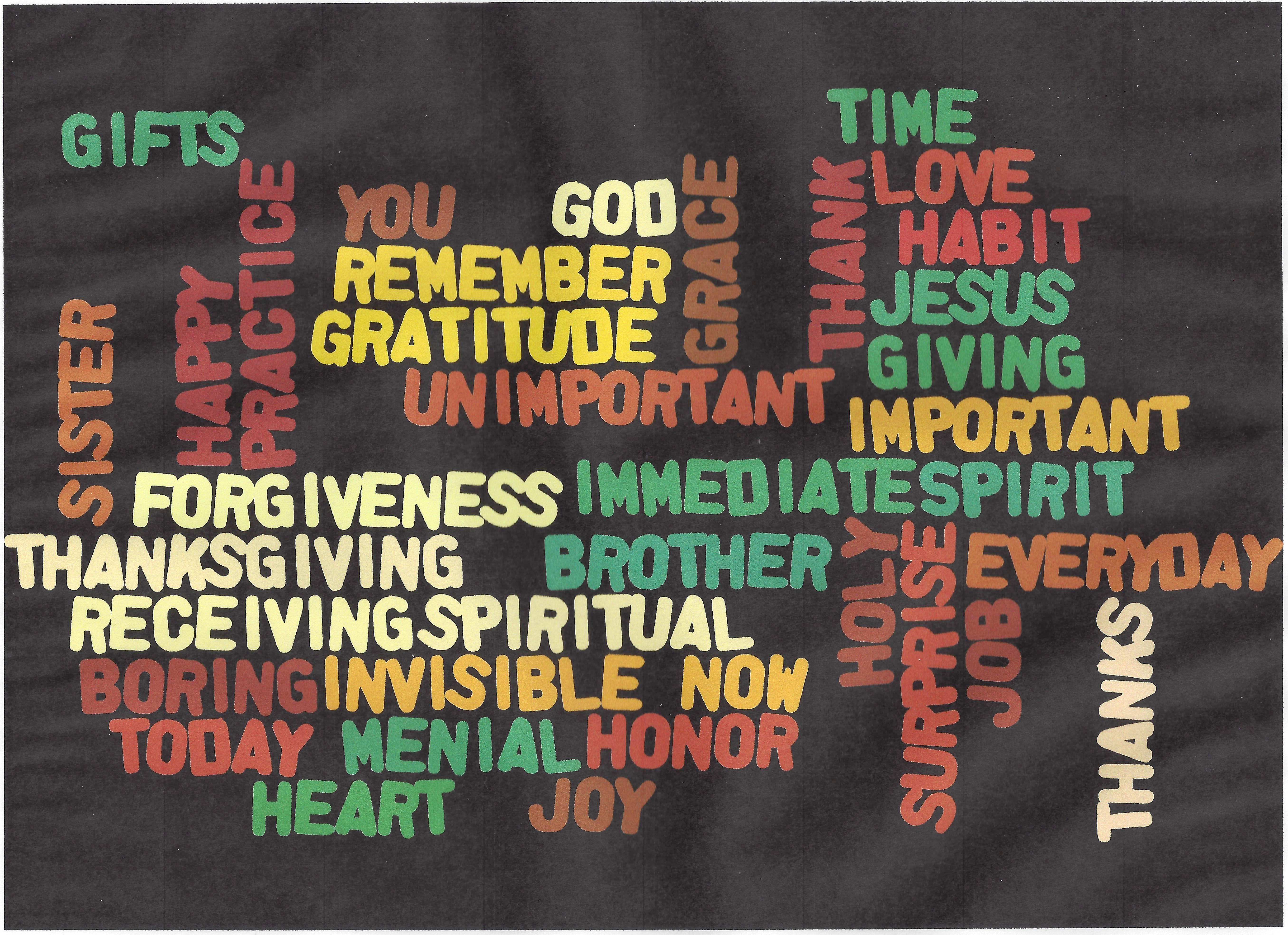
First of all, I really liked being called miss, no one has called me that in a very long time so he won me over just with that one word.  Well I was happy to bring a little joy into his otherwise boring day with just a few words of thanks from me.  But, what saddened me was his statement NO ONE HAD EVER COMPLIMENTED HIM for doing his job well!  No one ever said thank you! That is one of the saddest things I have ever heard.  It took me all of 2 seconds to express my thanks to the young man and those 2 seconds made his day.  For 2 seconds he wasn’t invisible and unimportant.  No he had been seen, he was important enough for someone to say thank you.  As we were separated by the ever shifting crowd he waved and gives me the biggest, toothiest grin I have ever seen.

Two seconds out of my day added joy to someone else’s.  Gratitude isn’t an emotion or attitude we are to keep to ourselves, no, gratitude is to be given away freely at every opportune moment, even when you yourself are not grateful.  We hear so often we are to be grateful for what God has given us, to express gratitude by thanking God.  Well being grateful for God’s grace comes in many forms.  It was a grace of God that a young man did his boring job well, it was a grace of God that allowed me to see the face of God in the young man and his courage to continue performing a rather menial task even when no noticed how well he did it.  Gratitude for the grace of God comes in many forms, big and small, all are important in the eyes of God.

The Psalms tell us to seek God’s face and to offer our thanks for God’s gifts.  Each one of us is a gift, each one of us has a gift to give, each one of us is the reflection of God, and each one of us carries God within.  So doesn’t it make sense to give thanks to those who reflect the grace of God?

Over the next week begin the habit of saying thank you for the little graces of God.  Offer thanks to the bus driver as you exit, say thank you to the young woman who hands you your morning coffee or say thank you to the washroom attended and see the smiles grow around you.  Offering thanks is an easy spiritual practice and one that brings great joy to the receiver and the giver alike and it is free to give.  It costs you no more than 2 to 5 seconds of your day, surly we can spend 5 seconds to bring hours of joy to someone who feels they are invisible to the rest of the world. Surly we can learn to do that every day, for every person we meet.

Thank you for reading my blog post.  Your presence on my site has made my day and I am grateful for your interest.

Ruth Jewell, ©February 25, 2014

Liturgy as Spiritual Practice – Prayerful Tuesday

Kneeling in Prayer
Kneeling in Prayer

According to my old college American Heritage Dictionary “liturgy is a noun defined as a fixed set of ceremonies, words, etc., that are used during public worship in a religion; ritual.” [1] As followers of faith traditions we most often encounter liturgies when we attend religious services.  But all rituals having a set order to the words spoken and are also liturgies. Graduation ceremonies, inaugurations, State Union Addresses, weddings any ritual using an set order of service uses a liturgy.

We may also use liturgies in our private prayer and spiritual practice’s.  Some traditions have small books with liturgies for each day of the week that include morning, mid-day, and evening prayers.  Each meditation includes a prayer, scripture, maybe a written meditation, and sometimes poetry or pictures to contemplate.  In addition to a traditions individual prayer books there are also many other books that provide written rituals for private prayer.  (You will find a short list of a few of my favorites at the end of this meditation.) Today I am going to introduce you to a liturgy from one of my all time favorite prayer books and offer how I use these resources in my prayer life. One of the advantages of having a liturgy already written out for you is you may adapt them to fit your day and your lifestyle.

I most often use prayer books when I am very stressed out and can’t find a way to sit still and listen for the still small voice of God.  Using a liturgy that includes a blessing or poem, scripture and a prayer calms my heart and open a door into soul allowing me to find my still point and open up to what God is trying to tell me.  If you are new to prayer, any kind of prayer, these pre-written liturgies may provide you with a stepping stone into a regular prayer life.  They allow you to slow down and step across a threshold to you own sacred space.  But, just as with every spiritual practice, you must set a regular time aside each day to read the liturgy.  Most are short and may be read in only a few minutes.  However, setting aside 10 to 15 minutes as a starting place will allow you to sit with the written prayers and scripture in silent contemplation.

Today I offer a liturgy I’ve adapted from a meditation for Tuesday from the Earth Gospel, a guide to prayer for God’s creation written by Sam Hamilton-Poore.   It is an adaption I have used before in my own private prayer and one that allows me to go deeper into that sacred space of my heart.  As you read may you also find a blessing within the words.

Opening Blessing: Edmund Banyard

Holy is the soil we walk on,
Holy everything that grows,
Holy all beneath the surface,
Holy every stream that flows.

A moment of silence

Scripture: Psalm 23 Common English Bible (CEB)

The Lord is my shepherd.
I lack nothing.
He lets me rest in grassy meadows;
he leads me to restful waters;
   he keeps me alive.
He guides me in proper paths
for the sake of his good name.

Even when I walk through the darkest valley,
I fear no danger because you are with me.
Your rod and your staff—
they protect me.

You set a table for me
right in front of my enemies.
You bathe my head in oil;
my cup is so full it spills over!
Yes, goodness and faithful love
will pursue me all the days of my life,
and I will livein the Lord’s house
as long as I live.

Reflection:  “The Avowal” by Denise Levertov (1923-1997)

As swimmers dare
to life face to the sky
and water bears them,
as hawks rest upon air
and air sustains them,
so would I learn to attain
freefall, and float
into Creator Spirit’s deep embrace,
knowing no effort earns
that all-surrounding grace

Closing Prayer:

Into your arms, loving Lord, let me “free-fall,”
upheld by your goodness and mercy.
Secure in your embrace,
show me how to love without effort,
trust without fear,
and live with abandon.  Amen

Resources:

  1. Deleon, Roy ObiSB, Praying with the Body, Bringing the Psalms to Life, Paraclete Press, Bewster, MA, 2009
  2. Hamilton-Poore, Sam, Earth Gospel, a guide to prayer for God’s creation, Upper Room Books, Nashville, TN , 2008 (my offered liturgy will be found on pages 106 and 107)
  3. Newell, J. Philip; Celtic Prayers from Iona, Paulist Press, Mahwah, NJ, 1997
  4. Rohr, Richard, YES, AND . . . Daily Meditations, Franciscan, Media, Cincinnati, OH, 2013

Ruth Jewell, ©January 28, 2014


[1] The American Heritage  Dictionary, 2nd College Edition, Houghton Mifflin Company, Boston MA, 1982


Seeking God’s Face

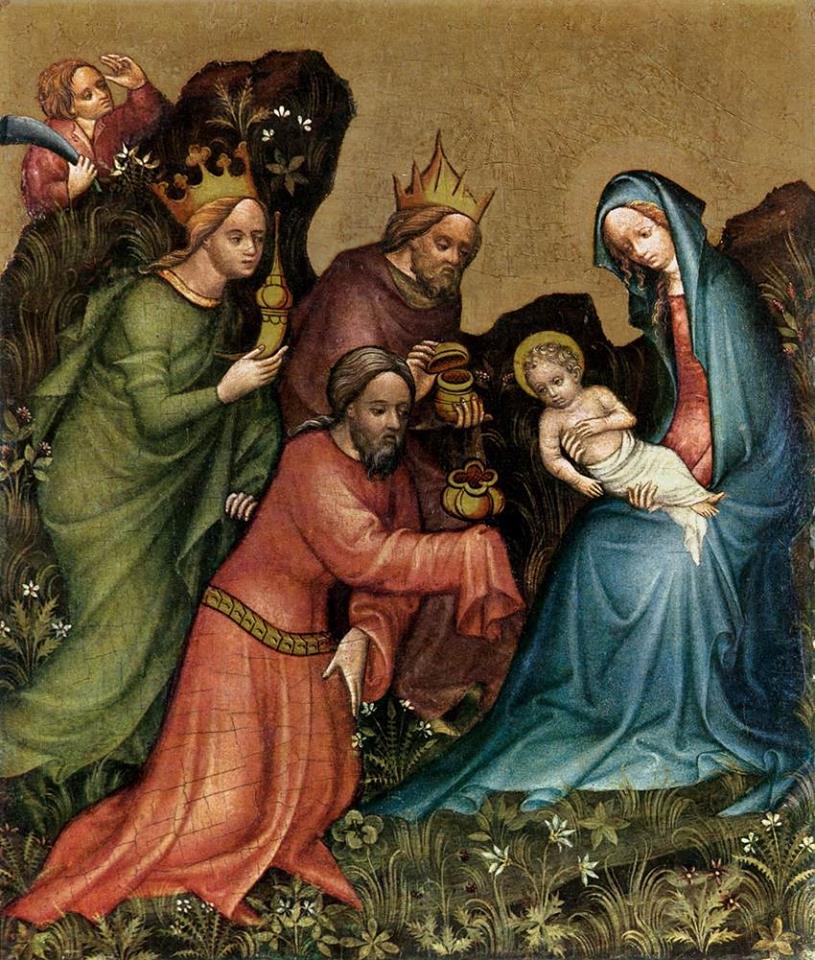
Master of Vienna, Adoration (1410), FB Page The Celtic Christian Tradition

Sermon – Epiphany Sunday
January 5, 2014
Queen Anne Christian Church Seattle, WA

Matthew 2:1-12 (Common English Bible [CEB])

Coming of the magi

1After Jesus was born in Bethlehem in the territory of Judea during the rule of King Herod, magi came from the east to Jerusalem. They asked, “Where is the newborn king of the Jews? We’ve seen his star in the east, and we’ve come to honor him.”

When King Herod heard this, he was troubled, and everyone in Jerusalem was troubled with him. He gathered all the chief priests and the legal experts and asked them where the Christ was to be born. They said, “In Bethlehem of Judea, for this is what the prophet wrote:

You, Bethlehem, land of Judah,
by no means are you least among the rulers of Judah,
because from you will come one who governs,
who will shepherd my people Israel.”

Then Herod secretly called for the magi and found out from them the time when the star had first appeared. He sent them to Bethlehem, saying, “Go and search carefully for the child. When you’ve found him, report to me so that I too may go and honor him.” When they heard the king, they went; and look, the star they had seen in the east went ahead of them until it stood over the place where the child was. 10 When they saw the star, they were filled with joy. 11 They entered the house and saw the child with Mary his mother. Falling to their knees, they honored him. Then they opened their treasure chests and presented him with gifts of gold, frankincense, and myrrh. 12 Because they were warned in a dream not to return to Herod, they went back to their own country by another route.

Greek derivation of Magi, (Strongs Hebrew, Chaldee, and Greek Dictionary)

3097. magos mag’-os  (of foreign origin (7248); a Magian, i.e. Oriental scientist; by implication, a magician:–sorcerer, wise man, [interpreter of dreams, prophet].   (plural, could refer to a male or female wise person)

The story of the Magi is such a familiar story. We have heard this story so many times before and I am sure all of us are able to repeat it without difficulty, at least the surface story.   I was confronted with this simple story, which is anything but simple, when I chose to meditate on it for Epiphany Sunday’s Sermon. Sitting in silence, letting the words of Matthew settle into my subconscious I realized there is so much more to this tale than I first believed. There are also way too many questions to address in a single sermon.  If you ever wanted to experience an abundance of graces just read this story carefully.   I could go into the fact that the gender and number of the Magi is never mentioned in the scripture and that the Magi were gentiles; or the Magi don’t visit the stable, they come to the home of Joseph and Mary; and because the story of the killing of the Bethlehem’s children that follows the Magi’s visit lead scholars to believe Jesus could have been as old as 2. And, that’s just few of the questions I found in these 12 verses of Matthew Chapter 2.  What did intrigue me, and what I will discuss, was never addressed by all of the learned theologians I perused. What I wanted to know was the reason these learned gentiles come in search of a child, a child born to a carpenter and his wife.  And, what unknown gifts still hides in this story for me, and all of us, beyond the pretty tale of rich strangers visiting a destitute baby?

First of my questions was what did the Magi expect to find when they arrived in Jerusalem.  Since they came to the city of the kings of Judea they must have expected to find the child born there, and to parents with more than a lineage to David. My guess is they had expected to find a somewhat wealthy family, or at least fairly well off.  After all they were looking for a King and you normally don’t find one living in the home of working class people. They must also have been confused and terribly disappointed that no one knew what they were talking about. I mean, the birth of a King is big news isn’t. Doesn’t everyone celebrate the birth of a King? It isn’t until King Herod calls them for an audience do they learn that the prophets foretell the birth of “the anointed one,” “the Christ,” was to happen in Bethlehem.  I have no doubt they left somewhat confused. But, eventually they find the baby living in the home with his mother and father. They even bring gifts, and while Mary might have preferred diapers, the gifts they gave were costly and fit for a King.  (By the way Bethlehem and the gifts are never mentioned again, why? Another question to confound me.)

They were seeking a child, an infant King, someone who would turn the Roman world upside down and I can only imagine their surprise at finding the child in such humble circumstances. They brought gifts Herod would have drooled over, gold, frankincense, myrrh.  Wonderful gifts but not really practical for the family they found, well the gold was probably most welcome.  But frankincense and myrrh those aren’t baby gifts.  Frankincense and myrrh were used to perfume oils and ointments for the purification of worship spaces and the anointing of the dead.

Now I know what Matthew was implying by the gifts: Gold was the symbol of Jesus’ kingship, frankincense the symbol for the priestly role Jesus would be called to live, and myrrh a foretaste of what he would endure at the end of his life.   But I think these gentile scholars brought something else and it has been bequeathed to us today and our children. The Magi brought the gift of “seeking God’s face.”

God has always welcomed us and longed for our inquisitive search for the face of the Divine, and She encourages us to reach for her Holy arms.  One of David’s Psalms says it well:

30 I will praise God’s name with song;
I will magnify him with thanks
31     because that is more pleasing to the Lord than an ox,
more pleasing than a young bull with full horns and hooves.
32 Let the afflicted see it and be glad!
You who seek God—
let your hearts beat strong again
— Psalm 69:30-32 (CEB)

And in the Book of Acts Paul tells the Athenians “27 God made the nations so they would seek him, perhaps even reach out to him and find him. In fact, God isn’t far away from any of us.” (Acts 17:27)  No God is never far away, we are.  And, seeking the face of God is one of the joys of creation we should do more often.

The Magi were the first to seek God’s face in its incarnated form, the face of a child.  For Matthew the Magi represent the mission Jesus gives his disciples to reach out to all peoples but especially gentiles, and those born within the great humble mass of humanity, in all its lovely diversity; poor and rich, young and old, all genders, all races, and all people.

For me the Magi represent the longing to see God in the face of my beloved, my grandchildren, best friend, and all creation.  I too want to see the incarnated God, I too long to see the ever present being in the first light of dawn, and I do see it in the face of my beloved when he first opens eyes in the morning.  The Magi have passed this longing down to us and I am grateful for the gift and grateful to pass it on to the next generation.

The Magi’s gift of presence to a child in a humble home was passed on to us through Jesus’ presence in his life, death and resurrection.  Now it is our mission to be present to the incarnated child born to humble parents.   To recognize and honor the incarnation born in each of us, through our gifts to the world whatever they may be; caring for each other, the environment, our nation, and our world.  It is up to us to be the Magi of today and visit the child in a humble home, to offer the gold of our love, to purify our mistakes with the frankincense of compassion; and to anoint those who pass on to the next world with the myrrh of God’s blessings and praise.   In a Judean desert David writes:

God! My God! It’s you—
I search for you!
My whole beingthirsts for you!
My body desires you
in a dry and tired land,
no water anywhere.
Yes, I’ve seen you in the sanctuary;
I’ve seen your power and glory.
My lips praise you
because your faithful love
is better than life itself!
So I will bless you as long as I’m alive;
I will lift up my hands in your name.
— Psalm 63:1-4 (CEB)

So too are we called to offer our praises to God, honor the child that lives today, in each one of us, and in all of creation.  Seek the face of God in all you meet, child, adult, male or female, and all of God’s marvelous creation.  Look in the eyes of your loved ones, your companion animals, see the face of God looking back.  Amen

Ruth Jewell, ©January 7, 2014