Psalms of Lament and Hope – Prayerful Tuesday

Paris, Beirut, Syria, Iraq, The World God in your mercy, hear our prayers
Paris, Beirut, Syria, Iraq, The World
God in your mercy,
hear our prayers

The only gift I have to offer this week is my sorrow for Paris, Beirut, Syria, Iraq, and all of us.  So I offer the Psalms I go to when I am in the midst of sorrow and pain.  May your hearts be comforted by the words of the psalmist and may you find solace knowing others cry with you.

Psalm 36:1-4 (MSG)
A David Psalm
1-4 The God-rebel tunes in to sedition—
all ears, eager to sin.
He has no regard for God,
he stands insolent before him.
He has smooth-talked himself
into believing
That his evil
will never be noticed.
Words gutter from his mouth,
dishwater dirty.
Can’t remember when he
did anything decent.
Every time he goes to bed,
he fathers another evil plot.
When he’s loose on the streets,
nobody’s safe.
He plays with fire
and doesn’t care who gets burned.

Psalm 42 (NRSV)

1As a deer longs for flowing streams,
so my soul longs for you, O God.
2My soul thirsts for God, for the living God.
When shall I come and behold the face of God?
3My tears have been my food day and night,
while people say to me continually,
“Where is your God?”
4These things I remember, as I pour out my soul:
how I went with the throng, and led them in procession
to the house of God, with glad shouts and songs of thanksgiving,
a multitude keeping festival.
5Why are you cast down, O my soul,
and why are you disquieted within me?
Hope in God; for I shall again praise him, my help
6and my God. My soul is cast down within me;
therefore I remember you from the land of Jordan
and of Hermon, from Mount Mizar.
7Deep calls to deep at the thunder of your cataracts;
all your waves and your billows have gone over me.
8By day the Lord commands his steadfast love,
and at night his song is with me, a prayer to the God of my life.
9I say to God, my rock, “Why have you forgotten me?
Why must I walk about mournfully
because the enemy oppresses me?”
10As with a deadly wound in my body,
my adversaries taunt me,
while they say to me continually, “Where is your God?”
11Why are you cast down, O my soul,
and why are you disquieted within me?
Hope in God; for I shall again praise him,
my help and my God.

Ruth Jewell, ©November 17, 2015

A Difficult Task – Prayerful Tuesday

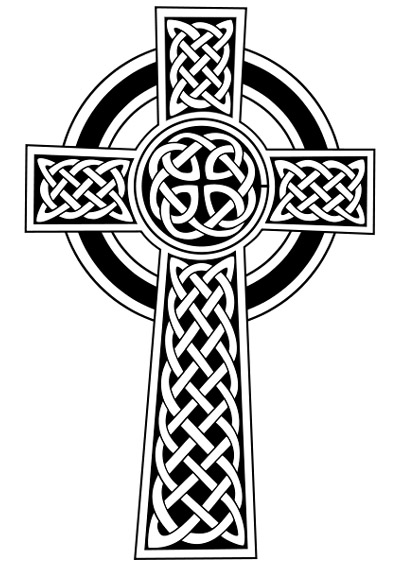
complex_celtic_cross

St Patrick’s Breast Plate Prayer

Christ be with me, Christ within me,
Christ behind me, Christ before me,
Christ beside me, Christ to win me,
Christ to comfort and restore me,
Christ beneath me, Christ above me,
Christ in quiet, Christ in danger,
Christ in hearts of all that love me,
Christ in the mouth of friend and stranger.

I have always loved this couplet of St Patrick’s Breast Plate Prayer.  In times of distress it has centered me and given me comfort.  But as I was reading it for the umpteenth time in light of the recent school shootings in Oregon, Arizona and Texas I felt if St. Patrick would mind if I added a couple of lines to his prayer.  You see this prayer says nothing of the compassion, mercy, or Justus we are asked to extend beyond ourselves and into the world.  So St. Patrick doesn’t mind, well even if he does, I think an addition is in order, perhaps something like this:

Christ in the heart of the wounded,
Christ in the hands of the comforter,
Christ in our forgiveness,
Christ in our love for the enemy
Christ in our carrying for those who harm us
Christ in how we live day to day.

This is what I would add, and maybe you would add something else. But whatever you add let your words open your heart to both the victim and the one who commits the crime.  That is what we are asked to do; it is a small thing but Oh so hard to succeed at.

Ruth Jewell, ©October 13, 2015

An Opportunity for Grace in the Face of Hateful Protest

This is one of the most moving and forceful articles you will read this week.  Amy Piatt is a minister of the WORD in every way possible. Source: An Opportunity for Grace in the Face of Hateful Protest

Prayers, Wildfires in Washington and Oregon – Prayerful Tuesday

Even though I walk through the darkest valley,
I fear no evil; for you are with me; your rod and your staff— they comfort me.
Psalm 23:4

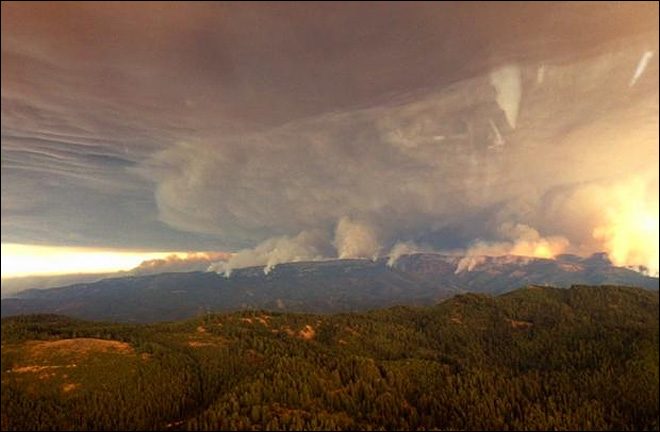
Table Mountain, Smoke Plume, KOMO TV
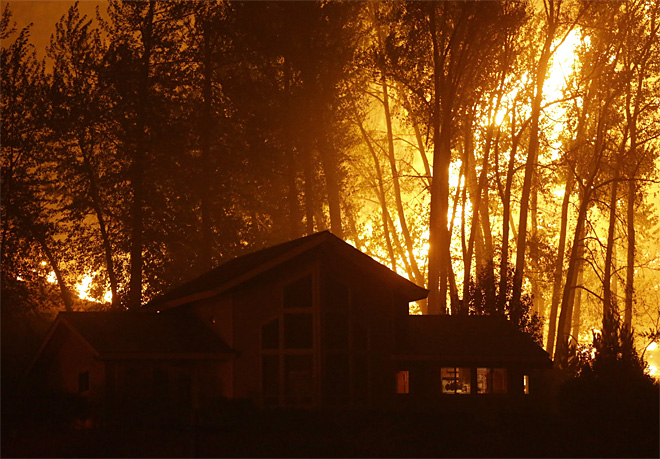
A wildfire burns behind a home on Twisp River Road, Thursday, Aug. 20, 2015 in Twisp, Wash. Authorities on Wednesday afternoon urged people in the north-central Washington town to evacuate because of a fast-moving wildfire. (AP Photo/Ted S. Warren)
A wildfire burns behind a home on Twisp River Road, Thursday, Aug. 20, 2015  (AP Photo/Ted S. Warren)
Hotshot Firefighters Pausing to Honor Fallen Firefighters Okanagan Co. WA ABC TV, August 19, 2015
Hotshot Firefighters Pausing to Honor
Fallen Firefighters, Okanagan Co. WA
ABC TV, August 19, 2015

Today I am asking you to offer prayers for those in the fire zones in Washington and Oregon and for the families and friends of the three firefighters who lost their lives in a fire storm August 19, 2015.  These men and women turn and run into the fire to protect, our homes, our loved ones, and the forests and animals that live there.  To them we owe our gratitude and prayers.

So today I ask you to offer a prayer for our all our fire fighters many who come from across the country and the globe to help protect our homes and planet, May the Holy Spirit keep them safe. Offer prayers of comfort for those who live in the fire zone and have lost their homes to the flames.  Offer a prayer for the environment and the creatures who live there. And finally pray for rain, soaking rain, without lightening, to give our land rest.

Ruth Jewell, ©August 25, 2015

Healing Hands – Prayerful Tuesday

Jeremiah 33:6a Behold, I will bring to it health and healing, and I will heal them

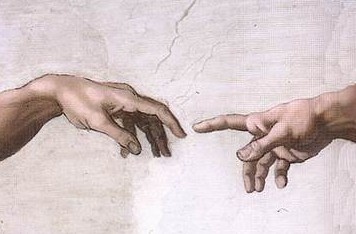
Hands of God and Adam Creation, Michangelo
Hands of God and Adam
Creation, Michangelo

In 3 days I am going to enter the hospital for back surgery.  This is an eagerly anticipated event because I have been in so much pain for such a long time and this is my best chance at relief.  But it got me thinking about healing and the value of touching and holding those in pain.  It is not uncommon to be afraid to touch or hold a person in pain, either physical or mental pain, because we don’t want to cause them any additional discomfort.  But, when it comes right down to it those of us who suffer chronic pain want to be held. To feel the gentle touch of another person helps us to know we are cared for and loved, that we aren’t forgotten or discarded.  You see there is much power in the touch of the human hand.

The hands of the surgeon will move across my back and do their best to heal the damaged spine.  The hands of the nurses will offer comfort with a warm blanket, a cool cloth for my head, or simply to touch and let me know I am not alone.  My husband’s hands will hold mine before and after surgery and they will convey his love without words even if I am unable to respond to him.  The hands of the physical therapist will hold me and support me as I regain my strength.  The silent touches, hugs, and holding all convey the message of I care for you, I love you, and you are not alone.

My prayer practice for you this week is to be aware of those in need of your healing touch.  Hold those you love in your arms,  give a hug to someone struggling to make it through the day, or gently touch someone’s hand and let them know they aren’t alone.

I also am going to ask for prayers the surgery on Friday, that it will be successful and that I will be relieved of chronic back pain.

Thank you all, blessings and peace for the coming week.

Ruth Jewell, ©July 7, 2015

Stand up and say NO MORE – Prayerful Tuesday

We are all Homo Sapiens sapiens but we will never be Human Beings until we stop just surviving and begin to live in harmony with each other and all creation.  

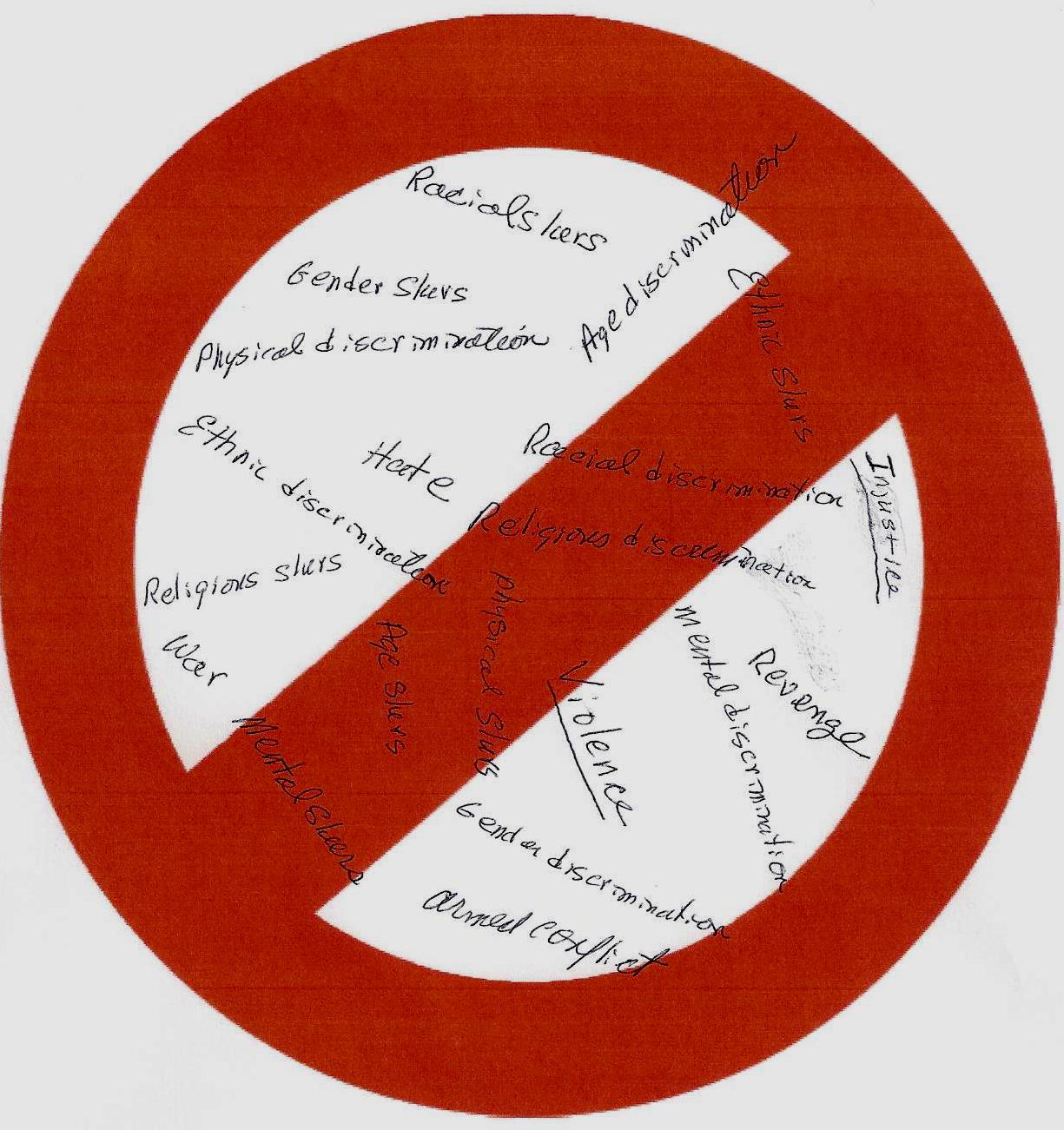
NO MORE
NO MORE

I have been trying to comprehend the shootings in South Carolina at the First Emanuel AME Church.  Just as the acts in other mass shootings I simply can’t get my mind around a hatred that produces such evil.  I have listened to the prayers for comfort and supplication.  I have listened, unwillingly, to the NRA and other public speakers who blame the church pastor and members, or minimize the acts of the shooter.  I can’t, or won’t, believe that 9 innocent people were the cause nor can I believe the shooter acted without encouragement.

You see, I believe we, you and I,  are to blame for what happened in South Carolina.  You and I, and everyone else regardless of skin color, privilege, ethnicity, or any other cultural classification are equally responsible for pulling the trigger and this is why I believe this.

We refuse to stand against acts of injustice, violence, discrimination, or the use of degrading speech.  We listen politely and shake our heads and tell ourselves that offering a prayer that people will change is enough.  We are afraid of what others might say about us if we stop someone in mid speech and tell them NO, I will not listen to this.  We look the other way when someone abuses another.  We tolerate public servants who degrade people of color, are poor, elderly, or have a religion they don’t follow.  We have tolerated public servants who have spoken as if they are the only ones who matter, who have verbally abused our President and anyone else they disagree with or disagree with them.

We have created this atmosphere of hate and violence found in country today.  Yes, I admit I am right there along with the rest of us.  Have I stood up and defended someone being abused, sometimes yes but not always.  I do it when it is convenient for me and that is not what we are called to do.  We, you and I, are called by the Divine to be better than that.

This week I am recommending a spiritual practice of standing up and defending the voiceless.  I am asking each of you to speak up when you hear someone abusing or degrading someone else.  I am pleading with each of you to stand and be counted when you see injustice happening.  As you go through this week remember this:

8 But he’s already made it plain how to live, what to do,
    what God is looking for in men and women.
It’s quite simple: Do what is fair and just to your neighbor,
    be compassionate and loyal in your love,
And don’t take yourself too seriously—
    take God seriously.” Micah 6:8 The Message (MSG)

Ruth Jewell, ©June 23, 2015

on being human—Prayerful Tuesday

Nursing an Ebola Victim Picture by Dr. Rudyard, Health Pictures
Nursing an Ebola Victim
Picture by Dr. Rudyard, Health Pictures

Matthew 25: 36 “I was naked and you gave me clothing, I was sick and you took care of me, I was in prison and you visited me.”

One of the books I read while I was on my sabbatical was Fields of Blood, Religion and the History of Violence by Karen Armstrong.[1]  As always I was impressed with her writing and level of scholarship but more than that in this book Ms Armstrong lays out the reasons for our love of violence and power.

Right at the beginning she identifies one of the factors in our continuing struggle between living in a harmonious world or living in a power driven world, the construction of our brains.  We have 3 brains, the old brain or reptilian brain is responsible for our fight or flight actions. It drives us to defend our territory for food and other resources, it is the self-centered part of the brain, most concerned with keep ourselves safe; the mammalian limbic system, which formed over the core of the reptilian brain is our second brain. It is responsible for new behaviors such as care of our young and the formation of allies with others; and the new brain, the third brain, the neocortex, is responsible for our “reasoning and self awareness that enables us to stand back from the instinctive, primitive passions.” (pg 4-5)

Ms. Armstrong proposes that the reptilian brain and limbic system are dominant within power systems that manipulate and control others.  The limbic system extended the actions of the reptilian brain to include family or a community unity but, still, this drive for power and control of others for territory and resources requires violence.  It wasn’t until about 20,000 years ago when the neocortex evolved did the idea of standing back and evaluating actions was there any question about the use of violence. Humanity really didn’t have a chance of becoming a reality until after the evolution of the neocortex and we have yet to learn how to  use the “new brain” to begin to evolve into who we are meant to be.  By this I mean most of us haven’t learned to overcome the impulses of the reptilian brain and limbic system and use our neocortex to evaluate our surroundings or our actions.  In general we humans are “subject to conflicting impulses of [our] three distinct brains.” (pg. 5)

Fortunately there is hope for us all.  A few of us are developing our neocortex’s and discovering what it means to be truly human.  I was listening to NPR this past Sunday morning when a story about Dr. Kent Brantly was broadcast. Dr. Brantly was one of the American Doctors who contracted Ebola last year and survived.  He was asked to deliver the graduating speech to the 2015 graduating class of the Indiana University School of Medicine.  What he says about compassion is important for all of us to hear (italics are mine):

“In the first seven weeks of treating patients with Ebola, we had only one survivor; one survivor and nearly 20 deaths. Losing so many patients certainly was difficult. But it didn’t make me feel like a failure as a physician because I had learned that there’s a lot more to being a physician than curing illness. In fact, that isn’t even the most important thing we do. The most important thing we do is to enter into the suffering of others. And in the midst of what was becoming the worst Ebola epidemic in history, we were showing compassion to people during the most desperate and trying times of their lives. Through the protection of Tyvek suits and two pairs of gloves, we were able to hold the hands of people as they died to offer dignity in the face of humiliating circumstances, to treat with respect the dying and the dead. And in my opinion, that made those weeks, those difficult weeks of my career a success.”[2]

Compassion isn’t offering help, it is being with the suffering of others, it is living the suffering, walking together down a road you may or may not know where it leads.  That is what Jesus did.  He entered into the suffering of others, he walk the road to where ever they were headed, that is one, maybe the first, step to becoming human.  Dr. Brantly has taken a step on a road most of us are afraid to even look at let along step onto.  The Prophet Micah tells us “He has told you, O mortal, what is good and what does the Lord require of you but to do justice and to love mercy and to walk humbly with your God?” (Micah 6:8). To do justice, to love mercy, to walk humbly with God, sounds easy does it not?  Ask Dr. Brantly how easy it was for him and he will tell you it is the hardest road you will ever walk, but if we wish to be the humans God has always wanted us to be it is a road we must walk.

This week my spiritual practice is more of a spiritual way of life.  I would like to invite you on a journey with me to become the “human” God wants us all to be.  To look at our actions by taking a step back and asking ourselves the following questions (I am sure there are more than these and please let me know what you would ask):

  1. Does this action support justice or impede justice?
  2. Is this action a loving act?
  3. Does that action move me closer to God or does it separate me from God?

Simple questions, but, sometimes hard to answer.  Our lives are filled with gray areas and we will need to determine how those gray, in between, spaces fit into our lives and either nurture or kill the life we want with God. This is not an easy practice or an easy way to live but I believe, at least for myself, a profitable one.  I know I will stumble and so will you.  That’s OK, just pick yourself up and start over again.  Failure is a lesson in how not to do something.  Loving life as God meant it to be was and is never easy.  Just remember you are not alone.

Ruth Jewell ©May 19, 2015

[1] Armstrong, Karen’ Fields of Blood, Religion and the History of Violence, The Bodley Head, London, UK, 2014.

[2] National Public Radio: Rachel Martin interview Dr. Kent Brantly, May 17, 2015, All Things Considered Sunday Edition.

Blind Bartimaeus, Questions. Answers? – Prayerful Tuesday

Mark 10:46-52 46They came to Jericho. As he and his disciples and a large crowd were leaving Jericho, Bartimaeus son of Timaeus, a blind beggar, was sitting by the roadside. 47When he heard that it was Jesus of Nazareth, he began to shout out and say, “Jesus, Son of David, have mercy on me!” 48Many sternly ordered him to be quiet, but he cried out even more loudly, “Son of David, have mercy on me!” 49Jesus stood still and said, “Call him here.” And they called the blind man, saying to him, “Take heart; get up, he is calling you.” 50So throwing off his cloak, he sprang up and came to Jesus. 51Then Jesus said to him, “What do you want me to do for you?” The blind man said to him, “My teacher, let me see again.” 52Jesus said to him, “Go; your faith has made you well.” Immediately he regained his sight and followed him on the way.

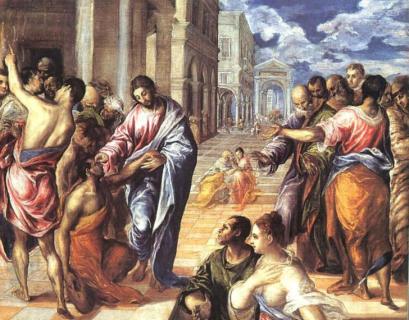
Jesus Healing Blind Bartimaeus El-Greco, 1578
Jesus Healing Blind Bartimaeus
El-Greco, 1578

We are rapidly approaching Holy Week and all of the exciting and heartbreaking moments the weeks brings.  In Mark the last story before the Triumphal Entry is of the Healing of Blind Bartimaeus that takes place as Jesus is traveling through Jericho to Jerusalem and his appointed fate.  I am offering the above painting by El-Greco for you to contemplate with the prayer practice of Visio Divina.  I have always found this story from the Gospel of Mark one of the most moving story of courage and faith in scripture.  Bartimaeus doesn’t know how close he is to Jesus; he simply calls out and has faith Jesus will answer him.  The questions Jesus asks of Bartimaeus also draw me into a deeper understanding of sight and I hope you will consider those questions and the responses as well.

May your sight be deepened in preparation for the coming week as your contemplate El‑Greco’s painting and the scripture lesson.

VISO DIVINA

  1. Study the picture slowly, taking a first glance and noting the colors, people, places and things.  Remain with the image for one to two minutes. If you would like, jot down a few words about the image.
  2. Read the Scripture lesson slowly and in meditation. Return to the painting does the scripture alter your perspective of the painting in anyway?  Do the questions and responses open new doors as you gaze at the painting?
  3. Take a second, deeper, look. Where is there movement? What relationships do you see? Engage your imagination. Where are you in the artwork? What do you see from that perspective? What deeper meaning emerges?
  4. Respond to the image with prayer. Did the image remind you of an experience, person or issue for which you’d like to offer thanksgiving or intercession? Place yourself in the place of Bartimaeus, and then in the place of a spectator, or one of the Disciples. Does your perspective Change?  What do you feel when you become Bartimaeus or a spectator?  Offer your thoughts as prayer to God.
  5. Find your quiet center. Breathe deeply. Relax your shoulders, arms and legs. Rest in this quiet. Let God pray in you. God prays beyond words.

May the Peace of God be with you as you travel the Holy Week Journey.

Ruth Jewell, ©March 24, 2015

Hope

Sermon Given at Lake Washington Christian Church
February 22, 2015

rainbow-landskape

Genesis 9:12-17  12God said, “This is the sign of the covenant that I make between me and you and every living creature that is with you, for all future generations:13I have set my bow in the clouds, and it shall be a sign of the covenant between me and the earth. 14When I bring clouds over the earth and the bow is seen in the clouds, 15I will remember my covenant that is between me and you and every living creature of all flesh; and the waters shall never again become a flood to destroy all flesh. 16When the bow is in the clouds, I will see it and remember the everlasting covenant between God and every living creature of all flesh that is on the earth.” 17God said to Noah, “This is the sign of the covenant that I have established between me and all flesh that is on the earth.”

Psalm 25:5-6 5Lead me in your truth, and teach me, for you are the God of my salvation; for you I wait all day long. 6Be mindful of your mercy, O Lord, and of your steadfast love, for they have been from of old.

1 Peter 3:21  21And baptism, which this prefigured, now saves you—not as a removal of dirt from the body, but as an appeal to God for a good conscience, through the resurrection of Jesus Christ,

Mathew 1:15-15 14Now after John was arrested, Jesus came to Galilee, proclaiming the good news of God, 15and saying, “The time is fulfilled, and the kingdom of God has come near; repent, and believe in the good news.”

Awhile back a friend asked me what was my favorite scripture and without hesitation I said Micah 6:8 “He has told you, O mortal, what is good; and what does the Lord require of you but to do justice, and to love kindness, and to walk humbly with your God?”  Then she asked the question … Why? I had to think about that for awhile.  I could have said that it was how my Father ended all of our dinner prayers and hearing it always brings back wonderful memories.  Or, I might have told her my Disciples tradition has based its mission and vision statement on it and those statements have opened the door to a witness in social justice and peace in the greater world.  But while each of those reasons are truth the real reason is this one verse from Hebrew scripture gives me Hope.

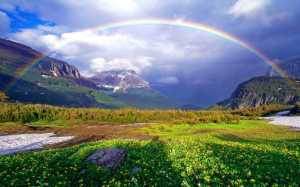
It is the hope of the rainbow that symbolizes the covenant between God, one-another and all creation.  It is the cry of the Psalmist who says “O, Lord, Teach me your paths, Lead me in your truth and teach me,” and the voice of the Gospel writer of Mark who writes “Jesus came to Galilee, proclaiming the good news of God.”

In our world today hope seems to be too little and too late.  We watch the news and it’s filled with killing, greed, anger, hate, and very little that would give us hope for a better world.  Killing, whether of the body or spirit, disrupts God’s purpose for our lives. To kill a human being  made in the divine image is to subvert our lives which were purposely created to be lived in mutuality, support and respect, to live in right relationship with each other, God, and creation.  Killing for greed, hate, and anger is to kill a little of ourselves and build a wall, brick by terrible brick, between us and God.

So what does the word “Hope” mean for us then? Those who define words say it is to expect with confidence.  For others it means to expect things will get better, not only to get us through the difficult times in our lives, but also for our world, we will have a place of peace and justice for all creation, not tomorrow, or sometime in the far future but NOW, today.  We in all of our faith communities across the globe are called to seek justice, offer kindness, and be examples of living in peace to the world, to be a living hope.

God promised the descendants of Noah, and all creation that God would no longer destroy the world.  As a covenantal symbol of God’s own self-limiting, God’s disarmament, God placed a rainbow in the sky. In Noah’s time bows were symbols of violence just as guns are for us today.  So God laid down his weapon of mass destruction and placed it in the sky and said ‘I will no longer destroy what I have created.’  I wonder what God would place in the sky today, a nuclear bomb maybe?

Don’t get me wrong, I haven’t forgotten all of the killing done in the name of God in Scripture.  And, I must admit I have difficulty with the genocidal practices of Joshua when the Israelites crossed the Jordan River into the Promised Land.  But I also know that just because a practice is in the Bible doesn’t make it an acceptable practice for today.  And, that is the reason I so firmly believe in God’s promises of hope.

You see God’s covenant of the rainbow means that we, you and I, all humans, are in a covenantal relationship with God, each other, and creation and that means that all life matters, my life, your life, white, black, yellow and brown life, furred and feathered life and (much to my discomfort) insect and spider life.  The Psalmist makes a claim of hope and trust in God and tells us that God’s protection flows from the mouths of those who have no hope or trust in systems of violence, injustice, and oppression. Not just overt physical acts of injustice but injustice and violence and oppression brought about by attitudes, social structures, and any other “isms” that threatens the peace and justice of God’s Kingdom.

God’s rainbow of hope spoken in the Good News of the Gospels goes beyond a “me-centered” interpretation of the world. God’s hope reaches out across our selfish desires to those who need hope, justice, and mercy. Where do you find God’s hope? It is placed where there is justice and peace and there you will find Kingdom of God. Jesus preached the Good News of hope. Hopeful news that leads not only to the salvation of those who accept the gift freely given, but is also the promise of something more, a new and different life for those who are the most victimized.  All faith communities are called to be participants in our own salvation by working for justice, now, in the context of our present world, thereby helping to bring the good news to those who need it, where ever and whenever it is needed.

We as believing members of our faith communities are to point the way to the kingdom breaking into our world right now. The kingdom of God isn’t a future event it is happening right now. Every time we offer a helping hand to someone who is hungry, or cold, or afraid the door to God’s Kingdom opens just a bit more.  Every time we stand up to those who would harm one of God’s children, the kingdom shines a bit brighter.  Every time we stand between victims of injustice and the perpetrators God let’s a little more light out of the door.   Every time we speak out when we see an injustice God smiles and sends another rainbow.

You know the Irish tell us that there is gold at the end of the rainbow, and I believe that is true.  Because I believe that God’s kingdom is that golden treasure and we are to seek it just as the man who sought out the pearl of great price.  What could be more beautiful than walking across the rainbow into the Golden Kingdom?

Yes, on the first Sunday in Lent, all of the Lectionary scriptures are about hope.  Whether you read Genesis, Psalm 25, 1 Peter, or Mark each of them has an element of hope for dark times, in a dark world.  Each one offers a ray of light to bring us out of darkness. The light calls us, bright and shinning, multicolored, and golden with hope and promise.  God first gave the rainbow as a promise that She would never forget any of her children.  The Psalmist tells us that God will always be there to sustain us.  And, Jesus, rekindled the hope in the hopeless that a better life was there for them.  Jesus reminds all of us that God will sustain us as we work to be the witness’ against injustice, violence and oppression.

God said, “When the bow is in the clouds, I will see it and remember the everlasting covenant between God and every living creature of all flesh that is on the earth.”  How does Micah fit into this, well Micah reminds us which path we are to take, “what does the Lord require of you but to do justice, and to love kindness, and to walk humbly with your God?”  We are called to be living communities of hope, of God’s promise in every moment of our individual and communal lives.

AMEN

Ruth Jewell, ©February 23, 2015
It is Good?—Prayerful Tuesday

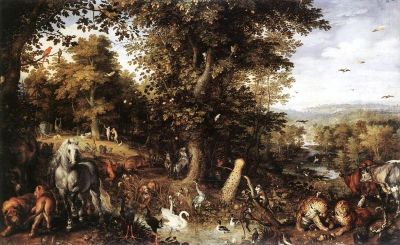
Garden of Eden, Jan Brueghel, 1612

“And God saw that it was good.” Genesis 1:10b

In the last weeks God’s creation has seemed anything but good.  Terrorist attacks, ambushing of police, and police shootings of unarmed young men continue to rent the very fabric of our society.  Yet God did not create an evil world, in fact God proclaims this world a good world where everyone, and I mean everyone, has what they need to live and be the person they are meant to be.  It is our choice’s, not God’s, that have created a world that is unsafe.

Spending time in silent contemplation with a focus on what we could have been, and still could be, seemed the only way for me to center myself and see the world as good.  So today I offer as our prayer of the week another Visio Divina using the above painting of the Garden of Eden by Jan Brueghel.

Prayer Practice:

1. Study the picture slowly, taking a first glance noting the colors, the placement of the plants, animals and, people.  Remain with the image for one to two minutes. If you would like, jot down a few words about the image.

  1. Take a second, deeper, look. Where is there movement? What relationships do you see? Engage your imagination. Where are you in the artwork? What do you see from that perspective? What deeper meaning emerges? What feelings about the world rise in you? Are there any images that you are particularly drawn too?
  2.  Respond to the image with prayer for the world. Did the image remind you of an experience, person or issue for which you’d like to offer thanksgiving or intercession? Offer that prayer to God.
  3. Find your quiet center. Breathe deeply. Relax your shoulders, arms and legs. Rest in this quiet. Let God pray in you. God prays beyond words.

Please do not let your belief, or non-belief, in the Garden of Eden and the subsequent fall from grace prevent you from seeing the good things in creation. Our world is in need of prayer right now.  All of our people, all of creation is crying and in pain.  Let your prayers go out into the world and let them lead you to be the person God has always wanted you to be.

Peace, Blessings

Ruth Jewell, ©January 13, 2015