Choosing a Path – Prayerful Tuesday

Psalm 23: 1-3  The Lord is my shepherd: I lack nothing. He makes me lie down in green pastures; He leads me to water in places of repose; He renews my life; He guides me in right paths as befits his name. (The Jewish Study Bible, Tanakh Translation)

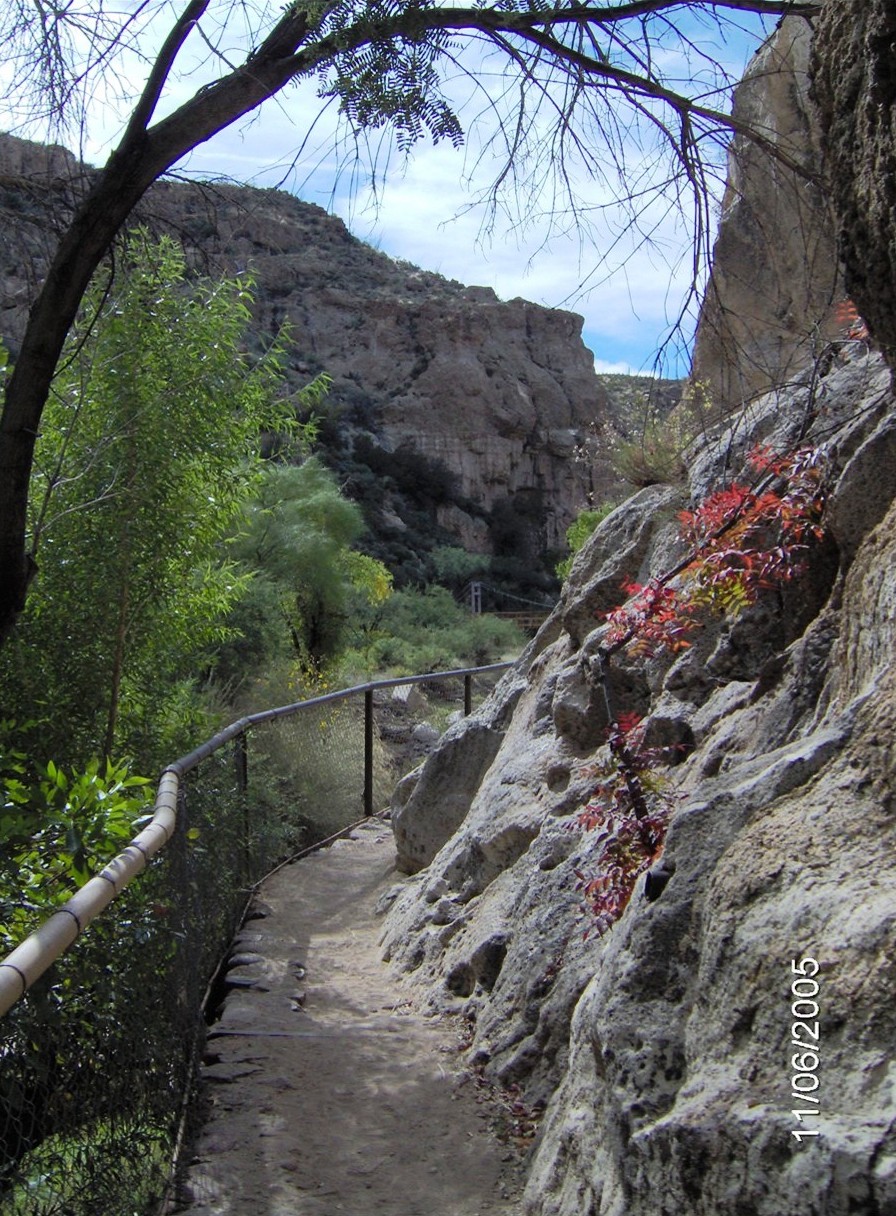
Boyce Thompson Arboretum Arizona, 2006

I subscribe to a Native American spirituality site, White Bison (www.whitebison.org), and recently I received the following daily meditation:

Elder’s Meditation of the Day – September 21

“everything is laid out for you. Your path is straight ahead of you. Sometimes it’s invisible but it’s there. You may not know where it’s going, but still you have to follow that path. It’s the path to the Creator. That’s the only path there is.”  — Leon Shenadoah, ONANDAGA

When I read this and held in my heart for awhile I recognized the truth in the statement.  However, I also saw that we are not given just one path, and many paths lead to the Creator.  Every day, every second of every day, we are asked to choose the path we will follow.  The choice is not always clear, nor is always easy.  Most often we are asked to make our choices quickly without thought and while these choices may seem insignificant it won’t be until much later do we realize how important they were.

I don’t have the answers to choosing the “right” path, as if any path could really be wrong. For me when I let go of my ego control and let The Great Spirit take the reins of my life the choices become easier, not easy, but easier.  I know I will still end up walking some dark and dangerous road instead of the one in sunshine, but I will also not feel I am alone on that scary path.

Letting go of our ego and releasing our control is hard spiritual practice to follow and one that I start over with every single day.  But there are rewards.  When I do let go I find that I am at peace with my choice of path and that I can smile and bear the difficulties much better.  Right now I am struggling with letting go and am on a path I am not sure of.  I keep saying ‘I can do this, I don’t need anyone else,’ but I know that is false.  I can’t do my life by myself!  I need the comfort of The Great Spirit and so I practice letting go.   Even though I slip back every day, and there will be doubt,  I grab onto the hand of the Spirit and haul myself up to the next step, the next place.

Do you have difficulty letting go of your control as you choose your paths?  What do you do to help you choose the next path, do you release your control of your life, or do you, just as I do, often say ‘I can do this by myself?’

Ruth Jewell, ©September 29, 2015


Seeing the Divine – Prayerful Tuesday

Photo by Rabbi Yael Levy, www.mishkan.org/awi, June 29, 2015
Photo by Rabbi Yael Levy, http://www.mishkan.org/awi, June 29, 2015

This week I am offering a meditation from Monday’s FaceBook (FB) page A Way In: Jewish Mindfulness Program.  I have used these FB daily meditations, and the Rabbi Yael Levy’s Jewish Mindfulness web page, Mishkan Shalom, for my own use for some time now.  I wanted to share with you the beauty of their posts and suggest you explore Rabbi Levy’s web page as a resource for mindfulness and meditation.

Let today’s meditation be your reminder to look for the Divine in all of creation.

Fulfilled is the person who knows that in each moment she dwells in the Divine presence
Fulfilled is the person who knows that in each moment the Divine presence dwells within her.
Always she offers praise.
-Psalm 84:5

May we have the strength and humility to look for the Divine within ourselves.
May we have the courage and faith to recognize the Divine in others.

More mindfulness resources: www.mishkan.org/awi

Ruth Jewell, ©June 30, 2015

Praying With Gratitude – Prayerful Tuesday

Sunset in the South Pacific April 23, 2015 (Ruth Jewell)
Sunset in the South Pacific
April 23, 2015 (Ruth Jewell)

While I was traveling in April I carried a small book with me by Mark E. Thibodeaux, SJ titled Reimagining the Ignatian Examen.[1] On our sea days when I would sit on the deck of our cruise ship and watch the ocean go by I various meditations for my daily prayer time.

Thibodeaux’s book takes the traditional Examen and includeds a specific focus to use within the prayer practice.  There are 34 different themes and I discovered a number of them to be very helpful for me as I sat in stillness. Over the next several months I will occasionally offer one of the meditations from the book for our Prayerful Tuesday. As today follows Memorial Day when we honor those who have died in service I would like to offer the meditation for Gratitude.

First let me offer a few hints from the book to get you started.

  1. Keep it short. Keeping your Examen under 15 minutes will keep your prayer in the moment and a reminder that this is a check-in with God that reorients your toward the Divine.
  2. Skip to the good parts and don’t get hung up on sin. You only want to dwell on the steps and you want to get to the point rather than linger for an extended period of time. Nor do you want to dwell on all the things that have gone bad or at least you think have gone bad.  God has the facts you don’t have to bore him with a lot of details.
  3. Sometimes, break all the rules. If you feel like it, skip over parts of the Examen you don’t feel you need to do or change them around.
  4. Experiment with different ways of journaling. Tweet-sized, or drawing, or video yourself dancing.  Do whatever moves you in prayer.
  5. Keep it prayerful. Keep the prayer God centered and don’t let your meditation drift into your shopping list or your latest aggravation.  Extra hints: A. ask God to take the lead, ask God to do your Examen for the day; B. Talk to God instead of yourself; C. listen for God’s voice, sit in silence for a moment and let God enter you

Here is how I began and closed my ritual, you may choose something totally different that fits you and the place you’re in spiritually right now:

  1. I stand still for a moment and let my mind quiet.
  2. I repeat Micah 6:8 as I sit down
  3. I place my hands in my lap, palms up, in a gesture of being open to God’s love and grace
  4. I slow my breathing and clear my mind, sitting very still for a moment
  5. I welcome God in to my heart and spirit
  6. Then I begin my Examen

Closure:

  1. I take several very deep breaths as a way to bring myself back to moment
  2. I place my hand on heart and repeat Matthew 28:20b
  3. I journal for a short while before rising from my chair.

Note: I change scriptures from time to time, substituting poetry and prayers.  Remember nothing is written in concrete.

Examen theme of GRATITUDE

  1. Begin in your usual way
  2. Ask God to reveal special blessing in your life this day. As yesterday was Memorial Day, ask God to also reveal the special blessing you’ve received from someone you loved who has passed on.
  3. Ask yourself ‘what am I grateful for today? “Who am I grateful for?’ Name the person(s) gift and offer the following “Lord, I am so grateful for your gift to me of _____.” Repeat this as many times as you need to
  4. Relish each gift in turn, letting them warm your heart. Using prayerful imagination see, feel, hear, touch, sense the gift again
  5. Let the gifts you have received dance in your memory offering your gratitude to God for each one. Offer the following; “Thank you Lord for (neighbor, family, laughter, shared meal, etc.)
  6. End in your usual way.

I truly enjoyed Thibodeaux’s focuses on my trip, they helped me retain a pilgrim attitude to the whole trip and I hope you find today’s focus helpful as much as I did.

Peace and Blessing on your journey

Ruth Jewell, ©May 26, 2015

[1] Thibodeaux SJ, Mark E; Reimagining the Ignatian Examen, Loyola Press, Chicago, IL, 2015

Blind Bartimaeus, Questions. Answers? – Prayerful Tuesday

Mark 10:46-52 46They came to Jericho. As he and his disciples and a large crowd were leaving Jericho, Bartimaeus son of Timaeus, a blind beggar, was sitting by the roadside. 47When he heard that it was Jesus of Nazareth, he began to shout out and say, “Jesus, Son of David, have mercy on me!” 48Many sternly ordered him to be quiet, but he cried out even more loudly, “Son of David, have mercy on me!” 49Jesus stood still and said, “Call him here.” And they called the blind man, saying to him, “Take heart; get up, he is calling you.” 50So throwing off his cloak, he sprang up and came to Jesus. 51Then Jesus said to him, “What do you want me to do for you?” The blind man said to him, “My teacher, let me see again.” 52Jesus said to him, “Go; your faith has made you well.” Immediately he regained his sight and followed him on the way.

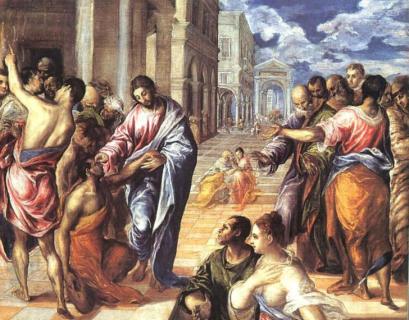
Jesus Healing Blind Bartimaeus El-Greco, 1578
Jesus Healing Blind Bartimaeus
El-Greco, 1578

We are rapidly approaching Holy Week and all of the exciting and heartbreaking moments the weeks brings.  In Mark the last story before the Triumphal Entry is of the Healing of Blind Bartimaeus that takes place as Jesus is traveling through Jericho to Jerusalem and his appointed fate.  I am offering the above painting by El-Greco for you to contemplate with the prayer practice of Visio Divina.  I have always found this story from the Gospel of Mark one of the most moving story of courage and faith in scripture.  Bartimaeus doesn’t know how close he is to Jesus; he simply calls out and has faith Jesus will answer him.  The questions Jesus asks of Bartimaeus also draw me into a deeper understanding of sight and I hope you will consider those questions and the responses as well.

May your sight be deepened in preparation for the coming week as your contemplate El‑Greco’s painting and the scripture lesson.

VISO DIVINA

  1. Study the picture slowly, taking a first glance and noting the colors, people, places and things.  Remain with the image for one to two minutes. If you would like, jot down a few words about the image.
  2. Read the Scripture lesson slowly and in meditation. Return to the painting does the scripture alter your perspective of the painting in anyway?  Do the questions and responses open new doors as you gaze at the painting?
  3. Take a second, deeper, look. Where is there movement? What relationships do you see? Engage your imagination. Where are you in the artwork? What do you see from that perspective? What deeper meaning emerges?
  4. Respond to the image with prayer. Did the image remind you of an experience, person or issue for which you’d like to offer thanksgiving or intercession? Place yourself in the place of Bartimaeus, and then in the place of a spectator, or one of the Disciples. Does your perspective Change?  What do you feel when you become Bartimaeus or a spectator?  Offer your thoughts as prayer to God.
  5. Find your quiet center. Breathe deeply. Relax your shoulders, arms and legs. Rest in this quiet. Let God pray in you. God prays beyond words.

May the Peace of God be with you as you travel the Holy Week Journey.

Ruth Jewell, ©March 24, 2015

Covenant – Prayerful Tuesday

Genesis 9:12-13  12God said, “This is the sign of the covenant that I make between me and you and every living creature that is with you, for all future generations: 13I have set my bow in the clouds, and it shall be a sign of the covenant between me and the earth. 

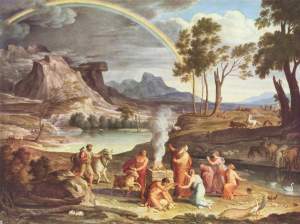
Joseph Anton Koch, 1803

The Hebrew Scripture for Sunday was from Genesis 9, the covenant between God and the earth.  Following the Flood, God voluntarily disarms, self-limits, herself by making a promise between Noah’s descendents and all creation never to destroy the earth again.  It is promise made to all of creation not just humans. God’s promise means we are to be in relation with each other and all of creation. (If you are not familiar with God’s promise please read Genesis 9:8-17.) Above is the painting by Joseph Anton Koch of Noah’s Thanksgiving Offering, which we will be using for today’s Visio Divina.

  1. Study the picture slowly, taking a first glance noting the colors, people, places and things.  Remain with the image for one to two minutes. If you would like, jot down a few words about the image.
  2. Take a second, deeper, look. Where is there movement? What relationships do you see? Engage your imagination. Where are you in the artwork? What do you see from that perspective? What deeper meaning emerges?
  3.  Respond to the image with prayer. Did the image remind you of an experience, person or issue for which you’d like to offer thanksgiving or intercession? In what way does God’s promise change, or not change how you visualize your relationship with the earth, each other, and God? Offer your thoughts as prayer to God.
  4. Find your quiet center. Breathe deeply. Relax your shoulders, arms and legs. Rest in this quiet. Let God pray in you. God prays beyond words.

Rainbows are symbols of hope, and renewal following a crisis.  May this day bring you your own personal rainbow.

Ruth Jewell, ©February 24, 2015

Hope

Sermon Given at Lake Washington Christian Church
February 22, 2015


rainbow-landskape

Genesis 9:12-17  12God said, “This is the sign of the covenant that I make between me and you and every living creature that is with you, for all future generations:13I have set my bow in the clouds, and it shall be a sign of the covenant between me and the earth. 14When I bring clouds over the earth and the bow is seen in the clouds, 15I will remember my covenant that is between me and you and every living creature of all flesh; and the waters shall never again become a flood to destroy all flesh. 16When the bow is in the clouds, I will see it and remember the everlasting covenant between God and every living creature of all flesh that is on the earth.” 17God said to Noah, “This is the sign of the covenant that I have established between me and all flesh that is on the earth.”

Psalm 25:5-6 5Lead me in your truth, and teach me, for you are the God of my salvation; for you I wait all day long. 6Be mindful of your mercy, O Lord, and of your steadfast love, for they have been from of old.

1 Peter 3:21  21And baptism, which this prefigured, now saves you—not as a removal of dirt from the body, but as an appeal to God for a good conscience, through the resurrection of Jesus Christ,

Mathew 1:15-15 14Now after John was arrested, Jesus came to Galilee, proclaiming the good news of God, 15and saying, “The time is fulfilled, and the kingdom of God has come near; repent, and believe in the good news.”

Awhile back a friend asked me what was my favorite scripture and without hesitation I said Micah 6:8 “He has told you, O mortal, what is good; and what does the Lord require of you but to do justice, and to love kindness, and to walk humbly with your God?”  Then she asked the question … Why? I had to think about that for awhile.  I could have said that it was how my Father ended all of our dinner prayers and hearing it always brings back wonderful memories.  Or, I might have told her my Disciples tradition has based its mission and vision statement on it and those statements have opened the door to a witness in social justice and peace in the greater world.  But while each of those reasons are truth the real reason is this one verse from Hebrew scripture gives me Hope.

It is the hope of the rainbow that symbolizes the covenant between God, one-another and all creation.  It is the cry of the Psalmist who says “O, Lord, Teach me your paths, Lead me in your truth and teach me,” and the voice of the Gospel writer of Mark who writes “Jesus came to Galilee, proclaiming the good news of God.”

In our world today hope seems to be too little and too late.  We watch the news and it’s filled with killing, greed, anger, hate, and very little that would give us hope for a better world.  Killing, whether of the body or spirit, disrupts God’s purpose for our lives. To kill a human being  made in the divine image is to subvert our lives which were purposely created to be lived in mutuality, support and respect, to live in right relationship with each other, God, and creation.  Killing for greed, hate, and anger is to kill a little of ourselves and build a wall, brick by terrible brick, between us and God.

So what does the word “Hope” mean for us then? Those who define words say it is to expect with confidence.  For others it means to expect things will get better, not only to get us through the difficult times in our lives, but also for our world, we will have a place of peace and justice for all creation, not tomorrow, or sometime in the far future but NOW, today.  We in all of our faith communities across the globe are called to seek justice, offer kindness, and be examples of living in peace to the world, to be a living hope.

God promised the descendants of Noah, and all creation that God would no longer destroy the world.  As a covenantal symbol of God’s own self-limiting, God’s disarmament, God placed a rainbow in the sky. In Noah’s time bows were symbols of violence just as guns are for us today.  So God laid down his weapon of mass destruction and placed it in the sky and said ‘I will no longer destroy what I have created.’  I wonder what God would place in the sky today, a nuclear bomb maybe?

Don’t get me wrong, I haven’t forgotten all of the killing done in the name of God in Scripture.  And, I must admit I have difficulty with the genocidal practices of Joshua when the Israelites crossed the Jordan River into the Promised Land.  But I also know that just because a practice is in the Bible doesn’t make it an acceptable practice for today.  And, that is the reason I so firmly believe in God’s promises of hope.

You see God’s covenant of the rainbow means that we, you and I, all humans, are in a covenantal relationship with God, each other, and creation and that means that all life matters, my life, your life, white, black, yellow and brown life, furred and feathered life and (much to my discomfort) insect and spider life.  The Psalmist makes a claim of hope and trust in God and tells us that God’s protection flows from the mouths of those who have no hope or trust in systems of violence, injustice, and oppression. Not just overt physical acts of injustice but injustice and violence and oppression brought about by attitudes, social structures, and any other “isms” that threatens the peace and justice of God’s Kingdom.

God’s rainbow of hope spoken in the Good News of the Gospels goes beyond a “me-centered” interpretation of the world. God’s hope reaches out across our selfish desires to those who need hope, justice, and mercy. Where do you find God’s hope? It is placed where there is justice and peace and there you will find Kingdom of God. Jesus preached the Good News of hope. Hopeful news that leads not only to the salvation of those who accept the gift freely given, but is also the promise of something more, a new and different life for those who are the most victimized.  All faith communities are called to be participants in our own salvation by working for justice, now, in the context of our present world, thereby helping to bring the good news to those who need it, where ever and whenever it is needed.

We as believing members of our faith communities are to point the way to the kingdom breaking into our world right now. The kingdom of God isn’t a future event it is happening right now. Every time we offer a helping hand to someone who is hungry, or cold, or afraid the door to God’s Kingdom opens just a bit more.  Every time we stand up to those who would harm one of God’s children, the kingdom shines a bit brighter.  Every time we stand between victims of injustice and the perpetrators God let’s a little more light out of the door.   Every time we speak out when we see an injustice God smiles and sends another rainbow.

You know the Irish tell us that there is gold at the end of the rainbow, and I believe that is true.  Because I believe that God’s kingdom is that golden treasure and we are to seek it just as the man who sought out the pearl of great price.  What could be more beautiful than walking across the rainbow into the Golden Kingdom?

Yes, on the first Sunday in Lent, all of the Lectionary scriptures are about hope.  Whether you read Genesis, Psalm 25, 1 Peter, or Mark each of them has an element of hope for dark times, in a dark world.  Each one offers a ray of light to bring us out of darkness. The light calls us, bright and shinning, multicolored, and golden with hope and promise.  God first gave the rainbow as a promise that She would never forget any of her children.  The Psalmist tells us that God will always be there to sustain us.  And, Jesus, rekindled the hope in the hopeless that a better life was there for them.  Jesus reminds all of us that God will sustain us as we work to be the witness’ against injustice, violence and oppression.

God said, “When the bow is in the clouds, I will see it and remember the everlasting covenant between God and every living creature of all flesh that is on the earth.”  How does Micah fit into this, well Micah reminds us which path we are to take, “what does the Lord require of you but to do justice, and to love kindness, and to walk humbly with your God?”  We are called to be living communities of hope, of God’s promise in every moment of our individual and communal lives.

AMEN

Ruth Jewell, ©February 23, 2015
Breath of Life—Prayerful Tuesday

Genesis 1:1-2, 2:7  1:1 In the beginning when God created the heavens and the earth, 2the earth was a formless void and darkness covered the face of the deep, while a wind from God swept over the face of the waters.

2:7 then the Lord God formed man from the dust of the ground, and breathed into his nostrils the breath of life; and the man became a living being.

Amos 8:11 The time is surely coming, says the Lord God, when I will send a famine on the land; not a famine of bread, or a thirst for water, but of hearing the words of the Lord.

Have you ever been unable to breath?  I mean you just couldn’t get air into your lungs.  I have several friends who suffer from Asthma and they tell me it is the most frightening thing to happen to them.  Without air we can’t live.  It is the first requirement of life, the first thing we do upon birth is to take that first breath and the last thing we do at our passing is to let the last breath go.

Genesis tells us that air is the first gift God gave to the earth. I mean it says so right there in the second verse, “a wind from God swept over the face of the waters” and then in chapter 2 God brings man to life by breathing into his nostrils, breath is life.  Without air we don’t live.  Breath, ruach, spirit, is the palpable presence of God in our lives.

I guess that is what makes Amos’ words so scary to me. If the God I trust to be there when I am frightened tells me that She will no longer come to me, that she is separating himself from me that means no air, no breath, no spirit  to enliven my life.  I mean you can’t have words without breath and no words means no breath of God, no life.

With every inhalation we partake of God’s gift of life and with every exhalation we give back life.  We have been doing it since our first breath at birth and will continue until we release our last breath at our dying.  Breathing is a sacred act of life giving; it is the ultimate communion with God and each other.  Turn to the person next to you and watch them breathe, the air they release is the air you take in and the air you release is the air they take in.  Breathing is the most intimate act of our lives.  Breathing connects us to all life, past, present, and future life.

Every breath we take has been blowing across this earth since God blew the wind across the waters.  With ever inhalation we breathe there is a molecule of air breathed, and passed on to us, by Jesus on the cross, Moses as he spoke to the burning bush, Sarah as  she delivered Isaac, Dinosaurs, Amos, even Hitler.  We breathe air given to us as a life gift and how we use it depends on us.

This week I ask that you think about breathing and contemplate who is sharing your breath.  Breathe deeply, take each breath into your lungs and feel the life fill you as your lungs inflate.  Treat each breath as the gift from God that it is, and grace each exhalation with a gift of your own gratitude.  Offer a prayer for those who struggle to breathe and remember how much their life, and yours, depends on the breath of God.  Treat the air as sacred and refrain from fouling it with contaminants.  With every breath you take this week let it be a prayer of thanks to God for the breath of life given at the beginning of time.

Ruth Jewell, ©February 10, 2015

“What If” – Prayerful Tuesday

Matthew 13:2b-9 “Listen! A sower went out to sow.4And as he sowed, some seeds fell on the path, and the birds came and ate them up. 5Other seeds fell on rocky ground, where they did not have much soil, and they sprang up quickly, since they had no depth of soil.6But when the sun rose, they were scorched; and since they had no root, they withered away. 7Other seeds fell among thorns, and the thorns grew up and choked them. 8Other seeds fell on good soil and brought forth grain, some a hundredfold, some sixty, some thirty. 9Let anyone with ears listen!”

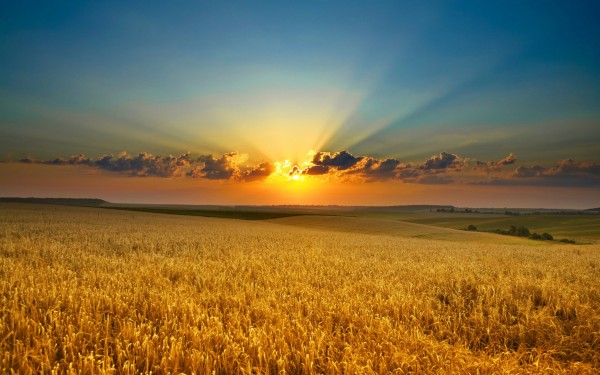
Golden-Grain-Field-600x375

Every interpreter I have ever read tells us this scripture is about the ground. It’s about us being good or bad ground for the word of God.  So what if, just what if, we have it upside down.  I’m not saying we do, this is a “what if,” looking at the parable from the other side, from the Sower’s perspective.

Barbara Brown Taylor in her book The Seeds of Heaven, Sermons on the Gospel of Matthew (2004) asks what if this parable isn’t about us, not about our failures or success’.  But rather about an extravagant sower who flings his seeds everywhere and “wastes it with holy abandon?” If this isn’t about us as ground for the word of God then this parable has a completely new meaning.  Taylor says what if “the focus is not on us and our shortfalls but on the generosity of our maker, the prolific sower, who does not obsess about the conditions of fields, who is not stingy . . . but casts his seed everywhere, on good soil and bad.”  What if God, the prolific Sower, says I have a lot of seed and some will take hold right away, but who knows maybe, just maybe, some sown in not the best of places may still feed a soul. Suppose Jesus was saying we are to sow God’s word everywhere, don’t expect a harvest, or at least a big one, just speak the word, live the word, be the word, and see what happens.

So this week I challenge you to go and live the life of a prolific sower. Imitate the Great Sower, and be one of those who has ears and hears.

Ruth Jewell, ©February 3, 2015

Marcus Borg & Gratitude for our Mentors—Prayerful Tuesday

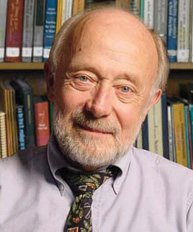
Marcus Borg 1931-2015
Marcus Borg
1931-2015

This last week I heard of the passing of Marcus Borg. I was sadden not just at his passing but because I have learned so much from his writings. I will miss reading his words and having them open up my understanding of Jesus as both human and Divine.  Marcus Borg’s writings were instrumental in changing how I came to look at Jesus, the apostles, and the first century Christians.  He made me think and doubt what I have always believed to be true and to take that doubt and turn it on its head by searching for answers and being comfortable with finding only more questions.

Because of Marcus Borg I began to read scripture, questioning the standard interpretations, searching for what the words printed in the Bible meant to those they were written to, the first century believers in Jesus.  Borg’s books were my first window into the church of the 21st century and why, and how, it is so different from the community of believers in the 1st century.  Reading Borg’s books were instrumental in giving me an interest in pursuing a Masters of Divinity degree and looking at the carefully at the path leading to ordination.  Yes I will miss this Master of Theology who opened doors and, through his writings, fostered a love of scripture, sacred texts, theology, and history.  Whose writing led me on a search for the divine and human Jesus that I wanted in my life.

We do not go through this life alone. There are many people, our mentors, who have walked and are walking with us.  Some mentors we know, some mentors we request or go looking for, some we have not known they were mentors but were our companions for a while, showing us us how to live by living their own quiet, faithful lives.  Some mentors never know they mentored us at all. Marcus Borg was one of my mentors who never knew he walked with me. I am grateful for his life and his words.  I never met him, only read his books, but I felt ‘close’ to this incredible theologian who made Jesus and God accessible to me.

I will never be able to thank him, so, instead I will thank all of my other mentors while I still have time.  My parents, my first grade teacher Miss Wooster, they taught me courage and determination. I am grateful for Pastors from childhood to adulthood that listened to my ravings and didn’t belittle me.  I am grateful for my current pastor, and friend, Laurie, who has been the most gracious and gentle of mentors as I have grown in my faith. I am grateful for friends who let me be me, inspiring me to be the best friend I could be.  I am grateful for my beloved John who has supported me through thick and thin as we have traveled this crazy new journey God has led us both on in the last 15 years.

I am grateful for the love, comfort, and companionship of dogs, cats and birds who have taught me the value of unconditional love. I am grateful for being able to live and work, and play in a world of great beauty, and sorrow.  I am grateful for my life as it is and as it will be and I know that whatever life hands me I know I am not alone, there is always someone standing beside me to offer encouragement.

On this Prayerful Tuesday who are you grateful for?  Who has walked with you on a difficult path or a path of exploration and great joy?  Who walked with you, gave you insights, taught you a lesson of life that you didn’t recognize at the time?  We all have people who have brought meaning to our lives, today offer your gratitude, your thanks for your life’s mentors.

Gracious Presence, I am grateful for all who walk, and have walked, with me on my very bumpy life’s journey. I am grateful for your presence as you have been with me always, even though I don’t recognize you. My spirit is grateful for all I have been given, and thankful for all that is yet to come.  Amen.

Ruth Jewell, ©January 27, 2015

Taking Care—Prayerful Tuesday

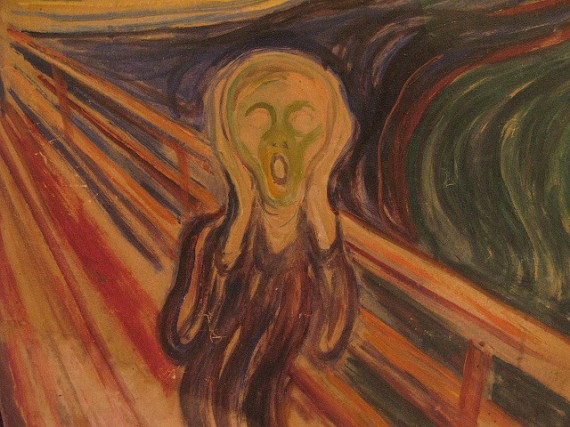
The Scream by Van Gogh

For the last three weeks I have been in constant pain due to a pinched nerve in my back.  This fussy nerve has been bothering me for a long time but I refused to listen to it. So now it is fighting back to get the attention it thinks it deserves.  I have never been in so much pain before.   It hurts to lie down, stand up and sit and that my friends are pretty much every possible position there is.  But, I am not asking for sympathy, prayers yes, sympathy no because I got myself here by not listening to my body.

It is always easier to give someone else advice than to take that advice ourselves about taking care of the temple God has graced us with.  Whether we are doing our busy lives or praying we often forget the clay vessel we are embodied with to the detriment of our health and well being both spiritually and physically.

I understand the forgetting the body when we are making a living, I certainly forgot.  After all we are only trying to make a living, feed our family, keep a shelter over our heads and clothes on our backs.  We don’t feed the body with good food rather we go for the quick easy meal of junk food, which is high in fat, calories and low in what we need to be healthy.  We don’t get enough sleep because a job needs to be done and “I, just don’t have the time to rest until it’s finished.” Stress takes its toll with worry about how we will survive if we lose our job, or add a new family member, or move to new community.  We forget to take the time to talk to God, to listen to God, to offer prayers of gratitude and concern to the one, and only, who can relieve our pain and suffering.

The ironic thing is we remember our bodies when they break down, and we remember our spiritual life when we are running on empty to the next event in our lives. That is what has happened to me.  I forgot to care for my body, I refused to listen and I am paying for it now.  But more than that I forgot that caring for my body, caring for my spirit is a prayer practice.

It is important to care for what has been given us the best way we can.  Even when we are given bodies that aren’t perfect, and whose is, we are called by God to care for this vessel as long as we are here enfleshed in this life. In order to care for this body given me I must repent and make changes to how I view my body.  It isn’t an object to worship, but it is a house of prayer.  Good food, exercise, rest and listening are my four healthy habits that will make my house stronger.  My physical house and my spiritual house.

My prayer for all of you this week is take a moment out of your day to sit in silence and offer God your gratitude, take a brisk walk and feel the breath of God on your face, rest in God, letting the healing touch of the Holy Spirit renew your soul and eat with gusto food rich in love and low in Cholesterol.

Ruth Jewell, ©January 20, 2015