The Good Samaritan – Prayerful Tuesday


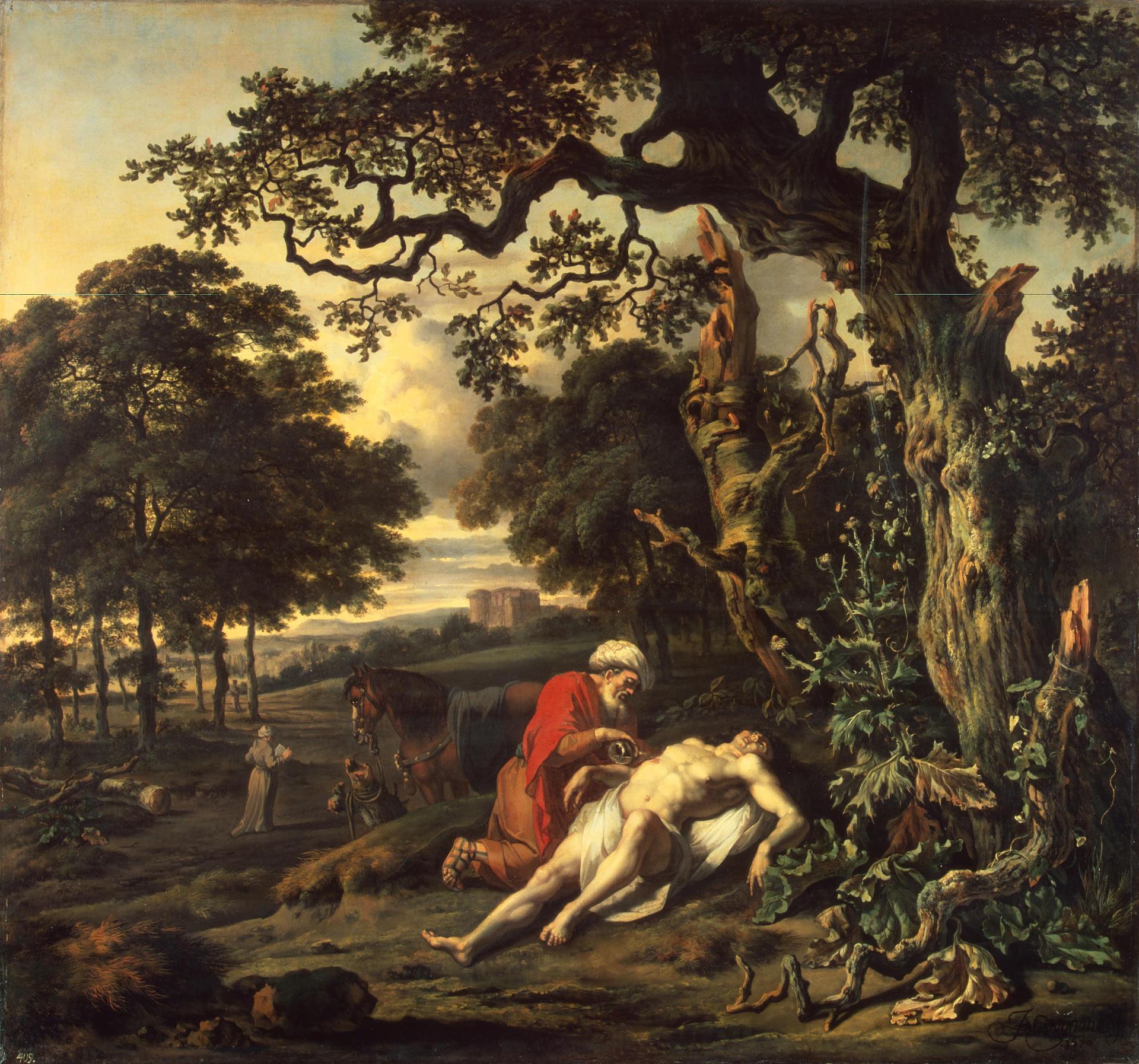
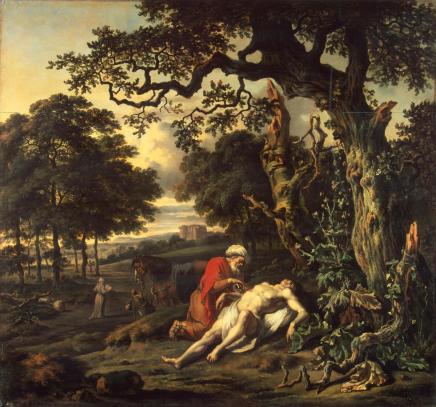
Jan Wijnants, Parable of the Good Samaritan, 1670
              Jan Wijnants, Parable of the Good Samaritan, 1670

Luke 10:33-35 “A Samaritan traveling the road came on him. When he saw the man’s condition, his heart went out to him. He gave him first aid, disinfecting and bandaging his wounds. Then he lifted him onto his donkey, led him to an inn, and made him comfortable. In the morning he took out two silver coins and gave them to the innkeeper, saying, ‘Take good care of him. If it costs any more, put it on my bill—I’ll pay you on my way back.’ The Message)

I have watched the news media’s reports on desperate flights of Syrian’s and Iraqi’s to Europe with a breaking heart.  I have donated funds to the Week of Compassion for their relief drive but it hasn’t helped the pain in my chest.  This morning’s meditation scripture was the Good Samaritan and it seeded so appropriate for me right now as I am trying to discern what else I can do for people half the world away.  So today my prayer practice for you is to sit down with this painting and this scripture and let God speak to you maybe together we can find our way on this difficult road.

Directions for Lectio Divina

  • Place yourself in a comfortable position and allow yourself to become silent. Focus for a few moments on their breathing; or use a “prayer word” or “prayer phrase” you gently recite to gradually center your thoughts. Use whatever method is best for you and allow yourself to enjoy silence for a few moments.
  • Turn to the text and read it slowly, gently. Savor each portion of the reading, constantly listening for the “still, small voice” of a word or phrase that somehow says, “I am for you today.” Do not expect lightning or ecstasies. In Lectio Divina, God is teaching us to listen to him, to seek him in silence. He does not reach out and grab us; rather, he gently invites us ever more deeply into his presence.
  • Take the word or phrase into you center. Hold it in your thoughts and slowly repeat it to yourself, allowing it to interact with your inner world of concerns, memories, and ideas. Do not be afraid of distractions. Memories or thoughts are simply parts of yourself that, Allow this inner pondering, this rumination, to invite you into dialogue with God.
  • Speak to God. Whether you use words, ideas, or images–or all three–is not important. Interact with God as you would with one who you know loves and accepts you. And give to him what you have discovered during your experience of meditation. Experience God by using the word or phrase he has given you as a means of blessing and of transforming the ideas and memories that your reflection on his word has awakened. Give to God what you have found within your heart.
  • Rest in God’s embrace. And when he invites you to return to your contemplation of his word or to your inner dialogue with him, do so. Learn to use words when words are helpful, and to let go of words when they no longer are necessary. Rejoice in the knowledge that God is with you in both words and silence, in spiritual activity and inner receptivity.

Sometimes in Lectio Divina, you may return several times to the printed text, either to savor the literary context of the word or phrase that God has given or to seek a new word or phrase to ponder. At other times, only a single word or phrase will fill the whole time set aside for Lectio Divina. It is not necessary to assess anxiously the quality of your Lectio Divina, as if you were “performing” or seeking some goal. Lectio Divina has no goal other than that of being in the presence of God by praying the Scriptures.

Directions for Visio Divina

  • Study the picture slowly, taking a first glance noting the colors, people, places and things.  Remain with the image for one to two minutes. If you would like, jot down a few words about the image.
  • Take a second, deeper, look. Where is there movement? What relationships do you see? Engage your imagination. Where are you in the artwork? What do you see from that perspective? What deeper meaning emerges?
  • Respond to the image with prayer. Did the image remind you of an experience, person or issue for which you’d like to offer thanksgiving or intercession? Offer your thoughts as prayer to God.
  • Find your quiet center. Breathe deeply. Relax your shoulders, arms and legs. Rest in this quiet. Let God pray in you. God prays beyond words.

May compassion fill our hearts and like the Good Samaritan care for our fellow travelers in the world.

Ruth Jewell, ©September 15, 2015


The Voice in the Wind – Prayerful Tuesday

“. . . a wind from God swept over the face of the waters.” Genesis 1:2b, NRSV

Photo, Ruth Jewell, 2014

I am sure all of you noticed we had a big windstorm 2 weeks ago.  John and I lost our power on Saturday just before noon and didn’t get it back until after 3 pm on Sunday.  For those of us in Edmonds that was a really long time.  Normally our power losses are quite short due to the presence of the Hospital and the transit center so close to us, but not this time.  What has been most frustrating for John and me is the lost of our internet, which we still don’t have, because we both have things to do.  While I gladly gave up internet access when we were on Holiday in the spring I was not quite so happy without this time.  I have things to do such as writing for my blogs, ordering pet food, doing activities for the committees I am on, you know the daily little things that we don’t normally think about but just do.  However, we have finally been reconnected to the rest of the electronic  world and so I am back at writing.

However, despite my irritation with the loss of technology, I have been thinking about the wind how strong it was, how persistent, and how loud.  Wind, spirit, ruach, the Breath of G-d made me listen whether I wanted to or not.  G-d made me stop and listen.  I slowed down, and I listened to God speak. I heard tears in the wind for those whose lives were lost, in the storm, in the wild fires, in world conflict, and in the madness we call a gun culture. I heard laughter for those who thought technology was everything and, like John and I were, ‘forced’ to read by oil lamp or candle light.

Sometimes we need to stop and listen to the wind.  Sometimes we need to slow down.  Two lives were lost in that storm and we need to stop and offer a prayer.  But for the rest of us our lives will go on with few changes to our daily routine. Saturday was an interruption nothing more unless we choose to learn from slowing down.  Walk outside, or open a door or window, listen to the wind, take in the breath of G-d, listen for the sound of tears and laughter.\

May you feel the breath of G-d as it kisses your cheek, may your hear the still small voice in the gentle breeze, and in your moment of stillness may you know the presence of G-d.

Ruth Jewell, ©September 9, 2015

You Are Invited . . .

Matthew 22:1-14 Once more Jesus spoke to them in parables, saying: 2“The kingdom of heaven may be compared to a king who gave a wedding banquet for his son. 3He sent his slaves to call those who had been invited to the wedding banquet, but they would not come. 4Again he sent other slaves, saying, ‘Tell those who have been invited: Look, I have prepared my dinner, my oxen and my fat calves have been slaughtered, and everything is ready; come to the wedding banquet.’ 5But they made light of it and went away, one to his farm, another to his business, 6while the rest seized his slaves, mistreated them, and killed them. 7The king was enraged. He sent his troops, destroyed those murderers, and burned their city. 8Then he said to his slaves, ‘The wedding is ready, but those invited were not worthy. 9Go therefore into the main streets, and invite everyone you find to the wedding banquet.’ 10Those slaves went out into the streets and gathered all whom they found, both good and bad; so the wedding hall was filled with guests. 11“But when the king came in to see the guests, he noticed a man there who was not wearing a wedding robe, 12and he said to him, ‘Friend, how did you get in here without a wedding robe?’ And he was speechless. 13Then the king said to the attendants, ‘Bind him hand and foot, and throw him into the outer darkness, where there will be weeping and gnashing of teeth.’ 14For many are called, but few are chosen.”

The above text is about how we are invited into God’s grace. However, what we do with that grace is entirely up to us.  We can ignore it, accept it but only on our terms, or completely live into the gift of grace.  What we do will be our choice and that choice will determine how we live our lives.  The following is the text of the sermon I preached on August 23, 2015, at my home church, Queen Anne Christian Church, Seattle, WA.

On a warm June afternoon in 2000 I was sitting at the entrance to the primary hotel in Vallejo CA.  I was waiting for a bus to come and deliver John to me who was taking the bus from the Oakland airport. I could hardly contain myself, you see in just a few short weeks I would be retiring from my consulting job and moving back to Edmonds. John was coming to help me pack-up the apartment and drive with me back to WA.  We would be married in September.  This was the beginning of 6 months of celebration that has extended into nearly 15 years. I had accepted an invitation, I said yes. I knew that in that acceptance I would now be living a new life and one that would require me to make the choice to change from a life of taking care of only me to taking care of someone else. Now that’s a huge change for someone who was 53 and never married.  But it was a choice that I have been grateful for ever since.  As a result I was blessed with a new life that has had its challenges and its joys. That’s what happens when you chose to transform your life.  Life can be a bed of roses, but what you must remember is roses have thorns and you can be sure you will sometimes get stuck with one, or more, of those thorns.

The scripture from Matthew is not only about choosing between accepting and refusing an invitation to a wedding banquet given by a King, it is about choosing between accepting or refusing to live a transformed life of free grace in the way we were meant to live. And, to deciding to live a transformed life means accepting all of that life of grace.  It means we are to commit to live that life no matter what gets thrown at us or how many thorns we run into.  Living a transformed life of grace doesn’t mean there won’t be thorns, or potholes, or great sorrows on your path. It means we have the strength to walk through them.

Matthew’s version of this story, which is also found in the Gospel of Luke, is actually two parables about invitations. It’s a story about a king, who wants to invite people to celebrate the wedding of his son with a banquet.  Matthew adds two additional details to the story; the first is when some of the king’s friends’ killed his slaves and he attacks and wipes out the kingdoms of those who committed those atrocities.[1] It is accepted by most interpreters that this part of the parable, Verses 6 and 7, are an interpretation of Matthew’s who is reading back into this parable the destruction of Jerusalem and the Temple. Matthew adds it because within his community he has people who are struggling with the loss of their ancestral home.  It is not believed to be part of the original parable from the time of Jesus, the oldest version of which is found in the Sayings of Q. Actually these verses are much more characteristic of an interpretation of God from the Hebrew Text rather than the life and teachings of Jesus.[2],[3] Matthew’s second addition are the last 4 verses, verses 11-14,  of the story where Jesus tells one more story of the banquet[4] and this addition is very important in the way Matthew wants us to understand and respond to the divine invitation to a new life.  Together these two parables are stories about the life choices we make and what we do with those choices.

So here we have a story of a King, who traditionally is identified with God, and throws a wedding party for his son, Jesus. Those are the traditional interpretations of Matthew’s King and Son.  But I want to you think about a what if.  What if we look at this story from a different perspective? What if we turn it upside down? What if instead of the King being God the King is Jesus who’s throwing a wedding banquet for the Children of God who he invites to live a new life?  How will that perspective change the way we hear and see these parables?

Now even though the Matthew’s setting of the parable is Jesus defending himself before the religious authorities Matthew wasn’t referring to “the Jewish authorities” as the ones who refused to attend, or that the ones who came were only “Gentiles.” Rather, most interpreters now believe Matthew was addressing his own conflicted community who he wanted to live a transformed life.[5]  The Jewish Jesus followers of Matthew’s community were struggling with the loss of the temple and his Gentile Jesus followers were struggling with whether they should or should not become Jewish. All this would have made for many conflicts between the different factions and Matthew is trying to bridge the gap between them.  I too am not suggesting that there are specific groups being discussed in these parables. So depending on which version you like the best, think of the players in the 1st century as Matthew’s neighbors or in our very own community as our neighbors right now in the 21st century.

So here is how the story might sound if we told it as if Jesus was throwing this shindig? The guests Jesus first invites to his amazing banquet are those he expects will accept the invitation because they already understand, or he thinks they do, what it means to live the transformed life He is offering them.  Jesus wants them to come and celebrate with Him, to become part of the new life that only happens when we accept the Divine invitation.  An invitation of free grace to live the life we are meant to live in the presence of God, Jesus and Holy Spirit.  So he sends his disciples out to bring his guests to the party; the food is ready, wine is poured, the orchestra is tuning up for an all night event.  But his disciples come back and tell him all have refused, all are too busy with the details of life, the minutia of daily living.  So what does he do, after all he has a hall prepared, food on the table, wine chilling, and musicians waiting?  Well, Jesus did just what he told his disciples to do when he sent them out to preach and the invitations they gave were refused. He “dusted the dirt from His sandals” and turns his back on those who refused him and sends his disciples out again into the streets and to the city gates to bring in whomever they find to the party, the good and the bad, the worthy and the unworthy.  With the diligence of his disciples the hall is soon filled to overflowing.

Who were the people from the streets? Well if we think of who are the people of the streets in the 21st century you might first of all think of the homeless tent encampments, or the people living under a bridge, or the man or woman standing on the corner with a sign that says “Homeless vet, needs food and job.” And think of the shop keepers in the poorest parts of any town. It was people like these who were the ones who were welcomed into Jesus’ party. They were the nobodies of the town and here they were going to a big party given by the most important person in town. Can you imagine how they felt?  Can’t you just hear them as they walk to the mansion, “Jesus invited me, me, to his party,” “You too, I can’t believe it,” “I was invited too, and get this, the man said come as I am, how cool is that.”  Unlike Jesus’ first guests these guests weren’t concerned about who would be attending.  It didn’t matter to them that the person next to them was a drug addict, a thief, a prostitute, a shop keeper, or a prosperous business person. They didn’t care if Jesus was failing or succeeding in life. They were excited about being invited.  They understood the importance of being invited to this banquet, this table.  They wanted to have new lives.  Unlike those first invited they knew their old lives weren’t working for them and they were willing to change and live new lives, transformed lives of grace that had meaning.

As the guests enter the hall they see the banquet tables set up with every food imaginable, roast lamb, poached fish, pastries, bowls of fruit, cool drinks, and wine, good wine, not the cheap stuff.  In the corner an orchestra was playing, with real instruments not a wash tub and jug band. Everyone was celebrating, drinking, eating, and dancing to the wonderful music. That is, everyone except this one guy who had piled his plate up with everything it would hold and was eating it in the corner telling anyone who would listen, “well it’s about time this Jesus dude recognized just who makes this town what it is.”  “I deserved this invitation, but don’t expect me to go overboard for him; this is what we should have had all along. In fact I think I will just take everything I can. And I’m going to let this Jesus person know that I’m not going to do anything unless I really want to just because he invited me to this party.”

When Jesus comes in to join his guests he sees this guy in the corner and he says “Ah, excuse me, why aren’t you celebrating. This is a joyous occasion, you come expecting to be fed but you won’t celebrate your new life.  You come in and can’t see the joy of living a life of peace, and justice.  You blame me for your suffering but you did nothing to help those who suffered as well. I was there to help but you wouldn’t come out, is that my fault? You accepted my invitation to grace but only on your terms? It doesn’t sound to me like you understand what it means to come to one of my banquets; I don’t think you belong here, yet.  Show this guy out until he understands what it means to come celebrate a transformed life.”

Jesus knew people had options in their lives. The trouble was those options weren’t working for the majority of the people. True the religious authorities and the Roman authorities were doing ok, but if you look at the number of people who were killed in order for someone else to advance socially or politically their options weren’t working for them either.  So along comes Jesus with an alternative way of living a life that didn’t involve beating up, or tearing down someone else. But Jesus wasn’t offering a new idea.  For centuries the Prophets of Israel were telling the people the same thing. Moses says in Deuteronomy (30:19b) “Choose life so that you and your descendants may live.”  Every Prophet since Moses, including Jesus, has said the very same thing and the people listened and accepted life, for little while, then the ‘easier’ way of greed and self-centeredness takes precedence and the original message of grace goes by the way side.

But what does it mean to choose life?  Well “When you say ‘Yes’ to life you say ‘Amen’ to all of life as a package deal. Thereafter the so-called problems you have with personal injustice do not arise. You renounce your concept of victimhood and the old impulse to complain about being unfairly treated.” A “commitment to life  . . . refuses to make any distinction between your outer life and your inner life, or between secular and sacred spheres of life, or between loving God, loving all of life, or loving one’s neighbor. Nor does it distinguish between your current life concerns or your eternal concerns. On the contrary, it simply calls for an unhesitating and unreserved ethical response to the call of life, the call of Jesus, God, and Holy Spirit – right where you are at this moment in time, at this point in your life,” to live a life where you defend justice for all and refuse to accept injustice for anyone as an expedient to living.[6] That is what Jesus taught, that’s grace. It’s not new information, its old stuff we haven’t listened to, at least not for long time.

That is what happened to our disgruntled guest.  He may have accepted the Divine invitation of free grace to attend the banquet, but his acceptance had no depth to it, it never went beyond saying I’m here, thanks for the food, see you later. He was glad to accept the invitation to grace but on his terms only. He never truly transformed his whole life.  He never saw that living in the presence of Jesus meant he had to let the inner life make its way to the outer side of who he was.  It meant he had to share the love, peace and abundance of grace with everyone he met, not hoard it. He came to the banquet not because he wanted to live a life transformed but because he wanted what he could get and then live as he always had.  That’s not change, it is not celebration and it’s not joy, and it is not committing to living a transformed life. It’s keeping the old life and saying it was good enough in the past it will be good enough now.

No matter how you tell today’s story it’s about Divine invitations, the acceptance of grace, and how you live once you’ve accepted God’s grace. When John asked me to marry him, I had a number of options.  Like the first invited guests I could have refused and that would have been that.  I don’t know where I would have been 15 years later but I am quite certain it wouldn’t have been here.  But I did say yes and again to that yes I had options as to how I was going to live within this new relationship.  One, I could continue to behave as I have always behaved.  Taking care of me, making sure I had what I wanted and what I needed.  Yes John would be there but our relationship would not have been very deep because I wouldn’t have let him into the deeper part of me, the part of me that would have built the relationship where both of us would have benefited.  These two options were not the ones I chose.  Instead I let John into my heart and said we are partners and what I do and what you do will affect and change who we both are.  We looked at the covenant of our marriage and said we do this together as one, not as two people living their own lives in one house.  When I accepted John’s invitation to marry, when I accepted that covenant, I had no clue as to what that might look like, but I knew I was going to have to change if I was going to make my life with John. And yes it hasn’t always been sunshine and flowers.  Sometimes we have had our thorny moments. But it was because we chose to live a life together as one that we had the strength to overcome all thorns and rocks in our path. While my wedding story wasn’t about God’s grace specifically, by accepting my invitation I discovered grace in a way I did not expect, and that is how it sometimes work.

Jesus invites us to a banquet of grace, he welcomes every single one of us to His table, and He doesn’t ask questions about our past or how many times we haven’t understood, He wants us to come and join Him. To laugh and sing and eat together, to tell jokes, and play games.  To dance to the music that life brings us, and cry together when life brings us sorrows. Jesus asks us to change who we are at our deepest level and live grace filled lives that don’t see differences between us, whether they are gender, racial, religious beliefs, cultural, social, or political.

We can change the world we live in, we can change the world by being the people we are meant to be, a people of grace, by being a people who refuse to accept evil, greed, and self-centeredness as the status quo.  We can change the world by refusing to accept that war is the only solution, or that homelessness and hunger is just part of life.  We can change the world by seeing each other as the Children of God, living the life God meant us to live.

The banquet meal is ready to be served: lamb roasted, wine poured out, table set with silver and flowers. . . .  Jesus goes to town, stands on the street corner, and invites everyone within the sound of his voice: Come, rich and poor alike, come the worthy and the unworthy, come with me, oh come, and celebrate the wedding of our spirits with me! I’ve prepared a wonderful spread—fresh-baked bread, carefully selected wines. Leave your lives of self-centeredness, loneliness, fear, poverty, greed, and come, celebrate with me! Come celebrate a life with meaning, a life of grace. Come change your lives, remember to live transformed, not only your inner selves, but also your outer selves.  Put on your cloak of joy and celebration and come, walk up the street to a life with meaning.”[7]

Moses said: “Choose life so that you and your descendants may live.”

Ruth Jewell, ©August 28, 2015

[1] Hare, Douglas R.A.: Interpretation, A Bible Commentary for Teaching and Preaching, Matthew, John Knox Press, Louisville, KY, pg 251-252
[2] Miller, Robert J; Editor, The Complete Gospels, Annotated Scholars Version, Polebridge Press, Sonoma, California, 1992, pg 98
[3] Hare, Douglas R.A.: Interpretation, A Bible Commentary for Teaching and Preaching, Matthew, John Knox Press, Louisville, KY, pg 251-252
[4] Allen, Ronald J. & Clark M. Williamson; Preaching the Gospels without Blaming the Jews, Westminster John Knox Press, Louisville, KY, 2004, pg.76-78
[5] Hare, Douglas R.A.: Interpretation A Bible Commentary for Teaching and Preaching, Matthew, John Knox Press, Louisville, KY, 1993, pg 251-253
[6] Cupitt, Don: Life, Life, Polebridge Press, Santa Rosa, CA, 2003, pg 6-7.
[7] Proverbs 9:1-6
Prayers, Wildfires in Washington and Oregon – Prayerful Tuesday

Even though I walk through the darkest valley,
I fear no evil; for you are with me; your rod and your staff— they comfort me.
Psalm 23:4

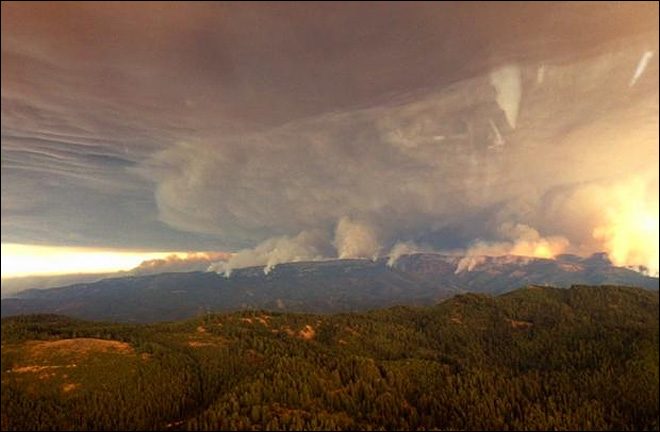
Table Mountain, Smoke Plume, KOMO TV
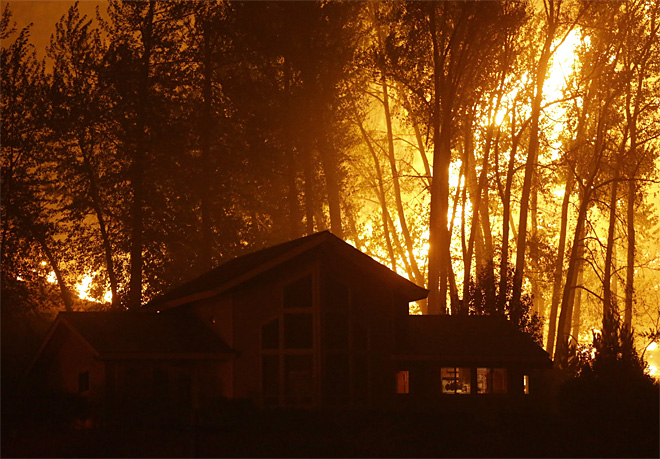
A wildfire burns behind a home on Twisp River Road, Thursday, Aug. 20, 2015 in Twisp, Wash. Authorities on Wednesday afternoon urged people in the north-central Washington town to evacuate because of a fast-moving wildfire. (AP Photo/Ted S. Warren)
A wildfire burns behind a home on Twisp River Road, Thursday, Aug. 20, 2015  (AP Photo/Ted S. Warren)
Hotshot Firefighters Pausing to Honor Fallen Firefighters Okanagan Co. WA ABC TV, August 19, 2015
Hotshot Firefighters Pausing to Honor
Fallen Firefighters, Okanagan Co. WA
ABC TV, August 19, 2015

Today I am asking you to offer prayers for those in the fire zones in Washington and Oregon and for the families and friends of the three firefighters who lost their lives in a fire storm August 19, 2015.  These men and women turn and run into the fire to protect, our homes, our loved ones, and the forests and animals that live there.  To them we owe our gratitude and prayers.

So today I ask you to offer a prayer for our all our fire fighters many who come from across the country and the globe to help protect our homes and planet, May the Holy Spirit keep them safe. Offer prayers of comfort for those who live in the fire zone and have lost their homes to the flames.  Offer a prayer for the environment and the creatures who live there. And finally pray for rain, soaking rain, without lightening, to give our land rest.

Ruth Jewell, ©August 25, 2015

A Moment of Silence – Prayerful Tuesday

Numbers 23:9a for from the top of the mountains I see him, from the hills I behold him;

Mt. Baker, 9/15/14
Mt. Baker, 9/15/14

On this beautiful Tuesday I ask only that you take a moment of silence. Hold in your hearts, the pain, suffering and loss from the deaths in Charleston North Carolina, Chattanooga TN.  To remember the loss of so many who have needlessly died from Sandy Hook, to Marysville.  As we lift up our eyes to the mountains open our hearts to those who suffer; the victims, the families. Hold the perpetrators in your heart as well, pray that light will enter the dark well they live in and bring them out of the darkness of their own making.   Amen

Ruth Jewell, ©July 21, 2015

Healing Hands – Prayerful Tuesday

Jeremiah 33:6a Behold, I will bring to it health and healing, and I will heal them

Hands of God and Adam Creation, Michangelo
Hands of God and Adam
Creation, Michangelo

In 3 days I am going to enter the hospital for back surgery.  This is an eagerly anticipated event because I have been in so much pain for such a long time and this is my best chance at relief.  But it got me thinking about healing and the value of touching and holding those in pain.  It is not uncommon to be afraid to touch or hold a person in pain, either physical or mental pain, because we don’t want to cause them any additional discomfort.  But, when it comes right down to it those of us who suffer chronic pain want to be held. To feel the gentle touch of another person helps us to know we are cared for and loved, that we aren’t forgotten or discarded.  You see there is much power in the touch of the human hand.

The hands of the surgeon will move across my back and do their best to heal the damaged spine.  The hands of the nurses will offer comfort with a warm blanket, a cool cloth for my head, or simply to touch and let me know I am not alone.  My husband’s hands will hold mine before and after surgery and they will convey his love without words even if I am unable to respond to him.  The hands of the physical therapist will hold me and support me as I regain my strength.  The silent touches, hugs, and holding all convey the message of I care for you, I love you, and you are not alone.

My prayer practice for you this week is to be aware of those in need of your healing touch.  Hold those you love in your arms,  give a hug to someone struggling to make it through the day, or gently touch someone’s hand and let them know they aren’t alone.

I also am going to ask for prayers the surgery on Friday, that it will be successful and that I will be relieved of chronic back pain.

Thank you all, blessings and peace for the coming week.

Ruth Jewell, ©July 7, 2015

Stand up and say NO MORE – Prayerful Tuesday

We are all Homo Sapiens sapiens but we will never be Human Beings until we stop just surviving and begin to live in harmony with each other and all creation.  

NO MORE
NO MORE

I have been trying to comprehend the shootings in South Carolina at the First Emanuel AME Church.  Just as the acts in other mass shootings I simply can’t get my mind around a hatred that produces such evil.  I have listened to the prayers for comfort and supplication.  I have listened, unwillingly, to the NRA and other public speakers who blame the church pastor and members, or minimize the acts of the shooter.  I can’t, or won’t, believe that 9 innocent people were the cause nor can I believe the shooter acted without encouragement.

You see, I believe we, you and I,  are to blame for what happened in South Carolina.  You and I, and everyone else regardless of skin color, privilege, ethnicity, or any other cultural classification are equally responsible for pulling the trigger and this is why I believe this.

We refuse to stand against acts of injustice, violence, discrimination, or the use of degrading speech.  We listen politely and shake our heads and tell ourselves that offering a prayer that people will change is enough.  We are afraid of what others might say about us if we stop someone in mid speech and tell them NO, I will not listen to this.  We look the other way when someone abuses another.  We tolerate public servants who degrade people of color, are poor, elderly, or have a religion they don’t follow.  We have tolerated public servants who have spoken as if they are the only ones who matter, who have verbally abused our President and anyone else they disagree with or disagree with them.

We have created this atmosphere of hate and violence found in country today.  Yes, I admit I am right there along with the rest of us.  Have I stood up and defended someone being abused, sometimes yes but not always.  I do it when it is convenient for me and that is not what we are called to do.  We, you and I, are called by the Divine to be better than that.

This week I am recommending a spiritual practice of standing up and defending the voiceless.  I am asking each of you to speak up when you hear someone abusing or degrading someone else.  I am pleading with each of you to stand and be counted when you see injustice happening.  As you go through this week remember this:

8 But he’s already made it plain how to live, what to do,
    what God is looking for in men and women.
It’s quite simple: Do what is fair and just to your neighbor,
    be compassionate and loyal in your love,
And don’t take yourself too seriously—
    take God seriously.” Micah 6:8 The Message (MSG)

Ruth Jewell, ©June 23, 2015

Laughter – Prayerful Tuesday

Psalm 126:2a our mouths shall be filled with laughter,
our tongues, with songs of joy

happy mouse

Photographer Unknown

Last Christmas Day my gift from Santa was a pinched nerve in my back. Apparently our dear Santa thought that was either funny or I was really bad last year.  Actually the problem is due to the fact that we humans stand upright. If we still walked on our knuckles like other apes we would have fewer problems. But then we wouldn’t be able to see over the tall person, in the tacky Uncle Sam hat, during the 4th of July parade would we.

Any way I digress.  What I am trying to say is in order to deal with the pain I have rediscovered the value of laughter as a spiritual practice.  Like the little mouse above I have learned the grace of sharing my joy at being alive instead of being the grouch my beloved John says I can be.  After all what does he know he only lives with me?

Spending time finding joy in all that is around me, offering that joy as prayer, and letting the response of joyful light to enter deep within does much for my own spiritual well being and for the life of those around me.

I am not the first to promote laughter as a spiritual practice, remember I said I rediscovered this practice.  But it is one we forget when life overwhelms us.  Taking ourselves seriously is important but it is also important to not go to the extreme.  No matter what we do, how we feel, or how badly things have gone there is always something to laugh at, even if it is just ourselves.

Before you all get your knickers in a knot I want you to know I am not making light of those who fight depression every day of their lives. Because depression isn’t a choice it’s an illness that needs to be addressed.  Caring for and helping those who fight mental illness is also a spiritual practice and an important one and something we all need to do.

However, for those of us who are fortunate not to experience depression learning to laugh, to find joy in life, and to bring joy to others is a spiritual practice, a spiritual practice that helps us all to not take ourselves too seriously.  For me laughing at life in general and discovering the joy in simply living each day brings me closer to God, who, I am sure, is laughing along with me.

Today I challenge each and every one of you to find something that brings you joy.  May your joy be your gift others and may it be a door to a deeper inner joy where you and the Holy Spirit have a good laugh.

Ruth Jewell, ©June 9, 2015

What will be, will be – Prayerful Tuesday

Psalm 131:1-2 God, I’m not trying to rule the roost,
I don’t want to be king of the mountain.
I haven’t meddled where I have no business
or fantasized grandiose plans.

I’ve kept my feet on the ground,
I’ve cultivated a quiet heart.
Like a baby content in its mother’s arms,
my soul is a baby content. (MSG)

Akaroa, New Zealand, April 9, 2015 taken by Ruth Jewell©
Akaroa, New Zealand, April 9, 2015
taken by Ruth Jewell©

One of the benefits of a sabbatical is having the time to stop and let the world go by. In fact I have begun to practice an extension of stopping that I call “what will be, will be.” On my trip I would wake in the morning and intentionally decided to let the day unfold as God intended for it to happen, making few plans, being open to opportunities to meet people or visit a place I hadn’t been before, taking the time to really listen to the person I just met, stopping and really seeing the world around me and the hardest of all, trying not to control my days events.  What I discovered was I was more relaxed and rested at the end of the day than this normally anxious introvert is.

This is more than mindfulness or being in the moment.  It is letting the Divine control the day, opening my eyes to the Good in each person I meet and greeting them with the Good within me.  This is an intense letting go of my expectations of how things ‘should’ be and seeing how they are/can be beautiful and insightful.

Of course I couldn’t do this every day.  Sometimes we had already made plans in advance so those intentional days weren’t every day, even on a vacation.  But I did make them happen often, and probably more often than I will be able to do now that I am home. However, I do wish to maintain this spiritual practice and hope my ability to let go and let God control my days increase. Here are a few suggestions to help you, and me, get started.  As I get better at this, or you, we might add suggestions or take some away, we will just have to wait and see how God unfolds this practice.

  1. Begin the day with silent prayer ending with a prayer for patience and openness
  2. As you start your day and continue through your tasks really notice what you are doing, see the people you are with, taste the food you eat, notice your surroundings, even the ugliest of areas has beauty if you look.
  3. As time allows stop for a moment and breathe deeply, if possible sit and let God into your day, your heart
  4. Let God into the moments of confusion and frustration, breathe deeply, say a prayer, let others express themselves and be aware of their hurt and pain, or joy and celebration. Recognize they too have the Divine within and welcome them.  (This is the hardest part, so do not be surprised if you fail, just keep trying)
  5. At the end of your day, sit again in silence; let your heart and mind reflect on your day, the good and the bad hold those you meet that are hurting in prayer, and offer gratitude for those who are celebrating.
  6. End by offering your own prayer of gratitude.

We all can’t take 6 weeks or even a day of sabbatical, but we all can let the Divine into our daily lives. We can offer one of our ‘normal’ busy days to God, and changing how we see our tasks and the people we interact with helps us change how we see the world.  It costs nothing to offer praise or condolences, or to sit and listen to someone’s story but the gift is priceless.

Blessings on your Journey

Ruth Jewell, ©June 2, 2015

Praying With Gratitude – Prayerful Tuesday

Sunset in the South Pacific April 23, 2015 (Ruth Jewell)
Sunset in the South Pacific
April 23, 2015 (Ruth Jewell)

While I was traveling in April I carried a small book with me by Mark E. Thibodeaux, SJ titled Reimagining the Ignatian Examen.[1] On our sea days when I would sit on the deck of our cruise ship and watch the ocean go by I various meditations for my daily prayer time.

Thibodeaux’s book takes the traditional Examen and includeds a specific focus to use within the prayer practice.  There are 34 different themes and I discovered a number of them to be very helpful for me as I sat in stillness. Over the next several months I will occasionally offer one of the meditations from the book for our Prayerful Tuesday. As today follows Memorial Day when we honor those who have died in service I would like to offer the meditation for Gratitude.

First let me offer a few hints from the book to get you started.

  1. Keep it short. Keeping your Examen under 15 minutes will keep your prayer in the moment and a reminder that this is a check-in with God that reorients your toward the Divine.
  2. Skip to the good parts and don’t get hung up on sin. You only want to dwell on the steps and you want to get to the point rather than linger for an extended period of time. Nor do you want to dwell on all the things that have gone bad or at least you think have gone bad.  God has the facts you don’t have to bore him with a lot of details.
  3. Sometimes, break all the rules. If you feel like it, skip over parts of the Examen you don’t feel you need to do or change them around.
  4. Experiment with different ways of journaling. Tweet-sized, or drawing, or video yourself dancing.  Do whatever moves you in prayer.
  5. Keep it prayerful. Keep the prayer God centered and don’t let your meditation drift into your shopping list or your latest aggravation.  Extra hints: A. ask God to take the lead, ask God to do your Examen for the day; B. Talk to God instead of yourself; C. listen for God’s voice, sit in silence for a moment and let God enter you

Here is how I began and closed my ritual, you may choose something totally different that fits you and the place you’re in spiritually right now:

  1. I stand still for a moment and let my mind quiet.
  2. I repeat Micah 6:8 as I sit down
  3. I place my hands in my lap, palms up, in a gesture of being open to God’s love and grace
  4. I slow my breathing and clear my mind, sitting very still for a moment
  5. I welcome God in to my heart and spirit
  6. Then I begin my Examen

Closure:

  1. I take several very deep breaths as a way to bring myself back to moment
  2. I place my hand on heart and repeat Matthew 28:20b
  3. I journal for a short while before rising from my chair.

Note: I change scriptures from time to time, substituting poetry and prayers.  Remember nothing is written in concrete.

Examen theme of GRATITUDE

  1. Begin in your usual way
  2. Ask God to reveal special blessing in your life this day. As yesterday was Memorial Day, ask God to also reveal the special blessing you’ve received from someone you loved who has passed on.
  3. Ask yourself ‘what am I grateful for today? “Who am I grateful for?’ Name the person(s) gift and offer the following “Lord, I am so grateful for your gift to me of _____.” Repeat this as many times as you need to
  4. Relish each gift in turn, letting them warm your heart. Using prayerful imagination see, feel, hear, touch, sense the gift again
  5. Let the gifts you have received dance in your memory offering your gratitude to God for each one. Offer the following; “Thank you Lord for (neighbor, family, laughter, shared meal, etc.)
  6. End in your usual way.

I truly enjoyed Thibodeaux’s focuses on my trip, they helped me retain a pilgrim attitude to the whole trip and I hope you find today’s focus helpful as much as I did.

Peace and Blessing on your journey

Ruth Jewell, ©May 26, 2015

[1] Thibodeaux SJ, Mark E; Reimagining the Ignatian Examen, Loyola Press, Chicago, IL, 2015