What does it mean to eat locally grown foods? Well it doesn’t mean you eat only food grown in your area. Rather it means you understand the importance of food or, as my friend David Bell says (Eating Locally, Artistically, justbetweentheridges.wordpress.com), the sacredness of food. Eating food from a neighbor or a local farmer has less impact on the environment than food grown at great distance from us. There are few transportation costs, less gas and oil means a smaller carbon footprint. Most local farmers use fewer pesticides or none at all that leads to less contamination of the environment and fewer chemicals to which we are exposed. The food is fresher because we are buying directly from the farmer we they can pick the fruit and produce at its peak instead of early because they don’t have to transport it as far. That leads to better nutrition for us and our families. The relationships built with farmers means you know where your food comes from and how it is produced. Those are some of the benefits but what about the sacredness of food?
Well, food is sacred. It is a gift from the Holy Presence to feed our bodies and when we separate ourselves from where it originates we lose a connection with the Holy that is basic to life itself. Throughout scripture food plays an important role in the relationship with God, and with the people of the bible. In Genesis God provided food for Adam and Eve, when they were banned from the Garden God still provided for them. The Israelites are fed by God with food from heaven; Elijah is cared for by angels; and at the end of his 40 days of temptation, the angels provided for Jesus. Ultimately we celebrate the sacredness of food every Sunday when we bless bread and cup and offer the feast of Jesus at the communion table. Food is important not just to our physical well being but to our spiritual well being as well. The work a farmer does is not only necessary to our existence it is a holy occupation, a sacred act, a connection between God, earth and us.
This week spiritual practice is to offer thanks at each meal for the food you eat. Here is the table prayer I use, you may use it or one of your own:
Holy Giver of Life, I thank you for this food before me, thank you for the earth in which it was grown, thank you for sun and rain that nurtured, thank you for the farmer who harvested it, and thank for the hands that prepared it. May this food feed our bodies as you feed our souls. Amen.
May your week be filled with wonderful food and abundant grace.
Matthew 18:21-22: 21 Then Peter came and said to him, ‘Lord, if another member of the church sins against me, how often should I forgive? As many as seven times?’ 22Jesus said to him, ‘Not seven times, but, I tell you, seventy-seven times.
This week’s prayer practice comes from the lectionary readings. In Matthew, Peter asks Jesus how many times he should forgive someone and Jesus’ response is an astronomical number. So how many times should we forgive? An infinite number of times.
I have often wondered what brought up that topic for Peter. Did he have someone he needed to forgive, did one of the other disciples do something that irritated him, or might one of his family been causing him trouble? I know those are some of the reasons I often need to offer forgiveness and to receive forgiveness.
Hurting someone’s feelings is simply part of being human and living in relationships. We are not always pleasant to be around anymore than anyone else is and so unless we forgive each other of those hurt feelings we would be carrying a terrible burden that would eventually eat away at our souls.
Several years ago a man entered an Amish school house and killed all of the children before he shot himself. It would have been understandable for the families of those children to be angry and want revenge on the shooters family, but that is not what happened. Instead they surrounded the widow and her children in love and cared for her and her children in her grief the way they cared for their own grief. A spokesperson for the Amish community said the best way to remember the lives of the children lost was to offer forgiveness and compassion to the shooters wife and child and if the shooter had survived they would have told him they forgave him. I have known Amish families and I wasn’t surprised by their actions but still it must have been very hard to offer that kind of loving forgiveness. You see I have carried around some anger for a long time for something someone did to my mother and I need to let forgive the person. It is time to simply release that anger and offer my forgiveness. In his book Spiritual Gems of Islam[1] Imam Jamal Rahman offers a meditation practice that guides us in releasing our anger and offering forgiveness even when the person is no longer with us by reaching out to the soul of the person to be forgiven. Briefly here are the steps to follow:
Begin in a state of meditation or stillness, let yourself feel safe and loved When you are ready call to the soul the person you wish to address
Give yourself permission to experience your feelings this person evokes in you. Notice in your body where those feelings are located. Feel compassion and mercy for yourself and slowly embrace those feelings
When you are ready allow the feelings of mercy and compassion as a bridge to the persons soul and tell why you are forgiving them.
Offer a prayer in the presence of the person’s soul that expresses your needs in relation to the person. State your heartfelt desire in prayer. End the prayer with whatever is in your highest interest, is manifesting for you now.
As you continue to meditate tell the person’s soul that they have been part of your life but that it is now time to let them go, with love and forgiveness. Jamal recommends a ritual of cutting cords to release your attachment to the person.
Listen for the soul of the other person expressing gratitude for this work of healing. Offer to release the person’s soul and envision his/her soul being embraced by the Holy Spirit.
As you end of your meditation, give yourself permission to be loved by the Spirit and slowly return to awareness.
The above is a brief introduction to the prayer practice but it follows all of the steps. However, if you are interested in furthering your understanding of this beautiful Sufi meditation I strongly recommend reading Imam Rahman’s book.
Peace to you all, and May your heart open like a flower in forgiving love for the unlovable and the lovable alike.
13 People were bringing little children to him in order that he might touch them; and the disciples spoke sternly to them. 14But when Jesus saw this, he was indignant and said to them, ‘Let the little children come to me; do not stop them; for it is to such as these that the kingdom of God belongs. 15Truly I tell you, whoever does not receive the kingdom of God as a little child will never enter it.’ 16And he took them up in his arms, laid his hands on them, and blessed them.
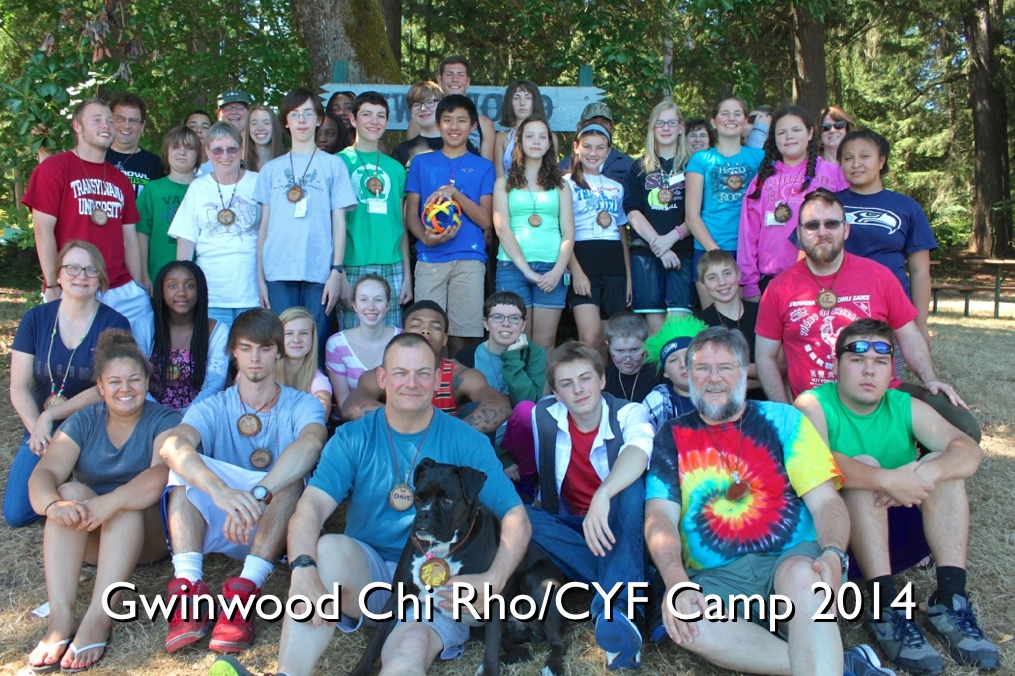
I spent last week at Gwinwood Christian Retreat Center, [(Christian Church (Disciples of Christ)] as one of the Chi Rho (Jr. High) counselors. The whole week was a wonderful experience and not just for the kids. Spending time with children and young people is a prayerful time. In the voices and faces of the young G-d is evident in all that they do, even the mischief. Jesus loved children and young people, he tells his disciples they are important to the breaking out of Kingdom of God; time spent with young people is time spent with G-d.
When you are with kids’ prayer comes in many shapes and sizes, in still and playful moments, in laughter and in tears, and in soccer and in worship. The joy of seeing a young person open their eyes to a new experience of G-d, in priceless. Hearing their voices around the campfire singing “Peace Like a River” will make you’re your heart swell.
Being a Camp Counselor is an experience you should not miss and if you are offered that opportunity please consider the prayer that is our Young People.
It is better to light one candle than curse the darkness
The news stories of the last few weeks have broken my heart. Seeing the pictures of wild fires, immigrant children, Palestine, Iraq, and the Ukraine simply overwhelms me with sadness and despair. I think how can one human being do these things to another human being, especially children. I keep asking myself when will this come to an end? I know it seems as if prayer doesn’t makes a difference and so it feels like a waste of time to offer your prayers. But heartfelt prayer often leads us into action and that is prayer indeed.
You see when many people offer prayers they, we, form a community of prayer and as a community we can do much. We can write letters, become involved in interfaith and cross cultural groups standing with those who are victims, or we can help with support first responders of a disaster, or help provide long term assistance in the recovery phase of a disaster. Each action becomes an act prayer offered by each individual and the community they belong to.
Today I am asking you to light a candle and hold the wounded, the lost, the victims, the perpetrators, all who are involved in some way with the violence of this world and the wildfires claiming so many homes. Hold them in your heart and lift them up to GOD. As responses to your prayers become involved in ways that will help promote peace, and well being. Choose the level of involvement that you are most comfortable with, the choice is yours.
But you are not in the flesh; you are in the Spirit, since the Spirit of God dwells in you. Romans 8:9a
Matthew 13:1-9, 18-23
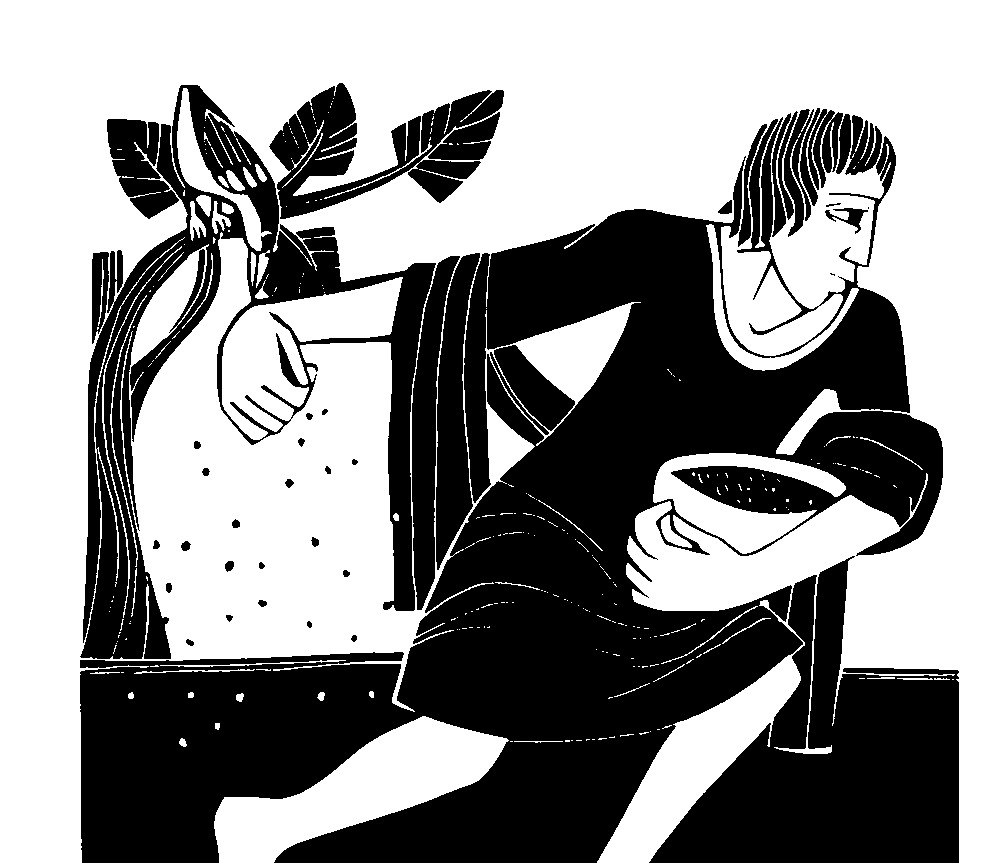
1That same day Jesus went out of the house and sat beside the lake.2Such great crowds gathered around him that he got into a boat and sat there, while the whole crowd stood on the beach.3And he told them many things in parables, saying: ‘Listen! A sower went out to sow.4And as he sowed, some seeds fell on the path, and the birds came and ate them up.5Other seeds fell on rocky ground, where they did not have much soil, and they sprang up quickly, since they had no depth of soil.6But when the sun rose, they were scorched; and since they had no root, they withered away.7Other seeds fell among thorns, and the thorns grew up and choked them.8Other seeds fell on good soil and brought forth grain, some a hundredfold, some sixty, some thirty.9Let anyone with ears – listen!’
18 ‘Hear then the parable of the sower.19When anyone hears the word of the kingdom and does not understand it, the evil one comes and snatches away what is sown in the heart; this is what was sown on the path.20As for what was sown on rocky ground, this is the one who hears the word and immediately receives it with joy;21yet such a person has no root, but endures only for a while, and when trouble or persecution arises on account of the word, that person immediately falls away.22As for what was sown among thorns, this is the one who hears the word, but the cares of the world and the lure of wealth choke the word, and it yields nothing.23But as for what was sown on good soil, this is the one who hears the word and understands it, who indeed bears fruit and yields, in one case a hundredfold, in another sixty, and in another thirty.’
The word of the Lord
Please join me in prayer:
Source of Life may all that offer this today be acceptable in your sight, Amen.
———
Today’s scripture is a popular one among biblical storytellers and so all of us have heard this many times in many ways. We have heard many interpretations as well, so many in fact that in all likelihood we all think “Oh I know that one, it’s an old one and I like what it says.” I thought the same thing, at first, but then I began to look more closely at what was being said and what I thought I heard and what I was actually hearing. I was surprised to realize, I hadn’t heard it all.
Parables are multi-layered, like a Russian doll, you think there is only one doll until you start opening it up and discover many little dolls hiding within. Parables are like that, layers wrapped in layers. I didn’t read the middle portion of this scripture where Jesus tells his disciples one very important lesson, and that is those who want knowledge will open his parables up to discover the many layers, messages, hidden within, and those who don’t will simply hear a story about a really bad farmer. So I am going to try and open this story up bit, and, maybe we will find a layer within we didn’t expect.
Because this is such a familiar story to all of us I am going to try something a little different this morning and hope that we all see this story in a new light. Because this is such a visual story I am going to lead you in a guided meditation. I am going to read only verses 1-17; so get comfortable, with both feet on the floor.
Now close your eyes and take a deep slow breath, let it out slowly, … take another deep slow breath, … let it out slowly.
You are one of the disciples of the teacher Jesus and after spending the night in the home of a friend Jesus goes out early in the morning to the shore of the Sea of Galilee. … Many people come to see and listen to this teacher of yours and to hear what he has to say, … so many in fact that there is no room for Jesus … to sit or stand on the beach. … Jesus asks one of your fellow disciples to get a boat and pull it up on the shore. … He gets in and asks everyone to sit. … You and the other disciples sit in the sand forming a half circle around the boat and the crowd finds their places behind you. … As you sit and wait for the crowd to become silent you are aware of your surroundings, … of the sound of the water lapping gently on the shore, shore birds calling, … a gentle breeze blows across the water, … and there is the pleasant smell of fresh fish coming from the boat. … The sun hasn’t yet climbed far into the sky but it is warm on your back and the sand is still comfortably cool.
Jesus begins to speak.
“‘Listen! A sower went out to sow. … 4And as he sowed, some seeds fell on the path, … and the birds came and ate them up. 5Other seeds fell on rocky ground, … where they did not have much soil, and they sprang up quickly, since they had no depth of soil. 6But … when the sun rose, they were scorched; and since they had no root, … they withered away. 7Other seeds fell among thorns, and the thorns grew up and choked them. … 8Other seeds fell on good soil and brought forth grain, … some a hundredfold, some sixty, some thirty. … 9Let anyone with ears – listen!’”
You and your fellow disciples are confused by the story … it seems simple yet you know there has to be more to it … or Jesus wouldn’t have told it. … So one of the disciples ask a question; … “Teacher, … ‘Why do you speak in parables? … We are confused but we know there is more to this than a simple story’”
Jesus smiles at you and says:
‘To you it has been given to know the secretsof the kingdom of heaven, … but to crowds … it has not been given. … 12For to those who have, will be given more, … and they will have an abundance; … but from those who have nothing, … even what they have will be taken away. … 13The reason I speak to them in parables is that … “seeing they do not perceive, … and hearing they do not listen, … nor do they understand.” … 14With them indeed is fulfilled the prophecy of Isaiah that says:
“You will indeed listen, but never understand,
and you will indeed look, but never perceive. 15 For this people’s heart has grown dull,
and their ears are hard of hearing,
and they have shut their eyes;
so that they might not look with their eyes,
and listen with their ears,
and understand with their heart and turn—
and I would heal them.” 16But blessed are your eyes, … for they see, … and your ears, … for they hear. … 17Truly I tell you, … many prophets and righteous people … longed to see what you see, but did not see it, … and to hear what you hear, … but did not hear it.
[Pause for moment and then ring the chime]
Well did you hear a new message in the story? Did you hear the story open up in a new way and did you find a new layer that you hadn’t seen or heard before? I cannot speak for you I can only speak of my own heart. I can only speak of what I have heard. And, I would like to offer my budding new understanding of this parable, a new layer for me. Your new layer maybe different from mine and that’s ok, we learn from each other and my layer of this story may or may not resonate with yours but it might be a layer you hadn’t seen before and cause you to think. I hope you will tell me yours sometime so that you will cause me think.
So here is the new layer I discovered as I listened to Jesus. I didn’t feel like a disciple in the story, rather I felt like one of the crowd who was thinking about following Jesus. When I heard the story I thought Jesus was comparing me to the seed being sown and I wasn’t sure I liked what I heard. I was close enough to hear the question of the disciples and Jesus answer and my first thought is “How rude of Jesus not to make the message plain to all of us.” Then I thought again, “OK, if there is a hidden message, what is it? And, how do I tease it out?”
As you can see this internal conversation has caused me to almost miss the rest of the Jesus’ answer so I listen again and hear.
“18 ‘Hear then the parable of the sower. 19When anyone hears the word of the kingdom and does not understand it, the evil one comes and snatches away what is sown in the heart; this is what was sown on the path. 20As for what was sown on rocky ground, this is the one who hears the word and immediately receives it with joy; 21yet such a person has no root, but endures only for a while, and when trouble or persecution arises on account of the word, that person immediately falls away. 22As for what was sown among thorns, this is the one who hears the word, but the cares of the world and the lure of wealth choke the word, and it yields nothing. 23But as for what was sown on good soil, this is the one who hears the word and understands it, who indeed bears fruit and yields, in one case a hundredfold, in another sixty, and in another thirty.’”
Ah … the story isn’t about being a careful farmer and planting the seed in good, rich and well watered soil after all. Rather it’s about who will have the staying power to follow Jesus and spread more seeds. OK, I get. But I still have questions. You see I do some farming, and yes my harvest is best when the seed is grown in the right place, but like all good farmers I’ve learned that seed that falls in difficult soil has its good qualities as well, it is often more hardy and will survive when no other seed would. What would it look like if considered for a moment the seed in this story and thought about how what the seed does and how that helps the sower? If I am going to be a seed for the Kingdom don’t I need to be strong?
Don’t I really need to work hard and build up my strength because this won’t be an easy task? So maybe falling on dry hard ground where I have to quickly dig deep into soil, taking up as much water as I can and learn to make efficient use of nutrients when they are available in order to grow. Wouldn’t that be a good thing? I know seeds that do that and they do well in dry places.
Or, what about the seed that falls on thorny ground and to prevent being overrun by thorns adapts and develops protection that would keep the thorns from killing me. I’ve seen plants do that as well so I know it works and such plants thrive. Or, consider the seed that falls on rocky ground. Here I have to learn to extend my roots around obstacles, breaking down some of the rocks into new soil. With deep, strong roots, I will do quite well, I know that because I’ve seen plants that do. So while I’ve not landed in an ideal place, I learned to survive and I may have produced only 10% compared to the 30 or 60% of the seeds planted in good soil. But that’s still something and there will be seeds for the sower to spread around in the next year. And if there is a draught, or someone seeds the farmers field with weeds, or he has to sow his seed in a rocky field I know that the seed that has had to struggle will do very well and produce a crop, which could mean the difference for the farmer between eating and starving.
How do I compare that scenario to Jesus answer? Well being a seed on the dry, hard ground of kingdom means I have to work hard at understanding. Not giving up but keep digging for the treasure found within me and those around me even when it seems hopelessly dry. When, I land in an area where the temptations of the world try to tear me away from my path to follow Jesus, I have to work harder to keep the message of the kingdom in front of me while I work within the world. And, when I hear the kingdoms message and find it sweet like honey but the world lays obstacles in my path I have to remember to let my roots grow with study and contemplation in order to break down the rocks in my path so that I am able to spread my seed-children, the good news of the Kingdom, in new soil.
Why wouldn’t I want to be planted in nice rich soil, with plenty of nutrients, in other words, why would I not like the task of spreading the word of the kingdom to be easy? Well, from a farmer’s perspective, seed that is always grown in nice rich soil does produce a lot of seed; however, a lot of that seed will not have the ability to fight off disease, or draught. That means if there is any kind of environmental stress your crop will most likely fail. However, if you harvest seed from plants that have had to withstand stress the resulting plants will be strong and healthy even under stressful conditions and the farmer has a crop to sell and eat.
It’s the same with the seed of the kingdom. If receiving the word is easy and you don’t have to work for it then when something challenges you, you and your community will struggle and maybe not survive. It has been my experience that working hard for anything means I value it more and I learn to distinguish what is false and what is true because I need to do it to live into the message Jesus taught me.
Jesus told this story because he knew what his disciples, and anyone else who followed him, would need strength in order to stand against the world’s trials, temptations, and obstacles as they spread the word of the kingdom of God. He knew they were going to be tested with many trials and how they responded to those trials would test their resolve and determine whether or not the Good News was spread. So his disciples were going to have to dig deep into inner territory, sending down strong roots into their soul to anchor their faith and learn to protect themselves from thorny individuals by loving instead of hating them. So you see it wasn’t the easy road and productive communities that defined the movement called THE WAY, it was those who experienced suffering, struggle, trials, doubts, who loved their enemies despite persecution that defined the followers of Jesus.
That definition of struggle and hardship is what defines us today, or should be anyway. Maybe in years past some of us have had it so easy to be “Christian” that we have forgotten what it means to be a follower of THE WAY. Those who cannot bring themselves to dig deep within, to doubt, question and be willing to live into mystery and paradox may fall by the way side. But some will strike out into the wilderness and learn how to thrive and how to spread the Good News despite draught, thorns or obstacles.
So my question to each of you is what do you identify with in this parable? Mine was the seed on less than ideal ground. Are you the seed on good soil, but when disaster strikes you are unable to go on? Or, are you the seed that lands in dry, thorny, rocky land, are you the seed that fights and struggles bringing into fruition the best fruit you can? We all have choices; I’ve chosen what I will do. How do you choose?
Saturday, June 21st, was the summer solstice and I spent the day in a solstice retreat. It was a time of quiet meditation, laughter, the beginning of new relationships and the renewal of others. One of our discussions covered how all of us have a ‘longing’ for the companionship of others. I, like most people, was born into a family that served as my primary home of ‘be-longing’ for many years but now the events of normal life has separated me from most of my birth family. As a result I created my own ‘family’ through relationships with good friends, companion animals, and my husband and his family.
I had never thought of either a birth-family or a self created-family as a holy thing until I read a book by the late John O’Donohue, Eternal Echoes: Celtic Reflections on our Yearning to Belong.[1] In the very beginning of the book O’Donohue says “When you suppress your wild longing and opt for the predictable and safe forms of belonging, you sin against the rest of Nature that longs to live deeply through you” (pg 5). When we deny our need to belong in relationship with others we deny our true selves and we deny God’s gift of grace of the warm embrace of those who care for us. Yes being in relationship with any other being entails risk; the risk of loss and grief, and the risk of being betrayed. Yet while all of those risk may/do/will happen the benefit joy of knowing there is someone who understands you and is willing to be there for you totally outweighs any sorrow that may occur in the future.
Yes I have lost people I had been in relationship with for many years to death, relocation, and arguments. And losing a friend because of anger or betrayal is the hardest lost for it means a break in the sacred bond God had gifted us with. Today I am more aware of my relationships, looking for ways to nurture them instead of poisoning them. Belonging requires hard work, but like a garden the fruits of the harvest are bountiful and delightful.
Today I ask you to hold in prayer your relationships with your family, friends, companion animals, God and draw strength from knowing you are not alone even when the night is the darkest.
Roman 6:1-11 What then are we to say? Should we continue in sin in order that grace may abound? 2By no means! How can we who died to sin go on living in it? 3Do you not know that all of us who have been baptized into Christ Jesus were baptized into his death? 4Therefore we have been buried with him by baptism into death, so that, just as Christ was raised from the dead by the glory of the Father, so we too might walk in newness of life. 5For if we have been united with him in a death like his, we will certainly be united with him in a resurrection like his. 6We know that our old self was crucified with him so that the body of sin might be destroyed, and we might no longer be enslaved to sin. 7For whoever has died is freed from sin. 8But if we have died with Christ, we believe that we will also live with him. 9We know that Christ, being raised from the dead, will never die again; death no longer has dominion over him. 10The death he died, he died to sin, once for all; but the life he lives, he lives to God. 11So you also must consider yourselves dead to sin and alive to God in Christ Jesus.
Matthew 10:24-39 ‘A disciple is not above the teacher, nor a slave above the master;25it is enough for the disciple to be like the teacher, and the slave like the master. If they have called the master of the house Beelzebul, how much more will they malign those of his household! 26 ‘So have no fear of them; for nothing is covered up that will not be uncovered, and nothing secret that will not become known. 27What I say to you in the dark, tell in the light; and what you hear whispered, proclaim from the housetops. 28Do not fear those who kill the body but cannot kill the soul; rather fear him who can destroy both soul and body in hell.* 29Are not two sparrows sold for a penny? Yet not one of them will fall to the ground unperceived by your Father. 30And even the hairs of your head are all counted. 31So do not be afraid; you are of more value than many sparrows. 32 ‘Everyone therefore who acknowledges me before others, I also will acknowledge before my Father in heaven; 33but whoever denies me before others, I also will deny before my Father in heaven.34 ‘Do not think that I have come to bring peace to the earth; I have not come to bring peace, but a sword. 35 For I have come to set a man against his father,and a daughter against her mother, and a daughter-in-law against her mother-in-law; 36 and one’s foes will be members of one’s own household. 37Whoever loves father or mother more than me is not worthy of me; and whoever loves son or daughter more than me is not worthy of me; 38and whoever does not take up the cross and follow me is not worthy of me. 39Those who find their life will lose it, and those who lose their life for my sake will find it.
For 10 years I was an environmental consultant performing Human Health and Ecological risk assessments for the military and private concerns. One of the uses of my reports was to define what would be the cost of a cleanup of a contaminated site both as risk of exposure and monetary cost of cleanup. The EPA has a basic cleanup target of 1 in 10000 chances of illness or death from exposure to contaminated soil, water, or air. Of course all is negotiable but that is what is desired. The EPA doesn’t really care about cost but companies do and so does the military. Cleanup is not popular with those who own the property. There is a balancing act that goes on at the negotiation table between the EPA and the owners of the property. The property owners want to remove as little as possible to keep cost down and the EPA wants as much removed as possible to keep risk down. When you add in resident and ecological groups to the mix you probably get some idea of how complicated such negotiations can be. But the key word is negotiable.
Matthew writes in this passage what the cost of discipleship will be for those who follow in the path of Jesus. He tells his community what the risks are when you commit to following Jesus’ teaching and he doesn’t mince any words and the cost is not negotiable. For those who are faithful to God and Christ will face criticism, be misunderstood, run out town, and face death at the hands of the Romans just as Jesus did. How is that for a recruiting statement? I can hear the thought of a potential follower now. “Ok, my family will disown me, I will most likely be run out of town on rail, I will have my words twisted around to mean something other than what I said, and the Romans are going to kill me, tell me again why I should sign up for this.” If a follower of the WAY ever thought about the risks they wouldn’t sign up. I mean would you give up everything to go out and teach others about the WAY of Jesus. Would you give up the king-size bed, the running water, the clean clothes, or 3 meals a day? What is amazing to me is that anyone actually did and I am grateful to those who had, and have, the courage to walk that difficult path.
Matthew wanted his community to understand those risks while having the courage to choose a way of life that would be difficult but result in a life lived within God as found in the life of Jesus. Matthew’s words challenge us to stand up for injustice just as Jesus did. To use our voice to speak for those who are silenced. To live a life of compassion and peace towards everyone no matter how different they may be from us; from a different culture or socio-economic class, differently abled, or differently gendered, or (and this is the hard part) even if they have done harm to us or someone we love. Matthew says we are called to right injustice even at the expense of our own comfort, reputation, relationships, financial security, or even our lives. That is a hard decision to make and I know I (as a risk assessor and a seminary student) that discernment before that decision to be baptized and commit to that life is often very difficult. And let’s face it the reasons to proceed are not all that well laid out. So where do we find some answers.
Well before Matthew wrote his Gospel Paul wrote a letter of introduction to the Roman community and in that letter we have this short passage that summarizes reasons for following the WAY and those reasons are just as valid today as they were in the 1st century. Following the WAY was dangerous and even Paul doesn’t deny that but the benefit is a life lived into love.
Paul tells the Romans, and us, that when we commit ourselves to being baptized we are baptized into the death and resurrection of Christ. Just as Christ died to sin and lives to God we are to recognize our baptism as dying to sin and living into God. Notice I didn’t say Christ died FOR our sins, Paul did not believe Jesus died because God wanted a sacrifice for our sins. No, Jesus death on the cross saves us because God overcame and said No to sin through his resurrection of Christ. God’s message of Jesus’ life, death, and resurrection was to reconcile those who are separated from God back into those loving arms. Called Atonement, or better still “at-one-ment,” reconciliation is the means of re-membering those who have spent their lives lost in a wilderness far from God back into the body of God through Christ.
When Paul writes “So you also must consider yourselves dead to sin and alive to God in Christ Jesus” he is talking about saying no to sin and moving toward God as experienced in the life, death, and resurrection of Jesus. Marcus Borg and John Dominic Crossan in their book Meeting Paul open the verse 6:3-4 to a new insight
“all of us who have been baptized into Christ Jesus were baptized into his death? 4Therefore we have been buried with him by baptism into death, so that, just as Christ was raised from the dead by the glory of the Father, so we too might walk in newness of life.”
We are graced with newness of life that includes a transformed way we see our world. A commitment leading to the ritual sacrament of Baptism results in a “renewing of [our] minds.” We being to see the world differently, living our lives into a richer and fuller life in love. We no longer see the world as other and different from ourselves but rather we see ourselves and the world as part of the body of God and Christ.
For Matthew, for Paul and for us these changes and commitments have political implications. It means we as followers of the WAY are to stand against the “wisdom of this world” as it is known today. We are to refuse to follow a path that results in harm, injustice, or death for anyone, whether we agree with them or not.
That is hard to do, I know it is hard for me. I too have watched the news and read the papers about mass shootings, people who demonize the poor and needy and I get angry. Sometimes I say things I might regret because I want them punished; you see I also forget they are part of God’s body. As a consultant I tried to tell the truth as I calculated it and saw it but I dealt with people who had very different agendas from mine. I grew frustrated and angry at people who only looked at the “bottom line” or a single unachievable number instead of considering how what they had done, and will do, affects those who live in the area, human and ecological. I wanted things to change and it wasn’t until I realized that the change must begin with me that I knew what I would do. I had to stop seeing the world with a “bottom line” perspective because all of creation, human and non-human are simply too important..
In Matthew Jesus says “Those who find their life will lose it and those who lose their life for my sake will find it.” The life I lost is the one that holds tight to the world I see in the news reports while the life I gain is a life lived in relationship with God. While I often forget that I try to remember, what all of us need to remember are these words of Jesus’ “Do not be afraid … I am with you always, to the end of the age.”
Words are many things:
hurtful, uplifting, loving, hateful,
words are either —
fertilizer for the growth of new life, … or
poison for the soul.
Actions do many things:
open or close door, feed or starve the hungry,
actions can —
lift up the soul into the sun, … or
drive the soul into the ground.
Life versus existence
which will it be.
To live life means;
speaking for the voiceless,
encouraging the timid, guiding the young,
sharing from your abundance, and
laughing until the dawn.
To exist means:
storing your treasures in leaking vessels,
hiding fearfully behind walls of your own making,
distrusting those closest to you, and
being alone even in a crowd.
Life is to be lived
to share good fortune and bad,
to share laughter and tears,
to offer a helping hand,
to dance and sing together
Giving is better than hording
light of life is better than the darkness of existence.
Life for all is at its best when
all have what they need, enough
encouragement, love, compassion, justice, mercy.
Amelia with her brother Liam and Suzie, the Chihuahua
Amelia is a 5 year old, little girl who is a mixture of tomboy, imp, princess and budding scientist but most of all a Grammy’s delight. Walking home from school with Amelia is always an adventure. Today we hadn’t gotten even 100 feet from her school when she bent over and said, “Look Grammy, I found a purple maple seed.” Amelia hands me the seed and says “now you carry this for me I want to show dad.” Off she runs to her next exciting stop, which is about 50 feet ahead. “Look what I can do Grammy,” she said as she runs up a yard to the brick wall and with one heart stopping leap lands safely on the ground in front of me. “My, my you are so good at jumping,” I said as I pushed my heart back into my chest.
Running ahead of me again she suddenly stops and gets down on her knees, as I walk up to her she is talking to a small ant hill. “Look how busy they are, Grammy, where are they going so fast?” “Well,” I tell her, “this is a new ant hill so they are just building it up right now and gathering in some of the leaves for food. Don’t disturb the nest or they will bite.” “Really,” she says as she prepares to test my theory. “Yes really, and those bites hurt so let’s leave them to their work, OK.” “Ok,” and she is off again.
“Help me look for snails, Grammy.” Amelia has a love affair going with snails of every shape and size. She picks them up and carries them carefully along with her, until, that is, she forgets she has them in the heat of a new discovery and then the snails are old news. Sometimes she carries them all the way home and we release them into the backyard and into the wild.
Every moment with Amelia is a discovery in a half, every rock a treasure trove, every leaf a rare jewel to be enjoyed. Worms and snails are potential friends or pets to be trained. We sing songs to stop traffic on our progression across a busy street and she dances down the street to a tune in her head.
Oh the life of a 5 year old, a world of discovery ahead and an imagination that has no boundaries. Where does all of the enthusiasm go to as we grow older? Is life so trying and stressful that we forget just what it means to be in the moment? As I watch my little adventurer skip down the sidewalk I am trying to remember what it was like to be that carefree, and find delight in a snail slowly making its way up a wall.
Maybe that is what grandchildren are for, to awaken in each of us that little boy or girl lost in the mists of time. To remind us of the important things like snails, red leaves, purple maple seeds and sunshine and shadow. Amelia has reopened a door I thought was shut and locked. A part of me remembers and dances with my little genius, princess, geologist, archaeologist, biologist, and junk collector as we walk home from school.














 A Quiet Walk