GOD SAID

Sunrise, Edmonds WA September 2, 2013 Ruth Jewell
Sunrise, Edmonds WA
September 2, 2013
Ruth Jewell

I have been trying to make sense of the events of the last week. The deaths of two black men at the hands of the police, the Dallas Police targeted and killed, and the bombings in Iraq and Turkey. And, just today a new shooting in Michigan. My heart is filled with sadness and tears and I could only cry out to God “Where Are YOU.”

“God where were you . . .
when suicide bombers chose to end their lives and take the innocent with them?
Where were you when 29 men and woman
enjoying a night out were used as target practice?
Where are you when cops shoot people,
when people shoot people,
when cops are targeted,
When people die, the good and the bad?”

God where are you . . .
when we are filled with emptiness by shooting after shooting,
when bombings and assaults become common place?
Where are you when we turn the news on and
another child has died, another cop is killed,
another person of color, differing abilities, or characteristics is assaulted or killed?”

“Why Oh God do you not answer?”

God said “I am there . . .
Holding the bodies as they bleed,
I am there leading the survivors’ out of danger.
I am there, holding the victim’s family’s in my arms
I am there in the broken hearts of witnesses, law enforcement.”

“When the darkness is greatest
I will sit with you, and listen to your sorrows,
I will hold you in my arms when you are weary.”
All I can do is lead the dying home to my arms,
to comfort those left behind, if they let me.”

“When pain and grief grip you
I will be there to tell you everything will be alright.
When you scream into the night,
I will come and comfort you,
I will dry your tears, and wrap you in my embrace.”

“I will be there when you are weary and in pain,
I will be there to lift you up, and comfort you,
All you have to do is call”.

God said, “I cry when you do not hear my voice, and
I cannot stop you from harming each other,
that choice is yours alone.

“All I can do is encourage each of you to stand up for justice and mercy.
All I can do is hope your hearts will soften
and let the love I have for each of you awaken your love for each other.
All I can do is wait for you to choose the path of justice, mercy, love and peace
between your selves and all that is created.”

God says “I gave you the choice of right or wrong,
It is up to you to choose. I will not make that choice for you
nor will I force you to choose one path over another!”

“You asked for freedom, it is your responsibility to choose.
Choose to use that freedom wisely.”

Ruth Jewell ©, July 11, 2016


Random Acts of Kindness – Prayerful Tuesday

“Thus says the LORD of hosts, Render true judgments,
show kindness and mercy each to his brother.”
–Zechariah, 7:9

“You have heard it said love your neighbor and hate your enemy.
But I say to you, Love your enemies and pray for those who persecute you.”
–Matthew 5:43-44

JPG-Single-Act-of-Kindness-Quote-Amelia-Earharthttpwww.uniqueteachingresources.com Quotes-About-Kindness.html
http://www.uniqueteachingresources.com/Quotes-About-Kindness.html


Thursday I am taking part in the Face book event 24 Hours of Random Acts of Kindness.  I don’t have to DO anything specific, or travel anywhere.  The only thing I am asked to do is perform some act of kindness for someone who doesn’t expect it.  Sounds simple, I guess I will see.

I have been trying to decide what I would do, help a little old lady across the street, well I am a little old lady so I will leave that for someone else to do.  Maybe take cookies and give them a way, Now that I could do.  Wait a minute; I do believe I am trying to plan for something for a random event now that can’t’ be right.

My favorite Biblical verse comes is Micah 6:8 “He has told you, O mortal, what is good; and what does the Lord require of you but to do justice,  and to love kindness, and to walk humbly with your God?”  Nowhere in this small verse does it say we are to plan to do any of that. Rather when we see injustice we do something to correct it. When we see the embodiment of God we are to walk together.  When we see someone, be it human or otherwise, in need of kindness we are to offer it freely with no expectation of being acknowledged or of a being paid back.  We are to show kindness where it is least expected, recognizing the blessedness of the recipient. Even if the freely given gift is refused or unacknowledged we have done what is right in the eyes, heart and mind of the Spirit.

Oscar Hammerstein wrote: “A bell’s not a bell ’til you ring it – A song’s not a song ’til you sing it – Love in your heart wasn’t put there to stay – Love isn’t love ’til you give it away!” To give the gift of kindness is to put your love into action.  What a better way to express God’s great gift of love, the Teachings of Jesus and the Holy Spirit, than by giving it away.

So this week I am going to challenge you to practice the spiritual practice of a “Random Act of Kindness.”  Sometime this week do kind act for someone or some creature when they least expect it.  If you want to up this challenge a notch, try doing it anonymously and let your heart warm with the thought of the gift being received.

May your week be filled with kindness; kindness received and kindness gifted.

Ruth Jewell, ©May 17, 2016

To Be a Blessing – Prayerful Tuesday

Be generous: invest in acts of charity.
Don’t hoard your goods; spread them around.
Be a blessing to others. This could be your last night.
— Ecclesiastes 11:1a, 2, The Message

Mom and Pippin, 1988 bMy Mother 1988
Steven F Austin St. Park, TX
©Ruth Jewell, 2016

A recent meditation had the following journal question “If you knew you were dying what would you write or say to your children or grandchildren?”  That question stopped me cold.  What would I say to grandson and granddaughter, Liam and Amelia?  How would I describe my love, and fears, for them?  How would I tell them of my life lived with my own loves, fears, and regrets? What would I say, what would you say?

During this Easter season I have been writing about the ways we express our feelings of the resurrection, and the many ways we witness to others our faith in the resurrection.  Sharing ourselves with the next generation is also a witness to our beliefs in the resurrection. The question above is an important one, challenging us to inspect our past and present lives and how that information could impact the lives that follow us.  I thought long and hard about what I would, will, say to my grandchildren and all of it wasn’t bright flowers and sunshine.

What might say, well I would of course tell them I love them very much, how grateful I am for having them in my life, and I will miss them.  I would ask for their forgiveness in my part for leaving them a world that is wounded and in pain, and a political system that doesn’t function.  I would tell them that no matter what they do in life their parents and I would always love them from wherever we are.  While their future is impacted by the world I leave behind it is still their future to make into what ever dream they reach for.  Following those dreams may not be easy, or always fun, but are worth the effort if they truly believe in them.  I would also tell them it is OK that they don’t believe in the Divine as I do, but, discovering their own pathway to something greater than themselves is important in finding their moral, loving, compassionate lives.  I would want them to stand up against injustice even when it is hard to do so, to see the good in people and all creation even when the night is darkest.  I want them to climb their most difficult mountains and to not be afraid of the challenges because I will be right there beside them cheering them on. I want my grandchildren to be fearless in the face adversity, to be strong when everyone else is weak, and to be gentle when touched by beauty.

What I want most for my beloved Liam and Amelia is to live a life that is not self-centered but other-centered. I want them to live a life that sees the best in the worst, the beauty in the ugly, and love in what is hatred.  I can’t leave them with much but when I make my final passage from this world to the next I want them to know I cared about them, and want them to be the best at whatever they want to be.

So that is some of what I would tell my grandchildren, what would be in your letter to your children?  We live in and uncertain world and we never know when our last day in this world will arrive.  We all too often leave too much unsaid to those we love the most.  So my journal question to you this week is: “If you knew you were dying what would you write or say to your children or grandchildren?”

May you find the words in your heart for those you leave behind.

Ruth Jewell, ©April 26, 2016

Prayerful Decisions – Prayerful Tuesday

If I speak in the tongues of men and of angels, but have not love, I am a noisy gong or a clanging cymbal. – 1 Corinthians 13:1


Photo by Joe Beck, Unsplash

Today is Super-Tuesday, a day when political parties in mostly southern states choose who they want to run as their Presidential Candidate.  So far in this election we have heard the traditional political rhetoric and a great deal of speech filled with anger, hate, bigotry, greed and plan nonsense. My choice of candidate is not important, no, rather what is important is that each of us look carefully at who is running and who has the American peoples best interest.  Not just white, male, and wealthy, but all Americans regardless of socioeconomic status, choice of faith, where they come from, color of their skin, age, or gender identification. All Americans regardless of whether or not they have U.S. citizenship or hopes to attain American citizenship all must be considered equal participants in our society.

In the Gospel of Matthew Jesus says “No one can serve two masters; for either he will hate the one and love the, or he will be devoted to the one and despise the other. You cannot serve God and mammon.” We cannot serve the people, the Divines own people, if we serve our own self interests. When we love power, money, and status more than we love the people of God, whoever they may be, pain and suffering will be, has been, the result.  We  who call ourselves followers of the Divine, with whatever faith tradition we  choose, must not let those whose primary interest is greed, hate, and power, and not the American people, or the people of the world be elected into a position where they could destroy the fabric of our nation and world.

So today, offer prayers for those voting, that they think carefully of their choices.  To refuse to let false, hateful and self-serving rhetoric sway them.  Rather pray that all people will stand together to push back the evil we are seeing displayed during this election year.

My prayer:  May the hand of every voter be guided by the desire for a country that holds sacred the lives and well being of all who live in American and beyond.

Ruth Jewell, ©March 1, 2016

A Thanksgiving Prayer? – Prayerful Tuesday

for I was hungry and you gave me food,
I was thirsty and you gave me something to drink,
I was a stranger and you welcomed me,

Matthew 25:35

Artist Unknown
Artist Unknown

Giver of abundant gifts, on this Thanksgiving we celebrate . . . we celebrate. Ah what are we celebrating God?  It seems to me that we have nothing to celebrate, nothing to be thankful for, except empty hearts and soulless comments.

Too many children are dying before our eyes on beaches, in stormy seas, in mountain passes, and refugee camps.  Too many are blinded by their fears, unable to see the path to your love.  I don’t know God, I can’t really think of something to be thankful for this year, you see my eyes are clouded with tears and my heart is screaming in pain for those who are being denied entry into our so called circle of love.  By the way if it is a circle of love would there really be boundaries?

God I don’t know how to say this but I do believe we humans have failed you and maybe it is time to pull the plug on this experiment. We are tired, I know I am, so please just let us go and let us be thankful for the too few moments when we recognized your love and shared it with the world.  Let some other species give being your priestly people a go at it. That task is very plainly to difficult for us. Dogs would be a good choice they love without condition just by being who they are, yes; Dogs would do a good job of being your treasured people.

So I guess I do have something to be thankful for.  I am thankful for your love, for your compassion, your presence in the darkest of times.  I am grateful for the times we danced in the sunlight, and sang at the moon. I am grateful for your faith in us when we have no faith in ourselves.  I am thankful for the many blessings you have given us, sunrises and sunsets, a newborns smile, oh so many gifts. So if it’s alright with you God I will lay my gratitude down at your feet and if it pleases you Lord, I would like to come back as a Dog.    AMEN

Ruth Jewell, ©November 24, 2015

Psalms of Lament and Hope – Prayerful Tuesday

Paris, Beirut, Syria, Iraq, The World God in your mercy, hear our prayers
Paris, Beirut, Syria, Iraq, The World
God in your mercy,
hear our prayers

The only gift I have to offer this week is my sorrow for Paris, Beirut, Syria, Iraq, and all of us.  So I offer the Psalms I go to when I am in the midst of sorrow and pain.  May your hearts be comforted by the words of the psalmist and may you find solace knowing others cry with you.

Psalm 36:1-4 (MSG)
A David Psalm
1-4 The God-rebel tunes in to sedition—
all ears, eager to sin.
He has no regard for God,
he stands insolent before him.
He has smooth-talked himself
into believing
That his evil
will never be noticed.
Words gutter from his mouth,
dishwater dirty.
Can’t remember when he
did anything decent.
Every time he goes to bed,
he fathers another evil plot.
When he’s loose on the streets,
nobody’s safe.
He plays with fire
and doesn’t care who gets burned.

Psalm 42 (NRSV)

1As a deer longs for flowing streams,
so my soul longs for you, O God.
2My soul thirsts for God, for the living God.
When shall I come and behold the face of God?
3My tears have been my food day and night,
while people say to me continually,
“Where is your God?”
4These things I remember, as I pour out my soul:
how I went with the throng, and led them in procession
to the house of God, with glad shouts and songs of thanksgiving,
a multitude keeping festival.
5Why are you cast down, O my soul,
and why are you disquieted within me?
Hope in God; for I shall again praise him, my help
6and my God. My soul is cast down within me;
therefore I remember you from the land of Jordan
and of Hermon, from Mount Mizar.
7Deep calls to deep at the thunder of your cataracts;
all your waves and your billows have gone over me.
8By day the Lord commands his steadfast love,
and at night his song is with me, a prayer to the God of my life.
9I say to God, my rock, “Why have you forgotten me?
Why must I walk about mournfully
because the enemy oppresses me?”
10As with a deadly wound in my body,
my adversaries taunt me,
while they say to me continually, “Where is your God?”
11Why are you cast down, O my soul,
and why are you disquieted within me?
Hope in God; for I shall again praise him,
my help and my God.

Ruth Jewell, ©November 17, 2015

FALL

Photo by By Sebastian Unrau, Unsplash,  November 2, 1015
Photo by By Sebastian Unrau, Unsplash,
November 2, 1015

Fall has finally arrived in the Northwest. The trees are shedding their leaves, my garden is clean all ready for winter, and the air has turned cold.  The land is preparing to sleep until the earth shifts again and the warm sun returns. I took a walk through Yost Park with the dogs the other day and the air was rich with the scent of wet and rotting leaves.  This is a time for animals to prepare for the coming winter when food is scarce and the land is cold and wet.

Fall is also a time for us to slow down, to sit with a cup of warm tea, coffee, or coco and let the seasons turn.  A time to pull out the afghans and a good book. It is also a time of reflection. It is a time to remember the joys of spring and summer and the many joyful moments.  A time to ask ourselves questions: what have I done this year that will leave it a better place?  Have I spent time caring for others, standing up when injustice rears its ugly head?  Have I taken care of my own spiritual needs? Have I remembered to stop, recharge and renew myself so that I will have the energy to be present to those in need?  This is the time to look back at what I could have done better, and to look forward to how I will improve.  It is also a time to reflect on how I have done my best with all I have even if I didn’t achieve all I wanted to; remembering that doing my best was enough.

This week I challenge you to sit down with a warm cup of something, or maybe a glass of wine, and spend some time on your past year.  Let the joys and celebrations provide the energy to improve what didn’t go so well.  Laugh, cry, and dance your memories of spring and summer.  Remember the sun and wind on your face.  Look back at your achievements and at what didn’t get done.  It is a time to forgive yourself and others. Were you the best you could be?  As the summer ended did you leave the earth a better place, did you care for the disadvantage, or do something to respond to the many, way too many, disasters of the last year?  Look toward the coming year and ask yourself how can I be someone who cares about mercy, justice, and peace?  How can I care for my own spiritual well being?  These aren’t easy questions, and they may take many days to reflect on. But it is dark early now, and it’s cold outside so curl up in your lap robe and reflect on who you are.

May the coming days of fall and winter be a time of rest for your spirit and a time to prepare for the next spring and summer.

Ruth Jewell, ©November 3, 2015

Overwhelmed with Sadness – Prayerful Tuesday

Band-Aids don't work anymore, Huffington Post
Band-Aids don’t work anymore, Huffington Post

I have been trying to think about what to say about the Umpqua shootings but my heart is breaking and my mind won’t process this.  So I am asking you for your prayer this week to write letters to your legislators about gun legislation, talk to your neighbors about keeping safe, and get involved in your community and/or church youth programs.  Talk kids and get to know your own children and the children they play with. Keep the kids involved with family and community and help them find safe ways to release anger and frustration.  If you need a gun for hunting then talk to every member of the family about gun safety and keep your guns in a secure gun safe when you aren’t using them.  I know that isn’t much but if all of us become more aware and involved in the efforts to regulate guns in a responsible manner than maybe, just maybe we won’t be speechless anymore.

Ruth Jewell, ©October 6, 2015

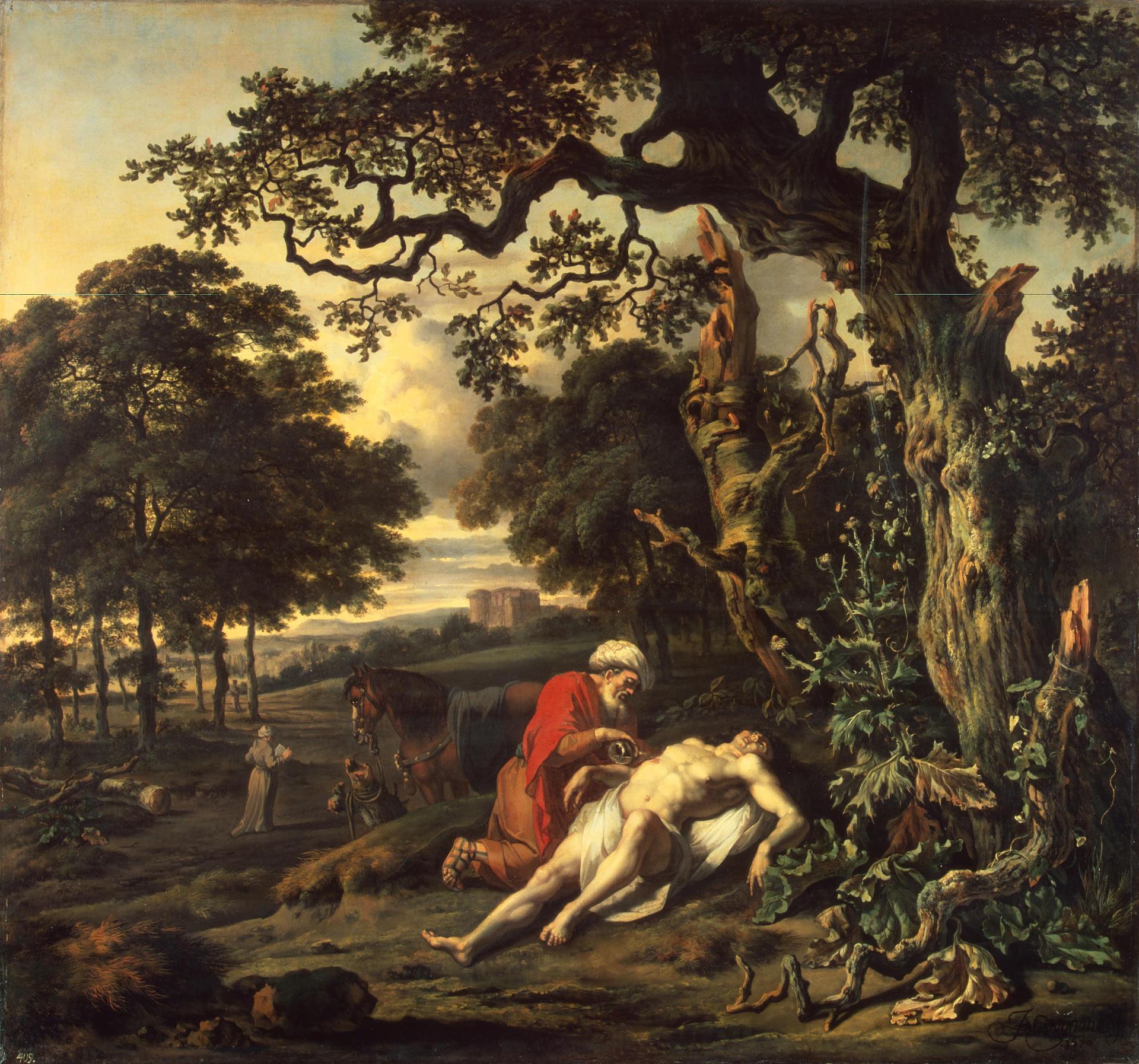
The Good Samaritan – Prayerful Tuesday


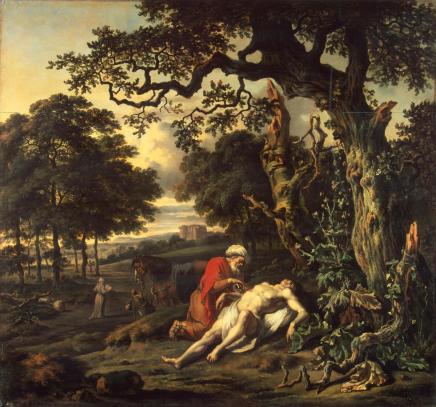
Jan Wijnants, Parable of the Good Samaritan, 1670
              Jan Wijnants, Parable of the Good Samaritan, 1670

Luke 10:33-35 “A Samaritan traveling the road came on him. When he saw the man’s condition, his heart went out to him. He gave him first aid, disinfecting and bandaging his wounds. Then he lifted him onto his donkey, led him to an inn, and made him comfortable. In the morning he took out two silver coins and gave them to the innkeeper, saying, ‘Take good care of him. If it costs any more, put it on my bill—I’ll pay you on my way back.’ The Message)

I have watched the news media’s reports on desperate flights of Syrian’s and Iraqi’s to Europe with a breaking heart.  I have donated funds to the Week of Compassion for their relief drive but it hasn’t helped the pain in my chest.  This morning’s meditation scripture was the Good Samaritan and it seeded so appropriate for me right now as I am trying to discern what else I can do for people half the world away.  So today my prayer practice for you is to sit down with this painting and this scripture and let God speak to you maybe together we can find our way on this difficult road.

Directions for Lectio Divina

  • Place yourself in a comfortable position and allow yourself to become silent. Focus for a few moments on their breathing; or use a “prayer word” or “prayer phrase” you gently recite to gradually center your thoughts. Use whatever method is best for you and allow yourself to enjoy silence for a few moments.
  • Turn to the text and read it slowly, gently. Savor each portion of the reading, constantly listening for the “still, small voice” of a word or phrase that somehow says, “I am for you today.” Do not expect lightning or ecstasies. In Lectio Divina, God is teaching us to listen to him, to seek him in silence. He does not reach out and grab us; rather, he gently invites us ever more deeply into his presence.
  • Take the word or phrase into you center. Hold it in your thoughts and slowly repeat it to yourself, allowing it to interact with your inner world of concerns, memories, and ideas. Do not be afraid of distractions. Memories or thoughts are simply parts of yourself that, Allow this inner pondering, this rumination, to invite you into dialogue with God.
  • Speak to God. Whether you use words, ideas, or images–or all three–is not important. Interact with God as you would with one who you know loves and accepts you. And give to him what you have discovered during your experience of meditation. Experience God by using the word or phrase he has given you as a means of blessing and of transforming the ideas and memories that your reflection on his word has awakened. Give to God what you have found within your heart.
  • Rest in God’s embrace. And when he invites you to return to your contemplation of his word or to your inner dialogue with him, do so. Learn to use words when words are helpful, and to let go of words when they no longer are necessary. Rejoice in the knowledge that God is with you in both words and silence, in spiritual activity and inner receptivity.

Sometimes in Lectio Divina, you may return several times to the printed text, either to savor the literary context of the word or phrase that God has given or to seek a new word or phrase to ponder. At other times, only a single word or phrase will fill the whole time set aside for Lectio Divina. It is not necessary to assess anxiously the quality of your Lectio Divina, as if you were “performing” or seeking some goal. Lectio Divina has no goal other than that of being in the presence of God by praying the Scriptures.

Directions for Visio Divina

  • Study the picture slowly, taking a first glance noting the colors, people, places and things.  Remain with the image for one to two minutes. If you would like, jot down a few words about the image.
  • Take a second, deeper, look. Where is there movement? What relationships do you see? Engage your imagination. Where are you in the artwork? What do you see from that perspective? What deeper meaning emerges?
  • Respond to the image with prayer. Did the image remind you of an experience, person or issue for which you’d like to offer thanksgiving or intercession? Offer your thoughts as prayer to God.
  • Find your quiet center. Breathe deeply. Relax your shoulders, arms and legs. Rest in this quiet. Let God pray in you. God prays beyond words.

May compassion fill our hearts and like the Good Samaritan care for our fellow travelers in the world.

Ruth Jewell, ©September 15, 2015


You Are Invited . . .

Matthew 22:1-14 Once more Jesus spoke to them in parables, saying: 2“The kingdom of heaven may be compared to a king who gave a wedding banquet for his son. 3He sent his slaves to call those who had been invited to the wedding banquet, but they would not come. 4Again he sent other slaves, saying, ‘Tell those who have been invited: Look, I have prepared my dinner, my oxen and my fat calves have been slaughtered, and everything is ready; come to the wedding banquet.’ 5But they made light of it and went away, one to his farm, another to his business, 6while the rest seized his slaves, mistreated them, and killed them. 7The king was enraged. He sent his troops, destroyed those murderers, and burned their city. 8Then he said to his slaves, ‘The wedding is ready, but those invited were not worthy. 9Go therefore into the main streets, and invite everyone you find to the wedding banquet.’ 10Those slaves went out into the streets and gathered all whom they found, both good and bad; so the wedding hall was filled with guests. 11“But when the king came in to see the guests, he noticed a man there who was not wearing a wedding robe, 12and he said to him, ‘Friend, how did you get in here without a wedding robe?’ And he was speechless. 13Then the king said to the attendants, ‘Bind him hand and foot, and throw him into the outer darkness, where there will be weeping and gnashing of teeth.’ 14For many are called, but few are chosen.”

The above text is about how we are invited into God’s grace. However, what we do with that grace is entirely up to us.  We can ignore it, accept it but only on our terms, or completely live into the gift of grace.  What we do will be our choice and that choice will determine how we live our lives.  The following is the text of the sermon I preached on August 23, 2015, at my home church, Queen Anne Christian Church, Seattle, WA.

On a warm June afternoon in 2000 I was sitting at the entrance to the primary hotel in Vallejo CA.  I was waiting for a bus to come and deliver John to me who was taking the bus from the Oakland airport. I could hardly contain myself, you see in just a few short weeks I would be retiring from my consulting job and moving back to Edmonds. John was coming to help me pack-up the apartment and drive with me back to WA.  We would be married in September.  This was the beginning of 6 months of celebration that has extended into nearly 15 years. I had accepted an invitation, I said yes. I knew that in that acceptance I would now be living a new life and one that would require me to make the choice to change from a life of taking care of only me to taking care of someone else. Now that’s a huge change for someone who was 53 and never married.  But it was a choice that I have been grateful for ever since.  As a result I was blessed with a new life that has had its challenges and its joys. That’s what happens when you chose to transform your life.  Life can be a bed of roses, but what you must remember is roses have thorns and you can be sure you will sometimes get stuck with one, or more, of those thorns.

The scripture from Matthew is not only about choosing between accepting and refusing an invitation to a wedding banquet given by a King, it is about choosing between accepting or refusing to live a transformed life of free grace in the way we were meant to live. And, to deciding to live a transformed life means accepting all of that life of grace.  It means we are to commit to live that life no matter what gets thrown at us or how many thorns we run into.  Living a transformed life of grace doesn’t mean there won’t be thorns, or potholes, or great sorrows on your path. It means we have the strength to walk through them.

Matthew’s version of this story, which is also found in the Gospel of Luke, is actually two parables about invitations. It’s a story about a king, who wants to invite people to celebrate the wedding of his son with a banquet.  Matthew adds two additional details to the story; the first is when some of the king’s friends’ killed his slaves and he attacks and wipes out the kingdoms of those who committed those atrocities.[1] It is accepted by most interpreters that this part of the parable, Verses 6 and 7, are an interpretation of Matthew’s who is reading back into this parable the destruction of Jerusalem and the Temple. Matthew adds it because within his community he has people who are struggling with the loss of their ancestral home.  It is not believed to be part of the original parable from the time of Jesus, the oldest version of which is found in the Sayings of Q. Actually these verses are much more characteristic of an interpretation of God from the Hebrew Text rather than the life and teachings of Jesus.[2],[3] Matthew’s second addition are the last 4 verses, verses 11-14,  of the story where Jesus tells one more story of the banquet[4] and this addition is very important in the way Matthew wants us to understand and respond to the divine invitation to a new life.  Together these two parables are stories about the life choices we make and what we do with those choices.

So here we have a story of a King, who traditionally is identified with God, and throws a wedding party for his son, Jesus. Those are the traditional interpretations of Matthew’s King and Son.  But I want to you think about a what if.  What if we look at this story from a different perspective? What if we turn it upside down? What if instead of the King being God the King is Jesus who’s throwing a wedding banquet for the Children of God who he invites to live a new life?  How will that perspective change the way we hear and see these parables?

Now even though the Matthew’s setting of the parable is Jesus defending himself before the religious authorities Matthew wasn’t referring to “the Jewish authorities” as the ones who refused to attend, or that the ones who came were only “Gentiles.” Rather, most interpreters now believe Matthew was addressing his own conflicted community who he wanted to live a transformed life.[5]  The Jewish Jesus followers of Matthew’s community were struggling with the loss of the temple and his Gentile Jesus followers were struggling with whether they should or should not become Jewish. All this would have made for many conflicts between the different factions and Matthew is trying to bridge the gap between them.  I too am not suggesting that there are specific groups being discussed in these parables. So depending on which version you like the best, think of the players in the 1st century as Matthew’s neighbors or in our very own community as our neighbors right now in the 21st century.

So here is how the story might sound if we told it as if Jesus was throwing this shindig? The guests Jesus first invites to his amazing banquet are those he expects will accept the invitation because they already understand, or he thinks they do, what it means to live the transformed life He is offering them.  Jesus wants them to come and celebrate with Him, to become part of the new life that only happens when we accept the Divine invitation.  An invitation of free grace to live the life we are meant to live in the presence of God, Jesus and Holy Spirit.  So he sends his disciples out to bring his guests to the party; the food is ready, wine is poured, the orchestra is tuning up for an all night event.  But his disciples come back and tell him all have refused, all are too busy with the details of life, the minutia of daily living.  So what does he do, after all he has a hall prepared, food on the table, wine chilling, and musicians waiting?  Well, Jesus did just what he told his disciples to do when he sent them out to preach and the invitations they gave were refused. He “dusted the dirt from His sandals” and turns his back on those who refused him and sends his disciples out again into the streets and to the city gates to bring in whomever they find to the party, the good and the bad, the worthy and the unworthy.  With the diligence of his disciples the hall is soon filled to overflowing.

Who were the people from the streets? Well if we think of who are the people of the streets in the 21st century you might first of all think of the homeless tent encampments, or the people living under a bridge, or the man or woman standing on the corner with a sign that says “Homeless vet, needs food and job.” And think of the shop keepers in the poorest parts of any town. It was people like these who were the ones who were welcomed into Jesus’ party. They were the nobodies of the town and here they were going to a big party given by the most important person in town. Can you imagine how they felt?  Can’t you just hear them as they walk to the mansion, “Jesus invited me, me, to his party,” “You too, I can’t believe it,” “I was invited too, and get this, the man said come as I am, how cool is that.”  Unlike Jesus’ first guests these guests weren’t concerned about who would be attending.  It didn’t matter to them that the person next to them was a drug addict, a thief, a prostitute, a shop keeper, or a prosperous business person. They didn’t care if Jesus was failing or succeeding in life. They were excited about being invited.  They understood the importance of being invited to this banquet, this table.  They wanted to have new lives.  Unlike those first invited they knew their old lives weren’t working for them and they were willing to change and live new lives, transformed lives of grace that had meaning.

As the guests enter the hall they see the banquet tables set up with every food imaginable, roast lamb, poached fish, pastries, bowls of fruit, cool drinks, and wine, good wine, not the cheap stuff.  In the corner an orchestra was playing, with real instruments not a wash tub and jug band. Everyone was celebrating, drinking, eating, and dancing to the wonderful music. That is, everyone except this one guy who had piled his plate up with everything it would hold and was eating it in the corner telling anyone who would listen, “well it’s about time this Jesus dude recognized just who makes this town what it is.”  “I deserved this invitation, but don’t expect me to go overboard for him; this is what we should have had all along. In fact I think I will just take everything I can. And I’m going to let this Jesus person know that I’m not going to do anything unless I really want to just because he invited me to this party.”

When Jesus comes in to join his guests he sees this guy in the corner and he says “Ah, excuse me, why aren’t you celebrating. This is a joyous occasion, you come expecting to be fed but you won’t celebrate your new life.  You come in and can’t see the joy of living a life of peace, and justice.  You blame me for your suffering but you did nothing to help those who suffered as well. I was there to help but you wouldn’t come out, is that my fault? You accepted my invitation to grace but only on your terms? It doesn’t sound to me like you understand what it means to come to one of my banquets; I don’t think you belong here, yet.  Show this guy out until he understands what it means to come celebrate a transformed life.”

Jesus knew people had options in their lives. The trouble was those options weren’t working for the majority of the people. True the religious authorities and the Roman authorities were doing ok, but if you look at the number of people who were killed in order for someone else to advance socially or politically their options weren’t working for them either.  So along comes Jesus with an alternative way of living a life that didn’t involve beating up, or tearing down someone else. But Jesus wasn’t offering a new idea.  For centuries the Prophets of Israel were telling the people the same thing. Moses says in Deuteronomy (30:19b) “Choose life so that you and your descendants may live.”  Every Prophet since Moses, including Jesus, has said the very same thing and the people listened and accepted life, for little while, then the ‘easier’ way of greed and self-centeredness takes precedence and the original message of grace goes by the way side.

But what does it mean to choose life?  Well “When you say ‘Yes’ to life you say ‘Amen’ to all of life as a package deal. Thereafter the so-called problems you have with personal injustice do not arise. You renounce your concept of victimhood and the old impulse to complain about being unfairly treated.” A “commitment to life  . . . refuses to make any distinction between your outer life and your inner life, or between secular and sacred spheres of life, or between loving God, loving all of life, or loving one’s neighbor. Nor does it distinguish between your current life concerns or your eternal concerns. On the contrary, it simply calls for an unhesitating and unreserved ethical response to the call of life, the call of Jesus, God, and Holy Spirit – right where you are at this moment in time, at this point in your life,” to live a life where you defend justice for all and refuse to accept injustice for anyone as an expedient to living.[6] That is what Jesus taught, that’s grace. It’s not new information, its old stuff we haven’t listened to, at least not for long time.

That is what happened to our disgruntled guest.  He may have accepted the Divine invitation of free grace to attend the banquet, but his acceptance had no depth to it, it never went beyond saying I’m here, thanks for the food, see you later. He was glad to accept the invitation to grace but on his terms only. He never truly transformed his whole life.  He never saw that living in the presence of Jesus meant he had to let the inner life make its way to the outer side of who he was.  It meant he had to share the love, peace and abundance of grace with everyone he met, not hoard it. He came to the banquet not because he wanted to live a life transformed but because he wanted what he could get and then live as he always had.  That’s not change, it is not celebration and it’s not joy, and it is not committing to living a transformed life. It’s keeping the old life and saying it was good enough in the past it will be good enough now.

No matter how you tell today’s story it’s about Divine invitations, the acceptance of grace, and how you live once you’ve accepted God’s grace. When John asked me to marry him, I had a number of options.  Like the first invited guests I could have refused and that would have been that.  I don’t know where I would have been 15 years later but I am quite certain it wouldn’t have been here.  But I did say yes and again to that yes I had options as to how I was going to live within this new relationship.  One, I could continue to behave as I have always behaved.  Taking care of me, making sure I had what I wanted and what I needed.  Yes John would be there but our relationship would not have been very deep because I wouldn’t have let him into the deeper part of me, the part of me that would have built the relationship where both of us would have benefited.  These two options were not the ones I chose.  Instead I let John into my heart and said we are partners and what I do and what you do will affect and change who we both are.  We looked at the covenant of our marriage and said we do this together as one, not as two people living their own lives in one house.  When I accepted John’s invitation to marry, when I accepted that covenant, I had no clue as to what that might look like, but I knew I was going to have to change if I was going to make my life with John. And yes it hasn’t always been sunshine and flowers.  Sometimes we have had our thorny moments. But it was because we chose to live a life together as one that we had the strength to overcome all thorns and rocks in our path. While my wedding story wasn’t about God’s grace specifically, by accepting my invitation I discovered grace in a way I did not expect, and that is how it sometimes work.

Jesus invites us to a banquet of grace, he welcomes every single one of us to His table, and He doesn’t ask questions about our past or how many times we haven’t understood, He wants us to come and join Him. To laugh and sing and eat together, to tell jokes, and play games.  To dance to the music that life brings us, and cry together when life brings us sorrows. Jesus asks us to change who we are at our deepest level and live grace filled lives that don’t see differences between us, whether they are gender, racial, religious beliefs, cultural, social, or political.

We can change the world we live in, we can change the world by being the people we are meant to be, a people of grace, by being a people who refuse to accept evil, greed, and self-centeredness as the status quo.  We can change the world by refusing to accept that war is the only solution, or that homelessness and hunger is just part of life.  We can change the world by seeing each other as the Children of God, living the life God meant us to live.

The banquet meal is ready to be served: lamb roasted, wine poured out, table set with silver and flowers. . . .  Jesus goes to town, stands on the street corner, and invites everyone within the sound of his voice: Come, rich and poor alike, come the worthy and the unworthy, come with me, oh come, and celebrate the wedding of our spirits with me! I’ve prepared a wonderful spread—fresh-baked bread, carefully selected wines. Leave your lives of self-centeredness, loneliness, fear, poverty, greed, and come, celebrate with me! Come celebrate a life with meaning, a life of grace. Come change your lives, remember to live transformed, not only your inner selves, but also your outer selves.  Put on your cloak of joy and celebration and come, walk up the street to a life with meaning.”[7]

Moses said: “Choose life so that you and your descendants may live.”

Ruth Jewell, ©August 28, 2015

[1] Hare, Douglas R.A.: Interpretation, A Bible Commentary for Teaching and Preaching, Matthew, John Knox Press, Louisville, KY, pg 251-252
[2] Miller, Robert J; Editor, The Complete Gospels, Annotated Scholars Version, Polebridge Press, Sonoma, California, 1992, pg 98
[3] Hare, Douglas R.A.: Interpretation, A Bible Commentary for Teaching and Preaching, Matthew, John Knox Press, Louisville, KY, pg 251-252
[4] Allen, Ronald J. & Clark M. Williamson; Preaching the Gospels without Blaming the Jews, Westminster John Knox Press, Louisville, KY, 2004, pg.76-78
[5] Hare, Douglas R.A.: Interpretation A Bible Commentary for Teaching and Preaching, Matthew, John Knox Press, Louisville, KY, 1993, pg 251-253
[6] Cupitt, Don: Life, Life, Polebridge Press, Santa Rosa, CA, 2003, pg 6-7.
[7] Proverbs 9:1-6