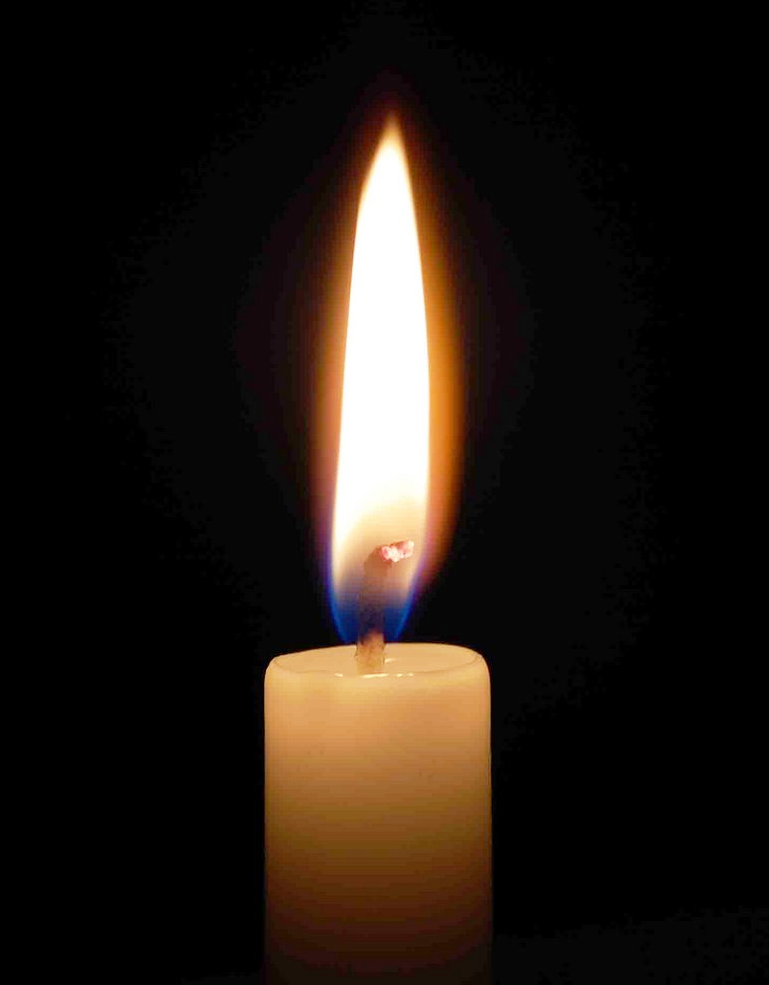
all will be well — Prayerful Tuesday

all will be well
and all will be well
and every manner of thing
will be well

Julian of Norwich, late 14th century mystic

The last couple of weeks have been a bit troubling for me. In one week I heard of the death of three of my friends and then there was a three day trip to Houston to visit my best friends and of course there has been loss of planes, and ferries, and the overwhelming loss in the Oso WA Mudslide. In the midst of this chaos I am writing the first draft of my ordination paper. Needless to say I haven’t bored, although some days I would have liked to be. What I do have is a deep sorrow and fatigue, which are following me around like two sad little puppy dogs.

This morning as I sat down to meditate and flipped open a small book with the writings of a number of medieval mystics I landed on Julian of Norwich’s “all will be well.”   I so needed to read those words, because right now nothing feels very well. I grieve the loss of my friends, which interferes with my thought processes for my paper. I want to ask God “what happened? Everything was going along smoothly now it’s all upside down, can’t we please go back to the beginning and start over?”   Well God’s answer was “all will be well.”

Yes what seems dark today is only the time before the dawn and new light and new hope. My friends still live in memory, I will finish my paper and God is still there sitting next to me saying “all will be well.”

The following music video of Julian of Norwich’s All Will Be Well by pastor Meg Barnhouse touched me deeply today and says so much of what I am feeling and asks the same questions I have been asking. But Julian of Norwich trusted that God knows the answers and if God said, “all will be well,” then I too will take heart and trust that “all will be well.”

Ruth Jewell, ©April 22, 2014


Prayers of Compassion, Visio Divina – Prayerful Tuesday

In the last week I have watched the reports from the mudslide in Oso Washington and my heart is filled with sorrow for all the victims lost and recovered alive. Last night I used this picture as my prayer focus and found it rich in prayers for all the victims and the responders of this terrible disaster.

1. As you gaze at the picture what feelings come up for you?
2. Do you have something you want to tell God?
3. What words of comfort would you offer to the victims and the responders in Oso?

Other areas have also experienced natural disaster. Los Angeles has been experiencing earthquakes this week and adverse weather due to climate change has plagued the areas east of the Rockies all winter.

4. End you time of meditation with a prayer for all who have been affected by disasters and extreme adverse weather conditions around the world?

Mudslide Oso Washington,  photo from Headline and Global News,  March 27, 2014
Mudslide Oso Washington,
photo from Headline and Global News,
March 27, 2014


Ruth Jewell, © (except for picture) April 1, 2014

a morning prayer

God said "Let  there be light" (ngc4921, NASA)
God said “Let there be light”
(ngc4921, NASA)

May we remember today that we are part of an unfolding story
That calls us to listen to God’s words with intent to action
May we live in the reality of God’s kingdom entering into our lives
May we rejoice in the wonder of God’s eternal presence
May all that we do deepen our awareness of God
May we see in every moment the spark of holiness
And recognize Christ in every encounter
May God’s word burst from the pages of our lives and …
become the life we live
AMEN

Ruth Jewell, ©March 22, 2014


WHISPER – Prayerful Tuesday

Visio Divina

20130619 a

sunrise, sunset
listen
do you hear
a whisper
calling.
heart open
spirit quiet
I listen
I hear
a whisper.

As you gaze at the picture what do you feel, what do you hear.  Does the picture lead you somewhere quiet, inside where a whisper is a shout of joy.

Ruth Jewell, ©March 18, 2014


Writing Our Fears – Prayerful Tuesday

Into the Light
Into the Light

Truly in the remembrance of God do hearts find rest (Quran 13.28)

In the last week I have begun reading the book Out of Darkness Into Light by Jamal Rahman, Kathleen Schmitt Elias and Ann Holmes Redding.[1] The book gives a wonderful introduction to spiritual guidance found in the Quran with reflections from the Jewish and Christian Faith provided by MS Elias and MS Redding respectfully.  The three faiths Islam, Jewish, Christian are siblings and we share more than just a connection with Abraham, we share hearts.

As a Christian I am well versed in my own tradition, practices and beliefs but reading Jamal’s writings and MS Elias’ writings has opened up interesting doors into the shared space of our three faiths.  One of those doors is called Spiritual Practice. I have always known many of our “Christian” spiritual practices have their roots in other faiths, yet as I read I am finding a second and third dimension in them.  The practice I would like to highlight is a specific type of journaling Jamal calls “sacred writing.

I have practiced journaling for many years and have done something similar to the practice of sacred writing called “free writing or journaling where you write what comes to mind, letting my hand freely put on paper whatever comes from my heart.  Sometimes there is an intention question sometimes not but always there is no planning of what I will write.  Sacred writing is very similar but Jamal has beautifully paired it with the intention of going deeper into the heart of self when you’re sad, angry or in crisis, however, this is a good practice to use at anytime.  Here is Jamal’s description:

“Start with the phrase, “Right now I am feeling” … and allow yourself to express your feelings and fears as fully as possible.  After you finish, invoke the mercy of God and Make an intention to connect with your higher self. Start by writing. “I have heard your sighs, beloved one, and I want to tell you …” and continue writing, allowing your higher self to express itself fully.”  (pg 55)

I have found that writing in this manner can produce insights to my own behavior and helps me find meaning in events or trials I could never have seen.  One benefit to this method is by putting feelings onto paper gets them out of my body and I see clearer and become filled with an inner peace.

May the Great Spirit enter your heart as you pour out your fears and doubts onto a simple piece of paper.   Amen

Ruth Jewell, ©March 4, 2014


[1] Rahman, Jamal, Kathleen Schmitt Elias, Ann Homes Redding; Out of Darkness Into Light, Spritual Guidance in the Quran with Reflections from Christian and Jewish Sources, Morehouse Publishing, New York, NY, 2009

Surrender – Prayerful Tuesday

Surrender to the Journey

“. . . too often we resist the urge to turn our hearts to God, for this might entail some serious and inconvenient changes in our lives.”  Jamal Rahman, Out of Darkness into Light

This past week has been interesting.  You see I am coming to a place where I have to let go of some goals and turn my resulting life, that will be, over to God.  Now I am a stubborn person, and I LIKE being in control of my journey, but, I am discovering I control nothing. Nothing in my life is predictable, except when I surrender my will to God.

The above words of Jamal Rahman really hit home for me, because surrendering to God does mean my life changes dramatically.  The number one in my life can no longer be me, but God.   It means everything I do take’s on a sacred attribute because I’m not doing it for myself; I am doing nothing, because you see everything is for and through God.

When I give up and let go of the reins I am clutching in my white knuckled hand my life focus changes from “it’s all about me” to it is all about what God wants of me; doing justice, loving kindness, and walking humbly with God (Micah 6:8).  While Micah’s words sound simple they are not easy and I am consciously, continually, moving into them bit by painful bit.

One of my first steps in surrendering to God began with (or I should say begins with) a practice of examining the unease I have with my life and then holding it to as I find the root cause. I allow myself to kind to me as I acknowledge and hold the energy the cause has over me, offering it up in prayer for God’s mercy and forgiveness.

So I offer Surrender as our spiritual practice of the week.   When you feel something is wrong in your life do not ignore or deny it.  Instead sit quietly and hold the feeling in your heart, listen to it and search from where it comes.  Then as you hold the feelings in your heart pray to God for strength and mercy, asking for God to walk with you as you go deeper into the feeling and surrender the cause to God in prayer.  Over time as you repeat this practice you may discover your connection and relationship with God growing ever stronger.

Surrender may be difficult but not impossible when you remember the words of Jesus who said “do not be afraid, for I am with you always.” (Matthew 28:10).

Ruth Jewell, ©March 10, 2014

Re-Membering our God Connection, Prayerful Tuesday

Lighting our Fire reconnecting with God
Lighting our Fire
reconnecting with God

For the Celtic Christian their religious life and their everyday life were tightly bound together.  They filled their days with prayer beginning with prayers of thanksgiving for waking up and continuing on to making the fire and milking the cow, all the way to prayers of thanks for the day as they went to their rest.  Today we call their life style of acknowledging the Presence of the Divine the Spiritual Practice of Presence.  This is probably one of the easiest of the spiritual practices because all you have to do is remember to pause when you begin and end a task and pay attention to your surroundings, letting your thoughts travel to God, breathing in grace and breathing out gratitude.  The whole exercise may take no longer than one minute to re-member yourself to the Holy Spirit.

Here are a few examples of when you might mentally pause and turn your thoughts to God.

  1. Before you even rise from your night’s sleep, thank God for a restful night and a new day to be in the presence of the Holy.
  2. As you walk into your place of business, offer a prayer for the people you will meet and work with, asking God for patience and kindness when interact with others.
  3. As you prepare breakfast give thanks for the abundance God has graced you with and offer gratitude for the opportunity to share it with your family or friends.
  4. During your day occasionally pause, breathe deeply and extend gratitude toward God
  5. Before you go to sleep offer a prayer of thanks for a day spent with the Spirit and if there are difficulties during the day (I mean who doesn’t have those rough spots) ask for guidance for the coming day.

Those are just a few of the times you might briefly stop and re-member your place alongside the creator.  I am sure you could name many more.

One of the early prayers of the Celtic people was offered as they laid the morning fire to begin the day and the one below is one of my favorites for it has a double meaning.  It prays not just for lighting the homes hearth, but also the lighting of the hearts’ fire.  Today this is my prayer for each and everyone one of you.

Kindling the Morning Fire

This morning, as I kindle the fire upon my
hearth, I pray that the flame of God’s
love may burn in my heart, and the
heart of all I meet today.

I pray that no envy and malice, no hatred,
or fear, may smother the flame.

I pray that indifference and apathy,
contempt and pride, may no pour
like cold water on the fire.

Instead, may the spark of God’s love light
the love in my heart, that it may burn
brightly through the day.

And may I warm those that are lonely,
whose hearts are cold and lifeless,
so that all may know the comfort of God’s love.[1]

Ruth Jewell, ©February 18, 2014
http://www.aquietwalk.wordpress.com


[1] Van De Weyer, Robert, Celtic Prayers, a book of Celtic devotion, daily prayers and blessings, Abingdon Press, Nashville, TN, 1997, pg 26


Salt and Light

Salt light

Sermon, Queen Anne Christian Church
February 9, 2014

I was supposed to preach yesterday, but because of snow all of the streets to the church were closed.  You see Queen Anne Christian Church is at the top of Queen Anne Hill and the wise DOT decided it was too dangerous for people to drive up either side of the hill, therefore church was cancelled. So instead I will offer my sermon here.  Enjoy

Matthew 5:13-20 (NRSV)

13 “You are the salt of the earth; but if salt has lost its taste, how can its saltiness be restored? It is no longer good for anything, but is thrown out and trampled underfoot.

14 “You are the light of the world. (Isa. 49:6) A city built on a hill cannot be hid. 15 No one after lighting a lamp puts it under the bushel basket, but on the lamp stand, and it gives light to all in the house. 16 In the same way, let your light shine before others, so that they may see your good works and give glory to your Father in heaven.

17 “Do not think that I have come to abolish the law or the prophets; I have come not to abolish but to fulfill. 18 For truly I tell you, until heaven and earth pass away, not one letter, [a] not one stroke of a letter, will pass from the law until all is accomplished. 19 Therefore, whoever breaks[b] one of the least of these commandments, and teaches others to do the same, will be called least in the kingdom of heaven; but whoever does them and teaches them will be called great in the kingdom of heaven. 20 For I tell you, unless your righteousness exceeds that of the scribes and Pharisees, you will never enter the kingdom of heaven.

In one of the early classes I took with Father Raschko at STM there was this long discussion about the differences between each of the 4 Gospels.  You know, Mark was written first, then Matthew and Luke, who used Mark as a blue print, and John was last and totally different.  Now Father Raschko is a Mark scholar and he loves Mark.  The Gospel of Matthew is OK, but in the words of Father Raschko Matthew was out to correct all of the mistakes Mark had made.  I, in my first or second year enthusiasm decided to sit down and compare them to see if he was right.  Silly me

I have to admit after reading both of them I discovered I loved the Gospel of Mark.  I mean there is that whole messianic message mystery thing he has going on.  You get to the end, all the endings, and it says go back to the beginning, it’s a mystery and who doesn’t love a mystery.  But I found I truly loved the Gospel of Matthew.

Matthew doesn’t write about mystery, well not the way Mark does anyway. He writes about an itinerate Jewish Rabbi, he places Jesus within the historical and cultural landscape of God’s very own people.  In Matthew’s Gospel he connects the Hebrew Scriptures and the peoples own history to what Jesus did to fulfill the scripture.  He writes about doing: about being intentional as a follower of Jesus. In a lot of ways the Gospel Matthew is a Do-It-Yourself manual for how to become a follower of Jesus. Matthew connects the actions of Jesus to the law and the prophets. He expected his own community of first century Christians to do the same.

In today’s scripture Jesus gives an introduction to what the mission of his disciples and followers will be. With the words “you are salt, and you are light” He identifies the ground rules for someone who wishes to become one of his followers. Jesus doesn’t say you should be salt, or you might be light, no, he is telling his disciples, the crowd and us, we are salt and we are light for the communities we live in.  It was the disciples and now it is you and I that is to add the goodness into the lives of those we meet, provide balance and savoriness in our communities, just as salt does for the foods we eat. It is us, you and me, who are to intentionally disrupt the status quo and care for the dispossessed, and those who are hungry and ill.  We are to work for justice and show mercy, and be peacemakers, other words we are to stand up for what we believe with no expectations of ever being rewarded. Just as salt does its job without announcing its presence in the food we eat we are to do all these things not to bring ourselves recognition but because that is just what we are supposed to do.  Just as salt is hidden within our food bringing brightness and goodness to the final product, Jesus wants us as his followers to hide within the community and bring brightness and goodness to the world around us. To do otherwise means we have lost our saltiness and not helpful to the work needed by the Kingdom of God.

Jesus then recalls the prophet Isaiah who says:

I will give you as a light to the nations,
that my salvation may reach to the end of the earth.” (49:6b)

Jesus tells his disciples “you are the light of the world, to both Jew and Gentile, and you can’t hide the light. We too are to let the light shine. This means we are not just salt and supposed to care for others, fight for justice, extend mercy and be peacemakers without an expectation of a reward we are to be the mirror that reflects God’s light into the darkness we humans so frequently to gather within and around us. We are to reflect the graciously given gift of God’s light within ourselves to illuminate the darkness in our own souls. To recognize and open the dark spaces within our souls so that we are better able to reflect God’s light outward to those around us so they too may live in Gods loving light.

We are to let the light shine without focusing the light on ourselves. We are to care for those around us and to carefully walk with God, not in front, but alongside.  We have to take all the good acts we see being done in the world and go one step farther.  And that means it is not in what we say we do, it is in what we DO that is important. Jesus wants us to be intentionally active in whatever way we are called to be, not sitting on the couch or watching others. We are to be the advocate for the voiceless, the homeless, and the dispossessed. It also means just like a mirror we are only the glass that reflects the glory of God and the Kingdom of God. We are to be behind the light being the lens that focus’ the beam on who those needing the light.

We are to be advocates for social justice, advocates for the hungry, the homeless, the incarcerated, and advocates for peace but we are to say “we have done nothing; it is God working through us that has done these things.”   This is where those Matthew called “scribes and Pharisees” got it wrong. Yes they did good works but they made sure everyone knew it. God’s command is we are to do good acts because it’s the right thing to do, not inflate our own ego’s

Today we have modern “scribes and Pharisees” who do the same thing and sometimes I’m one of them.  The hardest thing for me to do is setting aside my own ego and let God stand in front of me, you see I don’t always like taking a back seat.  I must admit that I am all too often a card carrying member of the Pharisee club and I am not proud of that.  I am sure I am not alone in being a member we are, after all, humans, who make choices sometimes there are good ones and sometimes not so good.  It is a good day when I intentionally start it with the words “today I am the mirror, I am the salt.

Ruth Jewell, © February 10, 2014
Intention as a Spiritual Practice – Prayerful Tuesday


Brokenbread

Matthew 5:13-20: (NRSV) 

 13You are the salt of the earth; but if salt has lost its taste, how can its saltiness be restored? It is no longer good for anything, but is thrown out and trampled underfoot.
   14You are the light of the world. A city built on a hill cannot be hid. 15No one after lighting a lamp puts it under the bushel basket, but on the lampstand, and it gives light to all in the house. 16In the same way, let your light shine before others, so that they may see your good works and give glory to your Father in heaven.
17Do not think that I have come to abolish the law or the prophets; I have come not to abolish but to fulfill. 18For truly I tell you, until heaven and earth pass away, not one letter, not one stroke of a letter, will pass from the law until all is accomplished.
   19Therefore, whoever breaks one of the least of these commandments, and teaches others to do the same, will be called least in the kingdom of heaven; but whoever does them and teaches them will be called great in the kingdom of heaven. 20For I tell you, unless your righteousness exceeds that of the scribes and Pharisees, you will never enter the kingdom of heaven.

I am preaching on Matthew 5:13-20 next Sunday, February 9th, and as I have read and re-read this scripture I have discovered Jesus is talking about a spiritual practice, the spiritual practice of intention.  Everything Jesus did was intentional. He started every day knowing he was going to do the will of the Father, his Father, his Abba.  In this portion of his Sermon on the Mount he is trying to teach all of us we must be intentional about our actions in the world.  It isn’t good enough to say we believe in justice and kindness, rather we are commanded to actually get up out of our chairs and actively walk with God as God continually creates our world and DO justice and kindness. So my spiritual practice for this week is “Intention as a Spiritual Practice.”

You are probably saying right now “well duh” everyone knows that.  If we all know that we are to do justice, kindness, and mercy then why don’t we?  It is because it is easy to say we are going stand up to injustice but it is much harder to actually get out there and get your hands dirty.  So I am going to give you a few suggestion that are simple everyday things you can do just to get you started and in the habit of living an intentional life.

In his book Everyday Spiritual Practice, Simple Pathways for Enriching Your Life Scott Alexander explains why a spiritual practices is different from a casual hobby, and “the answer is intentionality, regularity, and depth . . . what shapes your efforts into an everyday spiritual practice is your commitment to making the activity a regular and significant part of your life.”[1]
In addition an everyday practices doesn’t have to be complicated, take a great deal of time, or be physically or economically challenging, it just has to be done every day.

Alexander’s book offers many different activities from the very simple to the more difficult and I am going to suggest only a couple of the less difficult ones to get you started.  I also suggest you find Alexander’s book and read some of the practices if these do not appeal to you.

Everyday Spiritual Practice number 1 is probably the simplest of all to start but can be a hard one to carry out.  Every morning when you arise from sleep say the following:  “Today I will offer kindness to each person and creature I meet this day.”  Then follow through, no matter how frustrated you become during an event.  My suggestion is to repeat your intention several times during the day until the act of offering kindness becomes second nature to you.

Everyday Spiritual Practice number 2 involves caring for the world we live in.  Begin each day with the following state: “I will conserve energy by turning out the lights when I leave a room.” Or you might use recycling, bicycling and/or use city transportation instead of driving as your goal.  What you do is important but it doesn’t have to be difficult and if your way to care for the earth is to eat more foods from the lower end of the food chain instead of taking a bus to work, good for you.

Ok just one more to begin.  Everyday Spiritual Practice number 3 involves the relationships we have with others.  Repeat throughout your day: “I will treat those I live, work, and play with with the respect and kindness they deserve as family members, co-workers, friends, for all are my brothers and sisters of God.”

You might be saying these don’t feel very spiritual to me.  But, what I am saying is that to BE a spiritual being and the being God desires us to be is to approach everything we do, every moment, every day as if we were doing it for the one we call God because in reality we are.

Jesus tells us “as you do it for the least of these you do it for me.”  So when you offer a heartfelt word of thanks to the harried checkout clerk in Safeway you are behaving as Jesus would want you behave and who knows maybe, just maybe, that was Jesus and you didn’t know it.

You see the Spiritual Practice of Intention is basic to walking in the Way of Jesus. Whether you are preparing dinner for your family, taking a casserole to someone who is ill or grieving, or stopping to help a homeless person by offering them half of the sandwich you are carrying all of those are Spiritual Practices. When we place the love of the Divine in front row of the action we are doing a spiritual practice.  Jesus said “let your light shine before others” and how we do that is by gifting our light to those who are struggling in darkness.  Our light will not diminish by giving it away; it grows brighter because more people are shinning with its glow.

Ruth Jewell, © February 4, 2014


[1] Alexander, Scott W.(editor): Everyday Spiritual Practice, Simple Pathways for Enriching Your Life, Skinner House  Books, Boston, MA 1999 Pg. 5

Liturgy as Spiritual Practice – Prayerful Tuesday

Kneeling in Prayer
Kneeling in Prayer

According to my old college American Heritage Dictionary “liturgy is a noun defined as a fixed set of ceremonies, words, etc., that are used during public worship in a religion; ritual.” [1] As followers of faith traditions we most often encounter liturgies when we attend religious services.  But all rituals having a set order to the words spoken and are also liturgies. Graduation ceremonies, inaugurations, State Union Addresses, weddings any ritual using an set order of service uses a liturgy.

We may also use liturgies in our private prayer and spiritual practice’s.  Some traditions have small books with liturgies for each day of the week that include morning, mid-day, and evening prayers.  Each meditation includes a prayer, scripture, maybe a written meditation, and sometimes poetry or pictures to contemplate.  In addition to a traditions individual prayer books there are also many other books that provide written rituals for private prayer.  (You will find a short list of a few of my favorites at the end of this meditation.) Today I am going to introduce you to a liturgy from one of my all time favorite prayer books and offer how I use these resources in my prayer life. One of the advantages of having a liturgy already written out for you is you may adapt them to fit your day and your lifestyle.

I most often use prayer books when I am very stressed out and can’t find a way to sit still and listen for the still small voice of God.  Using a liturgy that includes a blessing or poem, scripture and a prayer calms my heart and open a door into soul allowing me to find my still point and open up to what God is trying to tell me.  If you are new to prayer, any kind of prayer, these pre-written liturgies may provide you with a stepping stone into a regular prayer life.  They allow you to slow down and step across a threshold to you own sacred space.  But, just as with every spiritual practice, you must set a regular time aside each day to read the liturgy.  Most are short and may be read in only a few minutes.  However, setting aside 10 to 15 minutes as a starting place will allow you to sit with the written prayers and scripture in silent contemplation.

Today I offer a liturgy I’ve adapted from a meditation for Tuesday from the Earth Gospel, a guide to prayer for God’s creation written by Sam Hamilton-Poore.   It is an adaption I have used before in my own private prayer and one that allows me to go deeper into that sacred space of my heart.  As you read may you also find a blessing within the words.

Opening Blessing: Edmund Banyard

Holy is the soil we walk on,
Holy everything that grows,
Holy all beneath the surface,
Holy every stream that flows.

A moment of silence

Scripture: Psalm 23 Common English Bible (CEB)

The Lord is my shepherd.
I lack nothing.
He lets me rest in grassy meadows;
he leads me to restful waters;
   he keeps me alive.
He guides me in proper paths
for the sake of his good name.

Even when I walk through the darkest valley,
I fear no danger because you are with me.
Your rod and your staff—
they protect me.

You set a table for me
right in front of my enemies.
You bathe my head in oil;
my cup is so full it spills over!
Yes, goodness and faithful love
will pursue me all the days of my life,
and I will livein the Lord’s house
as long as I live.

Reflection:  “The Avowal” by Denise Levertov (1923-1997)

As swimmers dare
to life face to the sky
and water bears them,
as hawks rest upon air
and air sustains them,
so would I learn to attain
freefall, and float
into Creator Spirit’s deep embrace,
knowing no effort earns
that all-surrounding grace

Closing Prayer:

Into your arms, loving Lord, let me “free-fall,”
upheld by your goodness and mercy.
Secure in your embrace,
show me how to love without effort,
trust without fear,
and live with abandon.  Amen

Resources:

  1. Deleon, Roy ObiSB, Praying with the Body, Bringing the Psalms to Life, Paraclete Press, Bewster, MA, 2009
  2. Hamilton-Poore, Sam, Earth Gospel, a guide to prayer for God’s creation, Upper Room Books, Nashville, TN , 2008 (my offered liturgy will be found on pages 106 and 107)
  3. Newell, J. Philip; Celtic Prayers from Iona, Paulist Press, Mahwah, NJ, 1997
  4. Rohr, Richard, YES, AND . . . Daily Meditations, Franciscan, Media, Cincinnati, OH, 2013

Ruth Jewell, ©January 28, 2014


[1] The American Heritage  Dictionary, 2nd College Edition, Houghton Mifflin Company, Boston MA, 1982