Visio Divina, a prayer – Prayerful Tuesday

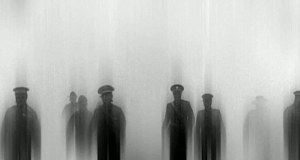
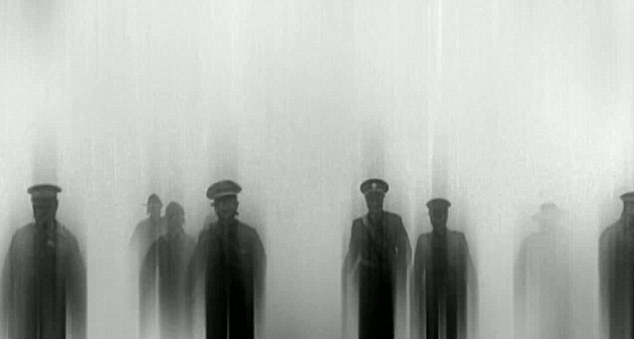
sodiers in mist

Today is Veterans Day and I would like us to practice Visio Divina using the above pictures by David Bowie of the United Kingdom of Soldiers in the mist that touched me deeply.  Take a few moments to study the picture, breathing deeply and begin your Divine Reading. Think of Visio Divina like this–putting on God-glasses to see how an image illuminates Christ for you.

  1. Study the picture slowly, taking a first glance noting the colors or lack of color, people, places and things.  Remain with the image for one to two minutes. If you would like, jot down a few words about the image.
  2. Take a second, deeper, look. Where is there movement? What relationships do you see? Engage your imagination. Where are you in the artwork? What do you see from that perspective? What deeper meaning emerges?
  3.  Respond to the image with prayer. Did the image remind you of an experience, person or issue for which you’d like to offer thanksgiving or intercession? Offer that prayer to God.
  4. Find your quiet center. Breathe deeply. Relax your shoulders, arms and legs. Rest in this quiet. Let God pray in you. God prays beyond words.

I offer the poem below as a testament to what I “heard and saw” within the photo and my heart; and as an offering to all who have served, fought, and died in conflicts across time and the globe.  Peace be unto all

a prayer

They walk
into the smoke
filled
mist

The wounded,
the dead,
the lost,
walking to their destiny

They fought
they gave their all
for love
of wife and child
of Parent and sibling

The mist is filled with voices
well done,
thank you,
I love you
I miss you

Each voice a prayer
to send them on their way
to let them know
they are not forgotten
they are loved
that all is OK
despite they suffering
despite their sacrifice

Poppy’s held
music plays
hearts send love
no you are not forgotten
you are always with us
in our hearts
in our souls
in the lives you died to protect
go to your rest
knowing we are
grateful for
the love you gave
the life you gave

We who remain
are blessed by
You who walk
yesterday, today and tomorrow
it is not good-by
it is only until we meet again

Ruth Jewell, ©November 11, 2014

Visio Divina – Life’s Entrances – Prayerful Tuesday

Entryway to . . .
Entryway to . . .

God has many ways to speak to us, through relationships, our experience, what we read and in the images we see every day.  Visio Divina, Latin for divine seeing, is praying with an image and listening for what God may say to us through that image.

  1. The above image is an entry, a rather nice entry but just an entrance to some place. Spend 2 or 3 minutes just gazing at the image. Does the picture raise any memories, good or bad? Does it look familiar to someplace you’ve been? Would you like to walk down this hallway? Jot down any words that come to you.
  2. Look deeper into the image is there movement, or do you see artwork? From this perspective where might you believe this entryway leads?  What lies at the end of the hallway? Who might you meet? Who would you like to see as you round the corner?
  3. Respond to the image in prayer. Does the image remind you of an experience, person or issue for which you like to offer a prayer of thanksgiving or intercession?  Is there someone who needs your forgiveness, or you need there’s waiting for you? Offer a silent prayer offering your sorrow, or giving your forgiveness.  Let God carry your hearts message.
  4. Sit quietly and find your quiet center. Breathe deeply; relax your shoulders, arms and legs.  Rest in this still moment and let God pray in you; remember God prays beyond words, in sighs and warming of the heart.

As you return to the present, let the prayers go with you throughout your day.

Peace and Blessings

Ruth Jewell, ©November 4, 2014

The Spiritual Gift of Slowing Down – Prayerful Tuesday

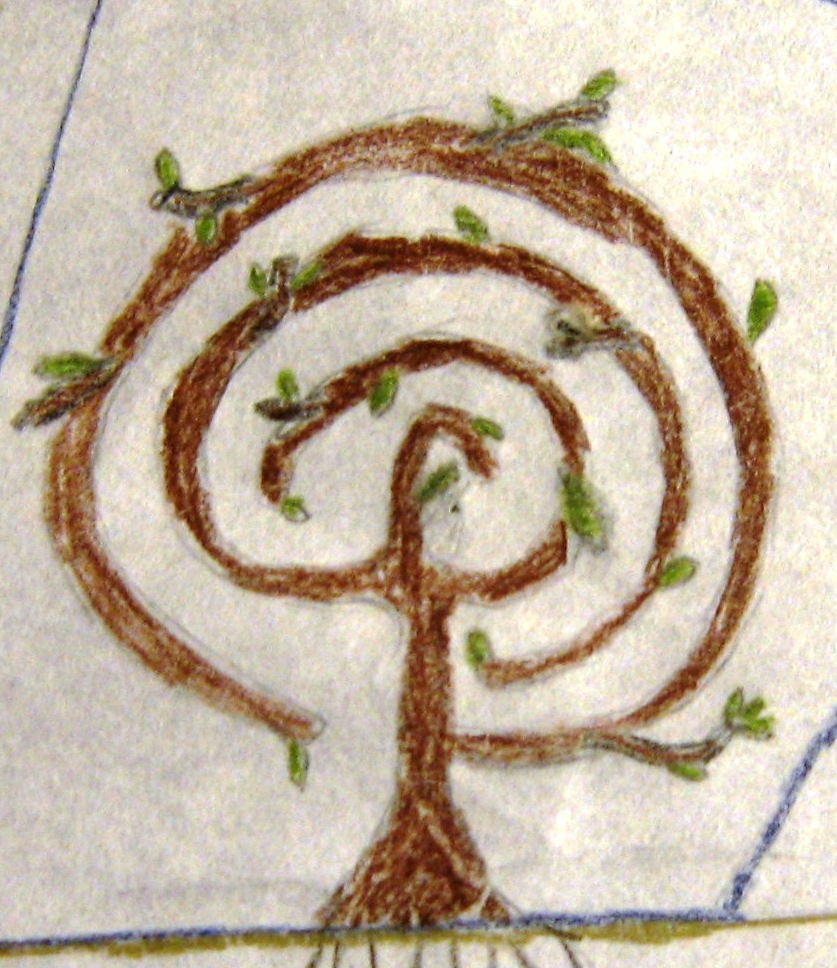
tree of life labyrinth


Last Friday I had foot surgery to correct arthritis damage to two toes.  I have had day surgeries before and in general they go well, just as this one did. But as I waited to be taken in to surgery I began to think of the consequences of my doing this. The benefits are easy to name, the primary ones are, being able to wear my shoes comfortably again and being able to walk without pain in my feet.  But there are also consequences and benefits I hadn’t considered.

For example, I wasn’t going to make an InterPlay group on Saturday that I really wanted to attend, and I wouldn’t be able to make it to church on Sunday.  In fact not until next Thursday will I be able to leave the house.

In addition to being stuck in the house my foot hurts, a lot, and because I can’t take the more popular pain killers, I have a pain medicine that, while it works well, has some drawbacks like extreme dizziness and fatigue. However, I have begun to see some real benefits, other than walking, that I hadn’t taken into consideration.

First of all I have to slow down, something I don’t often do, and think if what I want to do is really important and necessary.  I have been surprised at how much I do during the day that really is busy work. Simply letting go of those fussy details has been a great relief and I think I am going to continue with that. The things I am able to do right now have real importance, mean something to me, and are getting done better and with less effort.

I also have to say “no” to extra tasks when I am asked for “help.” Setting of boundaries has always been complicated for me.  I never want to “offend” anyone and so often take on tasks that I know I don’t have the time to do nor the energy and strength to do them. Saying no is one of the hardest things I am trying to learn.  I overextend myself all the time all because I can’t set boundaries and tell someone “no, not today.”

There are benefits of saying no such as more the time for meditation, and pausing to take the time for myself.  I don’t mean a short meditation I mean sitting down, which is all I can do anyway right now, for a couple of hours and meditating over a passage of scripture, or something I’ve just read.  Instead of worrying about what I can’t do I have been rediscovering the joy of what I can do in the moment, the return of silence and quiet peace.  Holding Suzie, my Chihuahua, in my lap I have been reconnecting with the Divine in art, literature and music and letting all of it wash over me and renew me.

I have also relearned the joy of receiving the generosity from others.  From hospital staff, to friends, to family, especially my beloved husband John, I have been graced with an amazing amount of love and care. These lovely people have helped me slow down and have given me the space to be right here, right now without feeling guilty.

I am grateful that I am not seriously handicapped or so ill I am unable to learn from this slow time. I am learning to accept with joy the gifts others give me and not feel embarrassed or feel I don’t deserve such grace. I know at some point I will grow impatient with being unable to do exactly what I want, but right now I am grateful for this time of rest and recovery.

Now I know I am not the only one out there who has difficulty in accepting gifts. Therefore, I offer this spiritual practice of saying “thank you” for the gifts you receive this week.  Simply say thank you, don’t elaborate, just accept.  Allow someone to do something for you, or do something for someone else and receive their gratitude with grace.  Recognize the joy of being in the moment and offer a thank you.  Offer your gratitude to the Holy for this time, this place, the people, creation that is the now.  Let the gifts of others to you renew your spirit and let the grace shine out from your heart to those around you.

May your week be filled with joy of gifts unforeseen, and may they bring you peace.

Ruth Jewell, ©October, 28, 2014

Hand Drawing a Labyrinth Meditation – Prayerful Tuesday

Drawing a Cretan or Classical Labyrinth

Note: the artist is making a right hand labyrinth, instruction are for a left hand labyrinth. 
The method is the same; the difference is the starting point,
which is from the top left hand short angle line to the top long center line.

I love walking a labyrinth, whether in an indoor or outdoor setting. It is one of the best ways to find the stillness within I need to hear the voice of the Divine.  But sometimes I am nowhere near a labyrinth, so in that case I will use a finger labyrinth. But I don’t always carry one with you, so, what I do is draw my own labyrinth. Drawing a labyrinth can also be a meditative act, which can be done anywhere or anytime I have a few moments to spare.

I have provided the following instruction for drawing the Classical (or Cretan) Labyrinth, which is the simplest to draw.   As you sit down with your paper, take a deep breath to center yourself.  Offer a prayer of intention and begin to draw.  As you make your seed pattern and connect each of the lines and dots give yourself to the process, letting the growing Labyrinth enter into your prayers and meditation.  When you are finished use your finger or pencil too “walk” your labyrinth just as you would with any finger labyrinth.  When you have “exited” offer a prayer of thanksgiving and gratitude for these moments of stillness.

Instructions for Drawing Classical (Cretan) Labyrinth

The best way to draw a labyrinth is to begin with a pencil and paper (you might want to include eraser?) We do not know who found it out or invented it, but this method is ingeniously simple and with practice easy to repeat.

It is very important to place your pattern such that you have sufficient space paper for the following steps. Draw the pattern into the lower half of your sheet of paper just slightly left of the center line, making sure you leave enough space on the right and left side and above.

First you draw the basic seed pattern that consists of 4 dots in a square. Inside draw an equal-leg cross. And into each of the 4 small squares resulting I draw a small angle.

Fig. 1
Fig. 1


Fig. 2. Seed Pattern


Next you will begin to connect the dots and lines, in sequence, from the left to the right, clockwise all in arc-shaped lines as shown in Fig 3 and Fig. 4

Fig. 3
Fig. 3 The First Arc


Fig. 4
Fig. 4 Three of the Equally Spaced Arcs

Begin with the middle line (see Fig. 3 above) this is the center.

Now connect the next free end of the line on the left side to the free dot on the right side with an arc equal distant from the first arch (Fig. 4).  Continue drawing arcs from left to right.  After all of the left side lines and dots have been connected there should be a gap between the bottom left short angle line and the bottom long center line, that is the entrance. Your Labyrinth should look like Fig. 5, if it doesn’t simply start over. Using your finger or a pencil  to “walk” your completed Labyrinth.

Fig. 5 The Finished Labyrinth


May your find the stillness within as you walk the labyrinth in it’s many and diverse ways.
Ruth Jewell, ©September 30, 2014

Forgiveness – Prayerful Tuesday

kneeling prayer sketch croped

Matthew 18:21-22: 21 Then Peter came and said to him, ‘Lord, if another member of the church sins against me, how often should I forgive? As many as seven times?’ 22Jesus said to him, ‘Not seven times, but, I tell you, seventy-seven times.

This week’s prayer practice comes from the lectionary readings.  In Matthew, Peter asks Jesus how many times he should forgive someone and Jesus’ response is an astronomical number. So how many times should we forgive? An infinite number of times.

I have often wondered what brought up that topic for Peter.  Did he have someone he needed to forgive, did one of the other disciples do something that irritated him, or might one of his family been causing him trouble?  I know those are some of the reasons I often need to offer forgiveness and to receive forgiveness.

Hurting someone’s feelings is simply part of being human and living in relationships.  We are not always pleasant to be around anymore than anyone else is and so unless we forgive each other of those hurt feelings we would be carrying a terrible burden that would eventually eat away at our souls.

Several years ago a man entered an Amish school house and killed all of the children before he shot himself. It would have been understandable for the families of those children to be angry and want revenge on the shooters family, but that is not what happened.  Instead they surrounded the widow and her children in love and cared for her and her children in her grief the way they cared for their own grief.  A spokesperson for the Amish community said the best way to remember the lives of the children lost was to offer forgiveness and compassion to the shooters wife and child and if the shooter had survived they would have told him they forgave him. I have known Amish families and I wasn’t surprised by their actions but still it must have been very hard to offer that kind of loving forgiveness.  You see I have carried around some anger for a long time for something someone did to my mother and I need to let forgive the person.  It is time to simply release that anger and offer my forgiveness.  In his book Spiritual Gems of Islam[1] Imam Jamal Rahman offers a meditation practice that guides us in releasing our anger and offering forgiveness even when the person is no longer with us by reaching out to the soul of the person to be forgiven.  Briefly here are the steps to follow:

  1. Begin in a state of meditation or stillness, let yourself feel safe and loved When you are ready call to the soul the person you wish to address
  2. Give yourself permission to experience your feelings this person evokes in you. Notice in your body where those feelings are located.  Feel compassion and mercy for yourself and slowly embrace those feelings
  3. When you are ready allow the feelings of mercy and compassion as a bridge to the persons soul and tell why you are forgiving them.
  4. Offer a prayer in the presence of the person’s soul that expresses your needs in relation to the person. State your heartfelt desire in prayer. End the prayer with whatever is in your highest interest, is manifesting for you now.
  5. As you continue to meditate tell the person’s soul that they have been part of your life but that it is now time to let them go, with love and forgiveness. Jamal recommends a ritual of cutting cords to release your attachment to the person.
  6. Listen for the soul of the other person expressing gratitude for this work of healing. Offer to release the person’s soul and envision his/her soul being embraced by the Holy Spirit.
  7. As you end of your meditation, give yourself permission to be loved by the Spirit and slowly return to awareness.

The above is a brief introduction to the prayer practice but it follows all of the steps.  However, if you are interested in furthering your understanding of this beautiful Sufi meditation I strongly recommend reading Imam Rahman’s book.

Peace to you all, and May your heart open like a flower in forgiving love for the unlovable and the lovable alike.

Ruth Jewell, ©September 9, 2014

[1] Rahman, Imam Jamal, Spirituality of Islam,  Skylight Paths Publishing, Woodstock, VT, 2013, pgs. 148-150.

Summer’s End—Prayerful Tuesday

Harvest Time
Harvest Time


The month of August is one of my favorite times of the year a time of reflection and gratitude.  This has always been a slow time of year for me. A time to sit on the porch with a cold glass of iced tea and just sit, letting the warm air surround me, and the end of summer sounds lull me into a lazy half-sleep. There are fresh vegetables from the garden, or farmers market, that make even the simplest meals a feast.  Ice cream tastes better with ripe fat blackberries, or sweet peaches on top.  The trees are making a tired sound as the August breezes blow through leaves that are drying out and getting ready to turn into autumns crowning glory of red and gold.

In May there is excitement, joyousness and expectations in the air, but in August the air begins to get sleepy, tired and a little sad.  In just a few short weeks our children will be back in school, the air will turn cold and instead of juicy watermelon on the back porch it will be hot chocolate with cookies at the kitchen table.

As you can see, for me, August is a time of reflection and remembrance but it is also a time to take stock and explore what I am grateful for.  And, today gratitude fills my thoughts.  I am grateful for the warm sun and gentle rains that have fed my vegetable garden this year.  I have feasted on fresh lettuce, green beans, garlic, onions, tomatoes and cucumbers.  I have been able to put some in our freezer to pull out and remember the warm summer sun in the darkness of winter.  I am grateful for the time spent lying in the shade and letting our dogs use me as a chew toy.  Together John and I have watched the sun set over the Olympic Mountains, turning the gold and purple and the waters of Puget Sound into silver.  I am grateful for walks in Yost Park and along the Edmonds beach, watching children play in forest and sand.  I am grateful for the feeling of life that thrums through me when I watch the sunrise over the trees of Yost Park, turning the sky from dark to bright and the Olympic Mountains pink with the first rays of light. I am grateful for the silence of the morning as I sit and meditate on our deck before sunrise. And, I am grateful for the opportunity to write in my blog, to have the time to read or simply sit and just be.

Gratitude is what warms my heart and gratitude is the spiritual practice I am asking you to join me in this week. You have read some of what I am grateful for now it is your turn.  As this summer winds down what are you grateful for?  Has something, no matter how small, given you pleasure or challenged you this summer? Have you done something that warms your heart and causes’ it to “swell with thanksgiving?” Did you travel, or read a book, or did you just stop and let the summer wash over you?  All of these, and more, are reasons to be grateful.

May G-d bless these your last days of summer with juicy berries and sweet peaches, gentle breezes and warm sunshine.  And, may you heart swell with gratitude for the gifts G-d graces you with.

Ruth Jewell, ©August 26, 2014

Sweet Pea and the Narrow Path

DSCF0427 a

Matthew 14:25-33 And early in the morning he came walking toward them on the sea. But when the disciples saw him walking on the sea, they were terrified, saying, “It is a ghost!” And they cried out in fear. But immediately Jesus spoke to them and said, “Take heart, it is I; do not be afraid.” Peter answered him, “Lord, if it is you, command me to come to you on the water.” He said, “Come.” So Peter got out of the boat, started walking on the water, and came toward Jesus. But when he noticed the strong wind, he became frightened, and beginning to sink, he cried out, “Lord, save me!” Jesus immediately reached out his hand and caught him, saying to him, “You of little faith, why did you doubt?”When they got into the boat, the wind ceased. And those in the boat worshiped him, saying, “Truly you are the Son of God.”

Nearly 40 years ago I went on a camping trip that included riding a horse 20 miles every day.  The horse I rode was a rather smallish black mare with a lot of quarter horse in her background.  She was gentle and quiet and when I learned she didn’t have a name I named her Sweet Pea.

One day we came to place where the trail all but disappeared and developed a tilt of maybe 30 to 40° as it extended across the lip of the canyon.  The distance to the bottom of canyon was maybe 100 to 150 ft down.  I needed to trust that my horse would safely carry me across the steep incline without falling to the bottom of the canyon.  I took a deep breath and started across and promptly halted Sweet Pea and froze about ¼ of the way on the path.  We were in very precarious position, on a steep incline and just inches from the edge of the canyon wall and a drop to the bottom would most likely have killed both of us.  I held Sweet Pea in place until she pulled the reins loose in my hand, turned her head as if to say trust me we can do this and she walked the rest of the way across.  As I look back over the years I have begun to learn this moment with Sweet Pea was a turning point for me. I now realize that it was here on a narrow trail in Mexico that I turned onto the path leading to this place in my life. For that first step to happen I had to let go of my fear and anxiety and trust someone else to take control of my life, it just happened to be that a small black horse was the one I put my trust in.

Peter too takes a step of trust when he steps out of the boat and starts to walk toward Jesus but something happened to him and he started to sink.  Yes Jesus saved him and before they get into the boat tells him he needs faith.  Ah, but what is faith and how does Peter or any of us get more of it? I can’t answer the “how” question because for each of us the way to faith will be different.  But I can explore with you what it means to have faith.

The modern definition of faith is not the definition that was understood in the days of Jesus and Peter.  Today we equate faith with religious belief; if you believe in specific religious doctrines you are said to have faith in it.  But, Marcus Borg in Speaking Christian, says in the 1st century faith was expressed by the Latin words fidelitas, faithfulness, and fiducia, trust.

To have faithfulness meant you were committed to, loyal to, held allegiance to, and were attentive to a relationship, Such as our relationship with God.  Faith as faithfulness does not just mean you are not going to follow other gods, but that you are committed and loyal to your relationship with God, and God known as Jesus, and that you attend to that relationship to keep it strong and healthy.

Faith as trust is more than a commitment; it is also a deep trust in God and Jesus.  That trust is so deep that you are willing to get out of your nice safe boat and walk on water, or, ride your horse across a dangerous trail.  The opposite of faith is not infidelity, but “mistrust”—that is anxiety, and that is what happened to Peter.  One moment Peter was striding above the waves, just as Jesus was, and then his fears build into anxiety and he began to mistrust Jesus, so he started sinking.  Jesus is not telling Peter, “You of little faith, why did you doubt?”  No, what Jesus was really saying was “Peter, why didn’t you trust me to keep you on the surface of the water, why did you mistrust me?”

Isn’t that what we all do? Don’t we all mistrust God and Jesus to fulfill our needs?  And, don’t our plans all too often sink, just as Peter did?  I know it is true for me.  My first steps out of the safety of my boat into the abyss of trust were with Sweet Pea and I froze.  I wasn’t sure I could trust her to carry me across that narrow path to safety.  But something in her eyes told me all would be well and you know what, 40 years later I’m still here.  Since that horseback camping trip in Mexico I have had many moments when I let my mistrust of Jesus keep me from achieving goals I know I could have achieved if I had had faith, if I had trusted, in the one leading me and I know that there will be more of them in my future.

You see I am human and to mistrust God is part of a being human because I have a strong sense of my own independence which wants to rule the day.  And having independence isn’t bad, nor is saying “No” to God and Jesus.  The choice of following or not following must always be mine.  It is when my independent voice says “Yes” that my trust in God and Jesus is the strongest and deepest for then I know with certainty that I am not alone.  I know then that nothing will shake by commitment to, my faithfulness in, the One All Surrounding Presence.

Have any of you ever read John Ortberg’s book If You Want To Walk on Water, You’ve Got to Get out of the Boat?  Well Ortberg is right, you do have to step out of the boat, or onto the narrow path, and trust that everything will be all right.  I often wonder if we, if I, can sustain my trust in God long enough to get out of the boat on that raging sea called life and walk across the water?  More often than not we will set ourselves up for failure by allowing our hearts to mistrust Jesus’ promise that He “is with us always.”

Life can be hard task master and the main reason we don’t succeed is often how we see failure and loss of trust.  Losing our trust, our faith does not have to shape who we, you and me, are; it is the way we respond to that loss that shapes us.  Jesus wasn’t ridiculing Peter when he asked why he failed. Rather he was asking a question of Peter, ‘why did you lose your trust.’  Peter may not have understood the question at the time but following the resurrection he did and he stepped out of his nice safe boat big time.  For Peter, learning to walk on water and being rescued by Jesus was his turning point, his moment that began his trip to his own cross.

We too don’t understand the questions Jesus asks us and I am no different.  Right now I am struggling with so many questions that I don’t know which ones I’m asking and which ones God is asking.  All I know is the answers are not forthcoming.

One of the first lessons in trust happens to be learning to wait on God to guide us in the right direction.  We have to wait for the power to be given to us to walk on water.  We have to wait for Jesus to calm the seas for us.  Only then will we make it across that treacherous path or across the water’s surface.  The problem is all of us are impatient; we want results now, not tomorrow, but yesterday.  We want to move forward in our lives and we don’t care how we do it.  One of my favorite phrases is “Give me patience Lord, but hurry” and for many years that fit me to a “T.”  Slowing down and opening my heart and mind, trusting that Jesus will come is extremely hard.  It is putting myself, in utter vulnerability, into Jesus’ hands. It is letting go of what I want and trusting and having faith that Jesus will bring me what I need.

The idea that any of us are self made individuals is a myth.  We all need others in order to survive and thrive in our world.  We have always needed the other, not just in today’s world where we are globally connected, but in all of time we have been in need of the other in our lives.  That other might be our brothers and sisters, it might be the food we hunt or grow but what and who ever it is we cannot survive alone. We have always needed to choose who to trust, who we would have faith in and be faithful to.  We look for what will guide us in ways that will allow us to flourish and let our children flourish. We look to pass on our understanding of the world in a way that teaches our children to trust in something other than themselves or those who only think like them.  We look to trust someone who will honor our independent yes as much as our independent no.  We want to have faith in someone who will show us how to walk on water and skip across dangerous paths.

Peter lost his trust and began to sink but Jesus was there to lift him up and into the safety of the boat.  I lost my trust for a moment but the Holy Spirit said trust in the guide I have given you and together Sweet Pea and I made it safely across.  It has always amazed me as to the number of different ways the Holy Spirit makes herself known to me.  Sometimes I simply have to go with the flow of energy and trust that what will be is what is supposed to happen. It is all about trust. That is what faith is all about.

Ruth Jewell, ©August 10, 2014
Sermon given at Queen Anne Christian Church
Seattle, WA
The Dark Night – Prayerful Tuesday

????????????

I watched a PBS program the other night about Shakespeare’s Macbeth and one insight of the host made me sit up and take notice.  The play of Macbeth, as Shakespeare tells it, is about the ego. You see Macbeth let his own and his wife’s ego control his life and I resonate with that. As of late I am wrestling with my own ego issues. Now I doubt I am going to go and kill anyone to get ahead, although metaphorically speaking I may have done that already, but right now I am trying to separate my desires from the desires of God.  To be honest I don’t think I’m doing a very good job.  The question I ask myself (ok questions) ‘is what I want what God wants for me and from me,’ or ‘am I telling God what I want and just assuming that it is what God wants to do.’

You see telling the difference between those two things is really very difficult.  God doesn’t speak in direct ways. Rather, God speaks through the voices of those I love, the actions of others, or my own emotional response to things, but God never makes a telephone call, writes an e-mail, or even makes a Facebook® post, as much as I would appreciate that.  Sitting in silence and letting go of my expectations is wonderful but how long do I sit before I begin to wonder if anyone listening?

So how do proceed?  Well for me it is learning (and re-learning over and over again) patience and letting go of the necessity to be anything other than who I am.  That doesn’t mean I have no ambition it just means that I begin by changing how I view the world around me.  Is the world here for my benefit or am I here for the worlds?   If I am here to benefit the world than what I do should provide those around me with the love, compassion, kindness, justice and peace that God calls me to offer without expecting  a reward or recognition.  For me, as I’m sure everyone else, that is hard to do, we are, after all, ‘required’ to list our skills and what we have done with those skills whenever we apply for job or even volunteer.  I’m not sure putting down my skill as “walking with God” (Micah 6:8) is enough for most people. So that is my dilemma, how do tell the difference between “walking with God” and a desire for getting ahead in this world.

Life is rarely simple and well defined and looking for answers by sitting and listening for a ‘word’ from God is not an easy thing to do.  Currently, I am in one of the proverbial ‘dry places’ in my prayer and spiritual life that happens to all of us. I am questioning whether God is even listening to me, or even if there is a God. Such questions and doubts are difficult to face and are frightening to think I may have wasted my life in pursuit of God.  All I can do is continue to sit in silence and wait; to practice praying the scriptures and pray for an insight; and to pray the call of blind Bartimaeus “Jesus, Son of David, have mercy on me” (Mark 10:42). Instead of worrying about not ‘hearing’ from God I ‘should’ understand this is a time for me to rest and let silence enfold me and let the silence create its own richness and prayers that I cannot speak. And maybe I have to remember that I do not have to pursue God.  God actually sits near by waiting for me to surrender my ego and open the eyes of my heart to that Divine presence.  It is remembering prayer isn’t about receiving answers it is about sitting with God, creating space for God to move in my life in ways my ego will never understand.

Ruth Jewell, ©July 1, 2014

Desert

Color_card_dove_pix


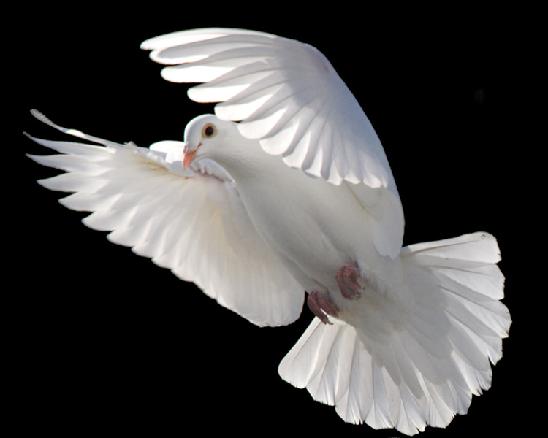
As I sit a robin sings his morning song,
tea in hand, dog in my lap
I wait expectantly,
I listen . . .
all I hear are crows, and wrens.

Where are you?
It has been so long since
I felt your presence.
I long to feel your touch on my cheek,
to hear your whispers in my ear.
I want to be enfolded in your Holy embrace

I search my heart for you.
I seek you in the eyes of those I meet.
I cannot find you, and
without you I am lost.

There is so much to tell you, but . . .
you are not there to hear.
Patience I tell myself, you will come.
So like a Desert Mother I sit day after day and wait,
listening, longing,
silent I sit.

Ruth Jewell, ©June 25, 2014

The Gift of Be-Longing – Prayerful Tuesday

Belong Gives My Heart Wings

Saturday, June 21st, was the summer solstice and I spent the day in a solstice retreat.  It was a time of quiet meditation, laughter, the beginning of new relationships and the renewal of others.  One of our discussions covered how all of us have a ‘longing’ for the companionship of others. I, like most people, was born into a family that served as my primary home of ‘be-longing’ for many years but now the events of normal life has separated me from most of my birth family.  As a result I created my own ‘family’ through relationships with good friends, companion animals, and my husband and his family.

I had never thought of either a birth-family or a self created-family as a holy thing until I read a book by the late John O’Donohue, Eternal Echoes: Celtic Reflections on our Yearning to Belong.[1] In the very beginning of the book O’Donohue says “When you suppress your wild longing and opt for the predictable and safe forms of belonging, you sin against the rest of Nature that longs to live deeply through you” (pg 5). When we deny our need to belong in relationship with others we deny our true selves and we deny God’s gift of grace of the warm embrace of those who care for us.  Yes being in relationship with any other being entails risk; the risk of loss and grief, and the risk of being betrayed. Yet while all of those risk may/do/will happen the benefit joy of knowing there is someone who understands you and is willing to be there for you totally outweighs any sorrow that may occur in the future.

Yes I have lost people I had been in relationship with for many years to death, relocation, and arguments.  And losing a friend because of anger or betrayal is the hardest lost for it means a break in the sacred bond God had gifted us with. Today I am more aware of my relationships, looking for ways to nurture them instead of poisoning them.  Belonging requires hard work, but like a garden the fruits of the harvest are bountiful and delightful.

Today I ask you to hold in prayer your relationships with your family, friends, companion animals, God and draw strength from knowing you are not alone even when the night is the darkest.

Ruth Jewell, ©June 24, 2014


[1] O’Donohue, John; Eternal Echoes, Celtic Reflections on our Yearning to Belong, Perennial Publishers, New York, NY, 1999