Party with Prostitutes – Prayerful Tuesday

Last week a friend posted this video of Dr. Tony Compolo and I thought I’d share it with you this morning. I really don’t need to add anything except the following two requests.

  1. If you know someone who is in need of love give it to them.
  2. Don’t let stereotypes get in the way of remembering what Jesus taught and love all with the same passion as Jesus did.

Enjoy the Video.   http://www.youtube.com/embed/DRBM_YY_YX0?autoplay=1


Published on Jul 25, 2013

Throwing a party for a bunch of prostitutes…..
Tony Campolo shares with us what Jesus would do if he was among us once more.
In fact – he shares what Jesus instructed us to do… to love one another!

May God grace you with love, and may that love warm your heart as it passes through you to someone in need. Amen

Ruth Jewell, April 8, 2014


Prayers of Compassion, Visio Divina – Prayerful Tuesday

In the last week I have watched the reports from the mudslide in Oso Washington and my heart is filled with sorrow for all the victims lost and recovered alive. Last night I used this picture as my prayer focus and found it rich in prayers for all the victims and the responders of this terrible disaster.

1. As you gaze at the picture what feelings come up for you?
2. Do you have something you want to tell God?
3. What words of comfort would you offer to the victims and the responders in Oso?

Other areas have also experienced natural disaster. Los Angeles has been experiencing earthquakes this week and adverse weather due to climate change has plagued the areas east of the Rockies all winter.

4. End you time of meditation with a prayer for all who have been affected by disasters and extreme adverse weather conditions around the world?

Mudslide Oso Washington,  photo from Headline and Global News,  March 27, 2014
Mudslide Oso Washington,
photo from Headline and Global News,
March 27, 2014


Ruth Jewell, © (except for picture) April 1, 2014

WHISPER – Prayerful Tuesday

Visio Divina

20130619 a

sunrise, sunset
listen
do you hear
a whisper
calling.
heart open
spirit quiet
I listen
I hear
a whisper.

As you gaze at the picture what do you feel, what do you hear.  Does the picture lead you somewhere quiet, inside where a whisper is a shout of joy.

Ruth Jewell, ©March 18, 2014


Salt and Light

Salt light

Sermon, Queen Anne Christian Church
February 9, 2014

I was supposed to preach yesterday, but because of snow all of the streets to the church were closed.  You see Queen Anne Christian Church is at the top of Queen Anne Hill and the wise DOT decided it was too dangerous for people to drive up either side of the hill, therefore church was cancelled. So instead I will offer my sermon here.  Enjoy

Matthew 5:13-20 (NRSV)

13 “You are the salt of the earth; but if salt has lost its taste, how can its saltiness be restored? It is no longer good for anything, but is thrown out and trampled underfoot.

14 “You are the light of the world. (Isa. 49:6) A city built on a hill cannot be hid. 15 No one after lighting a lamp puts it under the bushel basket, but on the lamp stand, and it gives light to all in the house. 16 In the same way, let your light shine before others, so that they may see your good works and give glory to your Father in heaven.

17 “Do not think that I have come to abolish the law or the prophets; I have come not to abolish but to fulfill. 18 For truly I tell you, until heaven and earth pass away, not one letter, [a] not one stroke of a letter, will pass from the law until all is accomplished. 19 Therefore, whoever breaks[b] one of the least of these commandments, and teaches others to do the same, will be called least in the kingdom of heaven; but whoever does them and teaches them will be called great in the kingdom of heaven. 20 For I tell you, unless your righteousness exceeds that of the scribes and Pharisees, you will never enter the kingdom of heaven.

In one of the early classes I took with Father Raschko at STM there was this long discussion about the differences between each of the 4 Gospels.  You know, Mark was written first, then Matthew and Luke, who used Mark as a blue print, and John was last and totally different.  Now Father Raschko is a Mark scholar and he loves Mark.  The Gospel of Matthew is OK, but in the words of Father Raschko Matthew was out to correct all of the mistakes Mark had made.  I, in my first or second year enthusiasm decided to sit down and compare them to see if he was right.  Silly me

I have to admit after reading both of them I discovered I loved the Gospel of Mark.  I mean there is that whole messianic message mystery thing he has going on.  You get to the end, all the endings, and it says go back to the beginning, it’s a mystery and who doesn’t love a mystery.  But I found I truly loved the Gospel of Matthew.

Matthew doesn’t write about mystery, well not the way Mark does anyway. He writes about an itinerate Jewish Rabbi, he places Jesus within the historical and cultural landscape of God’s very own people.  In Matthew’s Gospel he connects the Hebrew Scriptures and the peoples own history to what Jesus did to fulfill the scripture.  He writes about doing: about being intentional as a follower of Jesus. In a lot of ways the Gospel Matthew is a Do-It-Yourself manual for how to become a follower of Jesus. Matthew connects the actions of Jesus to the law and the prophets. He expected his own community of first century Christians to do the same.

In today’s scripture Jesus gives an introduction to what the mission of his disciples and followers will be. With the words “you are salt, and you are light” He identifies the ground rules for someone who wishes to become one of his followers. Jesus doesn’t say you should be salt, or you might be light, no, he is telling his disciples, the crowd and us, we are salt and we are light for the communities we live in.  It was the disciples and now it is you and I that is to add the goodness into the lives of those we meet, provide balance and savoriness in our communities, just as salt does for the foods we eat. It is us, you and me, who are to intentionally disrupt the status quo and care for the dispossessed, and those who are hungry and ill.  We are to work for justice and show mercy, and be peacemakers, other words we are to stand up for what we believe with no expectations of ever being rewarded. Just as salt does its job without announcing its presence in the food we eat we are to do all these things not to bring ourselves recognition but because that is just what we are supposed to do.  Just as salt is hidden within our food bringing brightness and goodness to the final product, Jesus wants us as his followers to hide within the community and bring brightness and goodness to the world around us. To do otherwise means we have lost our saltiness and not helpful to the work needed by the Kingdom of God.

Jesus then recalls the prophet Isaiah who says:

I will give you as a light to the nations,
that my salvation may reach to the end of the earth.” (49:6b)

Jesus tells his disciples “you are the light of the world, to both Jew and Gentile, and you can’t hide the light. We too are to let the light shine. This means we are not just salt and supposed to care for others, fight for justice, extend mercy and be peacemakers without an expectation of a reward we are to be the mirror that reflects God’s light into the darkness we humans so frequently to gather within and around us. We are to reflect the graciously given gift of God’s light within ourselves to illuminate the darkness in our own souls. To recognize and open the dark spaces within our souls so that we are better able to reflect God’s light outward to those around us so they too may live in Gods loving light.

We are to let the light shine without focusing the light on ourselves. We are to care for those around us and to carefully walk with God, not in front, but alongside.  We have to take all the good acts we see being done in the world and go one step farther.  And that means it is not in what we say we do, it is in what we DO that is important. Jesus wants us to be intentionally active in whatever way we are called to be, not sitting on the couch or watching others. We are to be the advocate for the voiceless, the homeless, and the dispossessed. It also means just like a mirror we are only the glass that reflects the glory of God and the Kingdom of God. We are to be behind the light being the lens that focus’ the beam on who those needing the light.

We are to be advocates for social justice, advocates for the hungry, the homeless, the incarcerated, and advocates for peace but we are to say “we have done nothing; it is God working through us that has done these things.”   This is where those Matthew called “scribes and Pharisees” got it wrong. Yes they did good works but they made sure everyone knew it. God’s command is we are to do good acts because it’s the right thing to do, not inflate our own ego’s

Today we have modern “scribes and Pharisees” who do the same thing and sometimes I’m one of them.  The hardest thing for me to do is setting aside my own ego and let God stand in front of me, you see I don’t always like taking a back seat.  I must admit that I am all too often a card carrying member of the Pharisee club and I am not proud of that.  I am sure I am not alone in being a member we are, after all, humans, who make choices sometimes there are good ones and sometimes not so good.  It is a good day when I intentionally start it with the words “today I am the mirror, I am the salt.

Ruth Jewell, © February 10, 2014

Seeking God’s Face

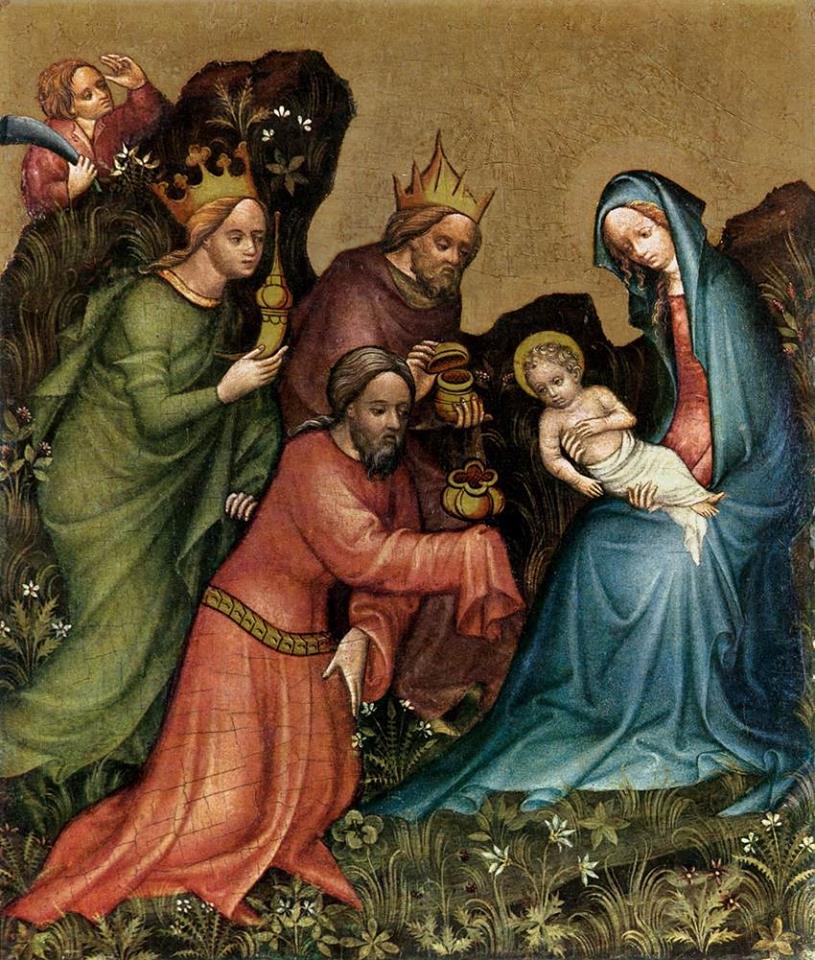
Master of Vienna, Adoration (1410), FB Page The Celtic Christian Tradition

Sermon – Epiphany Sunday
January 5, 2014
Queen Anne Christian Church Seattle, WA

Matthew 2:1-12 (Common English Bible [CEB])

Coming of the magi

1After Jesus was born in Bethlehem in the territory of Judea during the rule of King Herod, magi came from the east to Jerusalem. They asked, “Where is the newborn king of the Jews? We’ve seen his star in the east, and we’ve come to honor him.”

When King Herod heard this, he was troubled, and everyone in Jerusalem was troubled with him. He gathered all the chief priests and the legal experts and asked them where the Christ was to be born. They said, “In Bethlehem of Judea, for this is what the prophet wrote:

You, Bethlehem, land of Judah,
by no means are you least among the rulers of Judah,
because from you will come one who governs,
who will shepherd my people Israel.”

Then Herod secretly called for the magi and found out from them the time when the star had first appeared. He sent them to Bethlehem, saying, “Go and search carefully for the child. When you’ve found him, report to me so that I too may go and honor him.” When they heard the king, they went; and look, the star they had seen in the east went ahead of them until it stood over the place where the child was. 10 When they saw the star, they were filled with joy. 11 They entered the house and saw the child with Mary his mother. Falling to their knees, they honored him. Then they opened their treasure chests and presented him with gifts of gold, frankincense, and myrrh. 12 Because they were warned in a dream not to return to Herod, they went back to their own country by another route.

Greek derivation of Magi, (Strongs Hebrew, Chaldee, and Greek Dictionary)

3097. magos mag’-os  (of foreign origin (7248); a Magian, i.e. Oriental scientist; by implication, a magician:–sorcerer, wise man, [interpreter of dreams, prophet].   (plural, could refer to a male or female wise person)

The story of the Magi is such a familiar story. We have heard this story so many times before and I am sure all of us are able to repeat it without difficulty, at least the surface story.   I was confronted with this simple story, which is anything but simple, when I chose to meditate on it for Epiphany Sunday’s Sermon. Sitting in silence, letting the words of Matthew settle into my subconscious I realized there is so much more to this tale than I first believed. There are also way too many questions to address in a single sermon.  If you ever wanted to experience an abundance of graces just read this story carefully.   I could go into the fact that the gender and number of the Magi is never mentioned in the scripture and that the Magi were gentiles; or the Magi don’t visit the stable, they come to the home of Joseph and Mary; and because the story of the killing of the Bethlehem’s children that follows the Magi’s visit lead scholars to believe Jesus could have been as old as 2. And, that’s just few of the questions I found in these 12 verses of Matthew Chapter 2.  What did intrigue me, and what I will discuss, was never addressed by all of the learned theologians I perused. What I wanted to know was the reason these learned gentiles come in search of a child, a child born to a carpenter and his wife.  And, what unknown gifts still hides in this story for me, and all of us, beyond the pretty tale of rich strangers visiting a destitute baby?

First of my questions was what did the Magi expect to find when they arrived in Jerusalem.  Since they came to the city of the kings of Judea they must have expected to find the child born there, and to parents with more than a lineage to David. My guess is they had expected to find a somewhat wealthy family, or at least fairly well off.  After all they were looking for a King and you normally don’t find one living in the home of working class people. They must also have been confused and terribly disappointed that no one knew what they were talking about. I mean, the birth of a King is big news isn’t. Doesn’t everyone celebrate the birth of a King? It isn’t until King Herod calls them for an audience do they learn that the prophets foretell the birth of “the anointed one,” “the Christ,” was to happen in Bethlehem.  I have no doubt they left somewhat confused. But, eventually they find the baby living in the home with his mother and father. They even bring gifts, and while Mary might have preferred diapers, the gifts they gave were costly and fit for a King.  (By the way Bethlehem and the gifts are never mentioned again, why? Another question to confound me.)

They were seeking a child, an infant King, someone who would turn the Roman world upside down and I can only imagine their surprise at finding the child in such humble circumstances. They brought gifts Herod would have drooled over, gold, frankincense, myrrh.  Wonderful gifts but not really practical for the family they found, well the gold was probably most welcome.  But frankincense and myrrh those aren’t baby gifts.  Frankincense and myrrh were used to perfume oils and ointments for the purification of worship spaces and the anointing of the dead.

Now I know what Matthew was implying by the gifts: Gold was the symbol of Jesus’ kingship, frankincense the symbol for the priestly role Jesus would be called to live, and myrrh a foretaste of what he would endure at the end of his life.   But I think these gentile scholars brought something else and it has been bequeathed to us today and our children. The Magi brought the gift of “seeking God’s face.”

God has always welcomed us and longed for our inquisitive search for the face of the Divine, and She encourages us to reach for her Holy arms.  One of David’s Psalms says it well:

30 I will praise God’s name with song;
I will magnify him with thanks
31     because that is more pleasing to the Lord than an ox,
more pleasing than a young bull with full horns and hooves.
32 Let the afflicted see it and be glad!
You who seek God—
let your hearts beat strong again
— Psalm 69:30-32 (CEB)

And in the Book of Acts Paul tells the Athenians “27 God made the nations so they would seek him, perhaps even reach out to him and find him. In fact, God isn’t far away from any of us.” (Acts 17:27)  No God is never far away, we are.  And, seeking the face of God is one of the joys of creation we should do more often.

The Magi were the first to seek God’s face in its incarnated form, the face of a child.  For Matthew the Magi represent the mission Jesus gives his disciples to reach out to all peoples but especially gentiles, and those born within the great humble mass of humanity, in all its lovely diversity; poor and rich, young and old, all genders, all races, and all people.

For me the Magi represent the longing to see God in the face of my beloved, my grandchildren, best friend, and all creation.  I too want to see the incarnated God, I too long to see the ever present being in the first light of dawn, and I do see it in the face of my beloved when he first opens eyes in the morning.  The Magi have passed this longing down to us and I am grateful for the gift and grateful to pass it on to the next generation.

The Magi’s gift of presence to a child in a humble home was passed on to us through Jesus’ presence in his life, death and resurrection.  Now it is our mission to be present to the incarnated child born to humble parents.   To recognize and honor the incarnation born in each of us, through our gifts to the world whatever they may be; caring for each other, the environment, our nation, and our world.  It is up to us to be the Magi of today and visit the child in a humble home, to offer the gold of our love, to purify our mistakes with the frankincense of compassion; and to anoint those who pass on to the next world with the myrrh of God’s blessings and praise.   In a Judean desert David writes:

God! My God! It’s you—
I search for you!
My whole beingthirsts for you!
My body desires you
in a dry and tired land,
no water anywhere.
Yes, I’ve seen you in the sanctuary;
I’ve seen your power and glory.
My lips praise you
because your faithful love
is better than life itself!
So I will bless you as long as I’m alive;
I will lift up my hands in your name.
— Psalm 63:1-4 (CEB)

So too are we called to offer our praises to God, honor the child that lives today, in each one of us, and in all of creation.  Seek the face of God in all you meet, child, adult, male or female, and all of God’s marvelous creation.  Look in the eyes of your loved ones, your companion animals, see the face of God looking back.  Amen

Ruth Jewell, ©January 7, 2014


Prayers of Intercession and Petition – Prayerful Tuesday

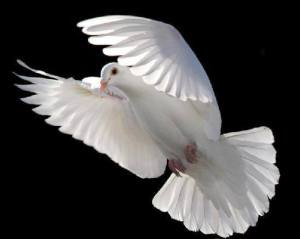
dove

Ephesians 3:16-19  16I pray that, according to the riches of his glory, he may grant that you may be strengthened in your inner being with power through his Spirit, 17and that Christ may dwell in your hearts through faith, as you are being rooted and grounded in love. 18I pray that you may have the power to comprehend, with all the saints, what is the breadth and length and height and depth, 19and to know the love of Christ that surpasses knowledge, so that you may be filled with all the fullness of God.

Paul’s prayer to the readers of the Letter to the Ephesians is an intercessory or petition prayer to the Holy Spirit, offered by Paul on behalf of the believers of Ephesus.  This prayer strikes a deep cord within me today because I am often asked if praying for others is actually beneficial or just words.  According to some prayer does. Richard Schiffman, in a 2012 post on the religious page of Huffington Post[1], makes the case that those who pray are healthier. In fact he states “It doesn’t matter if you pray for yourself or for others, pray to heal an illness or for peace in the world, or simply sit in silence and quiet the mind — the effects appear to be the same.”  Now I’m not calling Mr. Schiffman the world’s best expert but from my own experience I have to agree with him, prayer does help me and does provide comfort for those I pray for.

So why is Paul’s prayer touching me today? Well because today I have been offering a number of prayers for people and so form of prayer is weighing large on my mind today. I offer prayers for others and I keep a prayer list with names of those who ask me to pray for them. However, and I try to be gentle with those who request prayer and let them know that intercessory prayers may have a downside to them, at least from my perspective.  If we expect G-d to answer our prayers the way we do when we order something on Amazon, then we have a deep problem.  A problem that can harm those we offer prayers for and ourselves.

There is an old hymn that says to “take it to God in prayer” and the implication is all will be made well if we pray.  Now I like that old hymn but I also know that God isn’t going to answer my prayers in any way I expect.  Yes, sometimes there is no answer and that is probably God saying “no” to my request, but, sometimes the answer comes in a way I don’t recognize or expect.  It may not be until long after the prayer I understand what the answer is.

Before we go any farther a word of caution, and I want to make this very clear, my experiences are mine, your experiences with pray are yours. The meanings I receive for my prayers will not mean the same thing to you.  So don’t expect what I learn from my prayers will fit neatly into your frame of reference.

That word of caution is what I am trying, in my inept way, to say. Intercessory pray can become wish list for things you want God to fill.  We all have done that, when I was 8 I prayed for a pony and needless to say I didn’t get one and was very disappointed, going in tears to my father asking why God wouldn’t give me a pony.  He words have stuck with me to this day: “God doesn’t give things we want, God gives us the things we need.  God also gives her gifts in her own time, not mine, God listens but picks the moment when what she offers will do the most good for my life with her. I won’t always recognize her gifts right away, but if I am listening and watching I will see them eventually.”  Now I have to admit I had no idea what he was talking about, all I knew was there wasn’t a pony at the end of my bed the next morning.  But I’ve remembered those words and at this stage of my life I am finally learning what he meant and how to offer a prayer of petition, or intercession, for myself and others.

Today I would like to offer Intercessory and Petition Prayers as today’s spiritual practice, it is an important one to learn not just for yourself, but for those you carry within your heart. How I pray may not work for you but I am sure you will find what works best for you. Unplanned prayers happen when there is a necessity for them.  I have offered a prayer at the bedside of someone who was ill or dying, or when something happens that touches me deeply and I feel the need to offer that prayer.  Those prayers are unplanned and speak from my heart.  I don’t know how to give you instructions for those except to listed for the words and they will come.

Most often I offer prayers of intercession and petition following my daily meditation when I am fully centered in God’s presence. For these Prayers or Intercession and Petition I use the following Celtic Circle Prayer[2], a form of prayer used by early Celtic Christians called the Caim or encircling prayer, which goes like this:

Pray for ourselves

Circle me, O God, encircle me with your presence.

Keep joy within, keep bitterness out;
Keep generosity within, keep greed out;
Keep love within, keep self-seeking out;
Keep light within, keep darkness out.

In the name of the Sacred Three, the Father, Son and Holy Spirit, Amen

Prayer for those on our heart

Circle, O God, (name the person(s) you are praying for), encircle them with your presence.

Keep wholeness within, keep sickness out;
Keep hope within, keep despair out;
Keep peace within, keep turmoil out;
Keep light within, keep darkness out.

In the name of the Sacred Three, the Father, Son and Holy Spirit, Amen

Prayer for Peacemakers

Circle, O God, those who work for peace (you may wish to specifically name people), encircle them with your presence.

Keep wisdom within, keep folly out;
Keep strength within, keep weariness out;
Keep hope within, keep despair out;
Keep light within, keep darkness out.

In the name of the Sacred Three, the Father, Son and Holy Spirit, Amen

For those victims of violence and injustice

Circle, O God, (name people and places), encircle them with your presence.

Keep truth within, keep falsehood out;
Keep compassion within, keep hard-heartedness out;
Keep love within, keep hatred out;
Keep light within, keep darkness out.

In the name of the Sacred Three, the Father, Son and Holy Spirit, Amen

For those who commit acts of violence and injustice

Circle, O Holy Spirit, (name people and places), encircle them with your presence.

Help them to see the truth and to turn away from falsehood;
Help them to learn compassion and leave hard-heartedness behind;
Help them find the courage to turn away from evil;
May they feel your love in a world filled with hate;
Help them to see your light in the darkness.

In the name of the Sacred Three, the Father, Son and Holy Spirit, Amen

I don’t always use every one of these prayers at one time sometimes only one or two, but I find that I am less likely to petition God for selfish reasons when I use this prayer.  If these prayers are helpful for you please feel free to you them, but, you may also have or find a prayer that works better for you and that is just as much a blessing.

My prayer for all of you this day is:

Circle, O Holy Spirit all who read these words, encircle them with your presence.

Keep joy within, keep bitterness out;
Keep generosity within, keep greed out;
Keep love within, keep self-seeking out;
Keep light within, keep darkness out.

In the name of the Sacred Three, the Father, Son and Holy Spirit, Amen

Ruth Jewell, ©January 7, 2014


[1] Schiffman, Richard, Huffington Post, Religious Page, January 18, 2012
[2] Based on a Prayer from the Gethsemane Chapel, Wells Cathedral, Wells UK.
A Child

a child is born
a child like no other
a child born
to change the world

a child to turn the world
of Rome upside down
an “Anointed One”
to challenge greed and power

the stars in the sky celebrate
the scholar honors with kingly gifts
Herod and all Jerusalem with him
tremble

fear who sits on the shoulder of Rome
awakens
fear of a fall
fear of being nothing

the Magi bend their knees
hold a child in their arms
creaking old voices laugh
with a child whose laugh lights the sky

come to the home of Mary
visit the child of love
bring your gift of presence
bring your gift of self

Ruth Jewell, ©January 3, 2014

God’s Surprise — Prayerful Tuesday

73c89ea0157c3905290f6a706700dc8a


God’s Surprise
Paraphrase of Luke 2:26-33

God sent a Messenger to a virgin engaged
to a man named Joseph, of the house of David.
The virgins name was Mary.
As he entered the Messenger greeted Mary:

Greetings!
You are beautiful with God’s beauty,
beautiful inside and out,
God be with you.

Mary was confused by these words
and wondered what this could mean,
but the Messenger said:

Mary, you have nothing to fear.
God has a surprise for you;
You will become pregnant
and give birth to a son
and you will name him Jesus

Ruth Jewell, ©December 24, 2013
(I used the NRSV, The Voice and The Message)

Prayerful Tuesday – Why Have You Forgotten Me?

Winter's Path
Winter’s Path


Psalm 42:9-11

9I say to God, my rock, “Why have you forgotten me?
Why must I walk about mournfully because the enemy oppresses me?”
10As with a deadly wound in my body, my adversaries taunt me,
while they say to me continually, “Where is your God?”
11Why are you cast down, O my soul, and why are you disquieted within me?
Hope in God; for I shall again praise him, my help and my God.

I have to admit I haven’t always lead an exemplary life and the life I have led has been on roads and paths G-d might have preferred me to avoid.  Those bumpy roads led me to places where I felt abandoned and alone.  But, I have to remember that I choose those roads, I choose to ignore the sacred voice within and live outside of G-d’s love.  I choose to be there, even when the event that got me there was none of my doing I still choose NOT to recognize I wasn’t alone.  I couldn’t or wouldn’t see G‑d walking beside me every step of the way.  I choose to see only darkness; I simply refused to see the luminous darkness that was G-d.

Yes I blamed G-d for all the bad events in my life, isn’t that what every human does?  As a human being I saw the worst and assumed the worst.  I rolled around in my self-pity, yelling at G-d that life was unfair and therefore G-d either didn’t exist or didn’t care what happened to me. I yelled at G-d telling her “why are you doing this to me, why aren’t you there for me, why am I so alone.”  I was so busy trying to run from those comforting arms that I never recognized that it was G-d holding me up, that Jesus was the one helping my broken spirit and that the Holy Spirit was trying to dry my tears.  Because I did not recognize  G-d I was afraid, so afraid.  My bones shook with fear until I thought they would break. I could not see that what happened to me were the consequences I had to experience and live through in order to find my way back to a better place.

It wasn’t until I ran out of tears, ran out of words, until I ran out of myself that I was able to open the door and let you in, G-d.  Only then, O Divine One, did I feel your presence and finally rest in your outstretched arms.  I was still afraid, but I wasn’t alone any longer.  My fear was not as frightening because I knew you were there, and I know it now, in this moment of time I now live.

Why do I put myself through all of that? Why do any of us? Is the struggle to return to you G-d after I have rejected you so important to my understanding of you as unconditional love?  Well I think I know the answer to that question and it is yes.  Yes it is important to walk through the darkness in order to see the light.  Sometimes I have to test my own limits before I learn that you have no limits.

You, Oh G-d, will always welcome me back when I have strayed from your side.  I know you are always there in the dark with me but my eyes are blinded by your startling bright light and I cannot see.  Because I can’t see I fear you’ve left me to stumble in the darkness.   It is only when I regain some hope that you are there, that my eyesight begins to clear.  When I choose to hope, I choose you, oh G-d.  It is when I choose not to recognize you, there beside me, that I become hopeless and unable to see your glory all around me.

So I will choose hope, I chose you oh G-d, I am choosing you G-d.  I have made my choice and I choose to live in your light, your love, your hope.  Will I sometimes forget that choice, probably? In some future time I will again fail to see your presence in the dark and you will be there walking right beside me.  You will not leave me alone even if I believe you have.  But the big difference now is I know you forgive, I know you offer me grace and I will fall into your arms when the tears and words run out and you will comfort me.

O patient G-d I am grateful for your presence, even when I push you away.  Grant me my moments of struggle and suffering even though you suffer with me because, in my suffering I discover again your amazing love.   Amen

Ruth Jewell ©December 16, 2013


Prayerful Tuesday – Through Acts of Faith

DSCF0547a

Reflection:  Hebrews 11:32-34 (The Message) 

32-34 I could go on and on, but I’ve run out of time. There are so many more—Gideon, Barak, Samson, Jephthah, David, Samuel, the prophets. . . . Through acts of Faith, they toppled kingdoms, made justice work, took the promises for themselves.  They were protected from Lions, fires, and sword thrusts, turned disadvantage to advantage, won battles, routed alien armies.

I have always found this chapter of Hebrews somewhat difficult and these 3 verses when read outside the context of the whole chapter are, I think, somewhat confusing. These 3 verses are also often used to justify the idea of “G-d is on my side in this war because I am more faithful than you are.”  But I do not believe that is what the author had in mind.

The writer of Hebrews is making a case for faith, a faith in what we cannot see.  Now that I get, and, for me the writer could have stopped at verse 3 of chapter 11 and his argument would have been made.

Hebrews 11:1-3 – The Message (MSG)Faith in What We Don’t See  1-2 The fundamental fact of existence is that this trust in God, this faith, is the firm foundation under everything that makes life worth living. It’s our handle on what we can’t see. The act of faith is what distinguished our ancestors, set them above the crowd. By faith, we see the world called into existence by God’s word, what we see created by what we don’t see.

But he didn’t and so now I am left with chapter and verse that could be problematic when read outside the context of the whole chapter 11 and in fact the complete Letter to the Hebrews.  My difficulty isn’t with its premise it is with how it is interpreted and used in today’s world, the 21st century.  Yes Gideon, Barak, Samson, and the rest had faith in G-d and they used that faith to give them the courage to defend themselves and fight for a place to live.  Yes they are told by G-d and Moses they are G-d’s chosen people and that G-d would be right there beside them through thick and thin.  At least that is what is told in the Pentateuch, which was written during the Babylonian Exile sometime between 600 BCE and 580 BCE and not by Moses.

Now don’t get me wrong I actually love the Letter to the Hebrews.  The Letter’s central idea of Jesus as the High Priest, our representative who stands before G-d in our name as our advocate means we have a spokesperson on our side, something the disadvantaged throughout history rarely have.  That is an important metaphor to keep in mind.  It is also the root meaning of Chapter 11.

In the first three verses of Chapter 11 the author of Hebrews lays out the important points he wants to make: “By faith, we see the world called into existence by God’s word, what we see created by what we don’t see.”  The remainder of this chapter is a litany of heroes from the Jewish Bible.  They are examples of faith, combined with trust, obedience, and hope that supports the desire for a better place to live, a place to call their own where G-d is the planner and builder, a place where G-d is the central focus.  The memory of the prophets, kings and soldiers the author invokes is not about “whose side G-d is on,” it’s about being true to G-d’s teaching and message.  It is not the act of fighting or going to war that the author is writing about. The important point it is the faithfulness of those who were fighting to build a homeland and country.  Would Gideon have lost if they hadn’t had faith?  That is a possibility because they might not have had the courage to stand up for what they believed in. And, by invoking the heroes  of his Jewish faith the author is placing Jesus among the great and small who throughout history have listened  to G-d’s  call to stand up and speak G‑d’s message of justice, mercy, and  compassion (Micah 6:8).  To walk with G-d does not mean the road will be easy rather it means G-d walks with us into the “lion’s den” offering support and not making smoothing out the potholes.

As I contemplate these verses at  the dawning of Advent I am hearing G-d’s call to respond as Isaiah, Moses, Jesus, Paul, and the author of Hebrews to speak out in G-d’s name for justice, mercy, and compassion for those who cannot speak for themselves.   In the next 4 weeks as I, we, wait for the celebration of the birth of love in human form we need to remember why Jesus came.  He didn’t come so we could give gifts, or eat ourselves sick, or spend money with no thought of consequences.  Jesus came to bring us a way of life.  We are called by G-d to respond to those who are in need, to give out of our abundance. Because we have enough to live comfortably it is our responsibility to ensure that everyone has enough to live comfortably.   To give joyfully and generously, whether it is material, monetary, or spiritually is to practice the teaching of Jesus when he walked among us.

Spiritual Practice

So this week’s spiritual challenge is not an easy one but one worth doing.  What would you life be like if you examined where you are on your spiritual journey and choose what you can give, how you might serve or where you can answer G-d’s call of service and walk in the path of Jesus?  In what acts of faith will G-d recognize your footprints

Ruth Jewell, ©December 3, 2013