Liturgy as Spiritual Practice – Prayerful Tuesday

Kneeling in Prayer
Kneeling in Prayer

According to my old college American Heritage Dictionary “liturgy is a noun defined as a fixed set of ceremonies, words, etc., that are used during public worship in a religion; ritual.” [1] As followers of faith traditions we most often encounter liturgies when we attend religious services.  But all rituals having a set order to the words spoken and are also liturgies. Graduation ceremonies, inaugurations, State Union Addresses, weddings any ritual using an set order of service uses a liturgy.

We may also use liturgies in our private prayer and spiritual practice’s.  Some traditions have small books with liturgies for each day of the week that include morning, mid-day, and evening prayers.  Each meditation includes a prayer, scripture, maybe a written meditation, and sometimes poetry or pictures to contemplate.  In addition to a traditions individual prayer books there are also many other books that provide written rituals for private prayer.  (You will find a short list of a few of my favorites at the end of this meditation.) Today I am going to introduce you to a liturgy from one of my all time favorite prayer books and offer how I use these resources in my prayer life. One of the advantages of having a liturgy already written out for you is you may adapt them to fit your day and your lifestyle.

I most often use prayer books when I am very stressed out and can’t find a way to sit still and listen for the still small voice of God.  Using a liturgy that includes a blessing or poem, scripture and a prayer calms my heart and open a door into soul allowing me to find my still point and open up to what God is trying to tell me.  If you are new to prayer, any kind of prayer, these pre-written liturgies may provide you with a stepping stone into a regular prayer life.  They allow you to slow down and step across a threshold to you own sacred space.  But, just as with every spiritual practice, you must set a regular time aside each day to read the liturgy.  Most are short and may be read in only a few minutes.  However, setting aside 10 to 15 minutes as a starting place will allow you to sit with the written prayers and scripture in silent contemplation.

Today I offer a liturgy I’ve adapted from a meditation for Tuesday from the Earth Gospel, a guide to prayer for God’s creation written by Sam Hamilton-Poore.   It is an adaption I have used before in my own private prayer and one that allows me to go deeper into that sacred space of my heart.  As you read may you also find a blessing within the words.

Opening Blessing: Edmund Banyard

Holy is the soil we walk on,
Holy everything that grows,
Holy all beneath the surface,
Holy every stream that flows.

A moment of silence

Scripture: Psalm 23 Common English Bible (CEB)

The Lord is my shepherd.
I lack nothing.
He lets me rest in grassy meadows;
he leads me to restful waters;
   he keeps me alive.
He guides me in proper paths
for the sake of his good name.

Even when I walk through the darkest valley,
I fear no danger because you are with me.
Your rod and your staff—
they protect me.

You set a table for me
right in front of my enemies.
You bathe my head in oil;
my cup is so full it spills over!
Yes, goodness and faithful love
will pursue me all the days of my life,
and I will livein the Lord’s house
as long as I live.

Reflection:  “The Avowal” by Denise Levertov (1923-1997)

As swimmers dare
to life face to the sky
and water bears them,
as hawks rest upon air
and air sustains them,
so would I learn to attain
freefall, and float
into Creator Spirit’s deep embrace,
knowing no effort earns
that all-surrounding grace

Closing Prayer:

Into your arms, loving Lord, let me “free-fall,”
upheld by your goodness and mercy.
Secure in your embrace,
show me how to love without effort,
trust without fear,
and live with abandon.  Amen

Resources:

  1. Deleon, Roy ObiSB, Praying with the Body, Bringing the Psalms to Life, Paraclete Press, Bewster, MA, 2009
  2. Hamilton-Poore, Sam, Earth Gospel, a guide to prayer for God’s creation, Upper Room Books, Nashville, TN , 2008 (my offered liturgy will be found on pages 106 and 107)
  3. Newell, J. Philip; Celtic Prayers from Iona, Paulist Press, Mahwah, NJ, 1997
  4. Rohr, Richard, YES, AND . . . Daily Meditations, Franciscan, Media, Cincinnati, OH, 2013

Ruth Jewell, ©January 28, 2014


[1] The American Heritage  Dictionary, 2nd College Edition, Houghton Mifflin Company, Boston MA, 1982


Visio Divina – Prayerful Tuesday

Desert Times

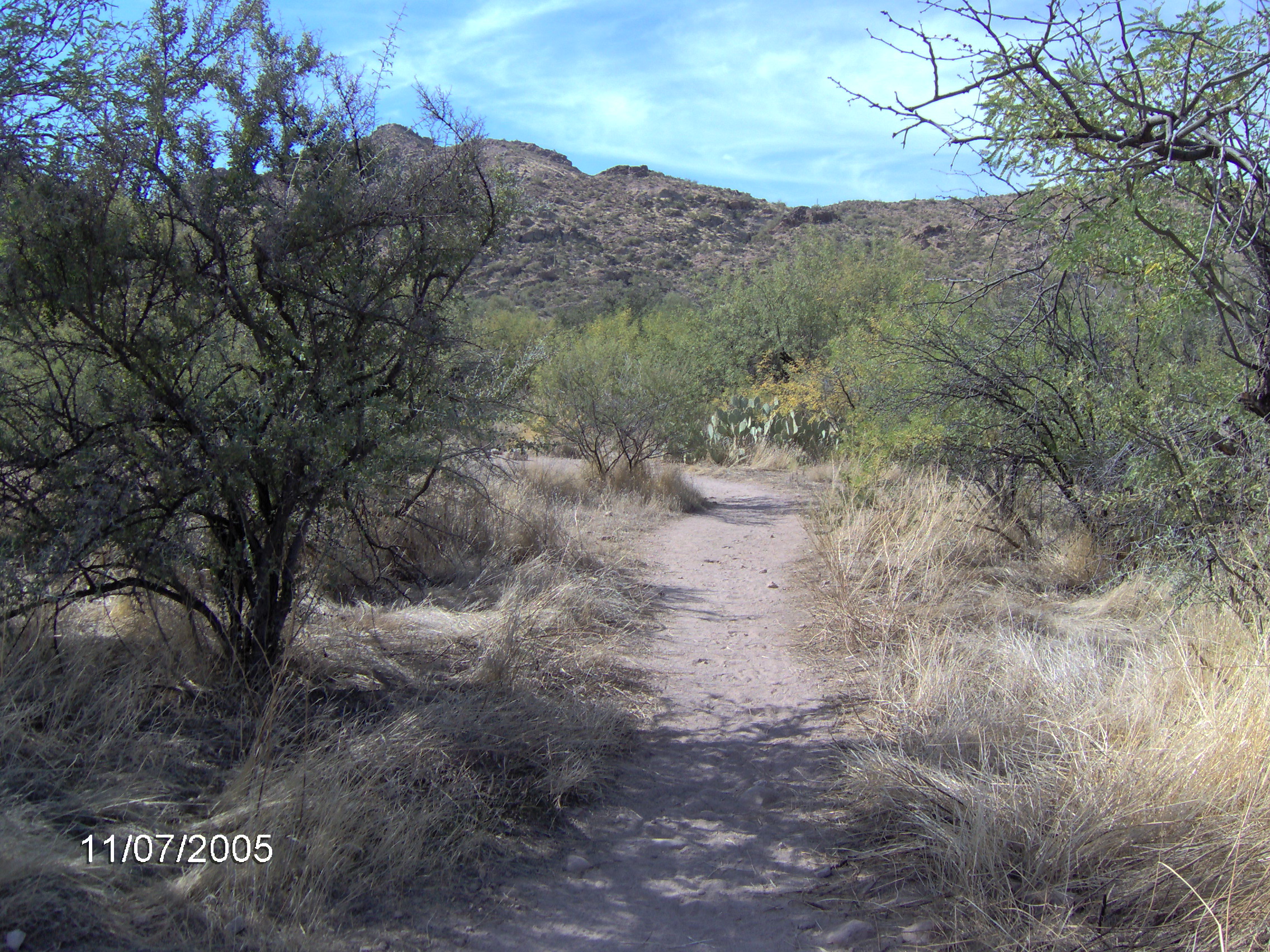
Superstition Mountains, Arizona,  ©Ruth Jewell, November 2005
Superstition Mountains, Arizona,
©Ruth Jewell, November 2005

January is a month of quiet stillness, the stillness of snow falling, the stillness of early darkness. It is time when the earth sleeps waiting for the renewal in life coming in future months.  January is a desert time, a time when the darkness can overwhelm us with emptiness, and loneliness.  For some the month of January can last forever, or seem like it anyway.  But spring is coming, hope lies just below the surface of cold snow and hard ground just as water lies beneath the surface of the desert waiting until it is able to break through into the light.

Today I invite you to join me in the practice of Visio Divina with the above desert picture.  As you focus on the desert scene ask yourself the following questions:

  1. When have you felt the silence of the desert in your life?
  2. In what ways did the desert nurture your renewal into a new spring?
  3. And, what is calling your forth from the desert?

May your deserts, whether cold or hot, draw you deeper into the arms of the Holy Spirit.

Ruth Jewell, © January 21, 2014

Seeking God’s Face

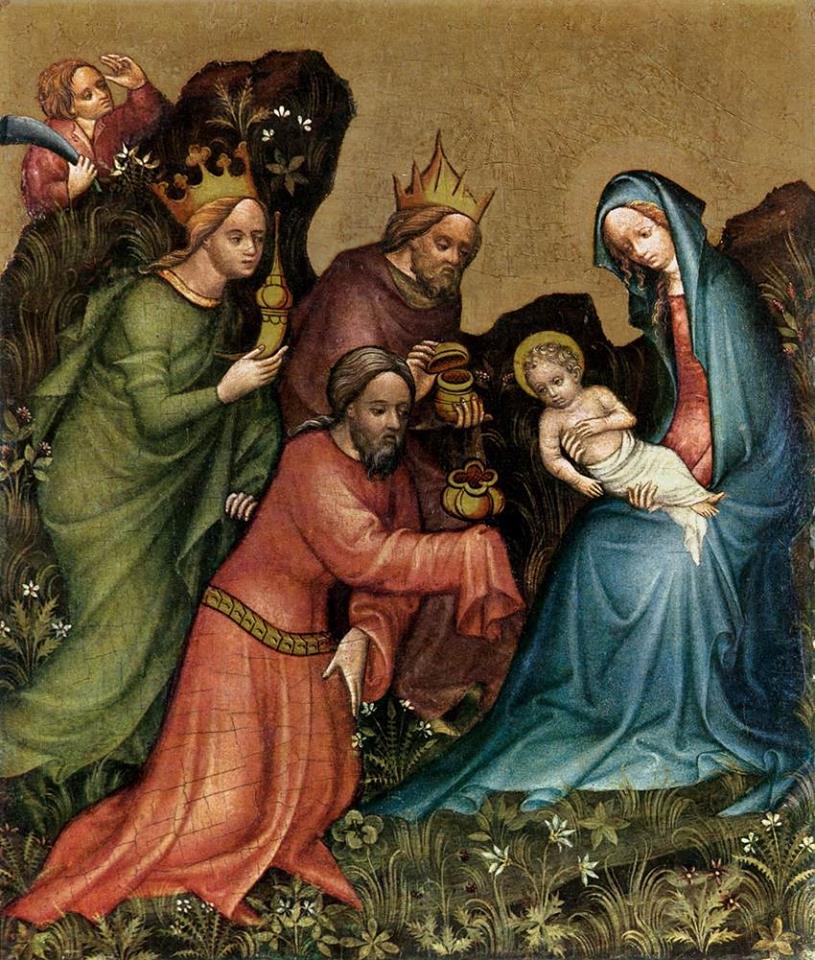
Master of Vienna, Adoration (1410), FB Page The Celtic Christian Tradition

Sermon – Epiphany Sunday
January 5, 2014
Queen Anne Christian Church Seattle, WA

Matthew 2:1-12 (Common English Bible [CEB])

Coming of the magi

1After Jesus was born in Bethlehem in the territory of Judea during the rule of King Herod, magi came from the east to Jerusalem. They asked, “Where is the newborn king of the Jews? We’ve seen his star in the east, and we’ve come to honor him.”

When King Herod heard this, he was troubled, and everyone in Jerusalem was troubled with him. He gathered all the chief priests and the legal experts and asked them where the Christ was to be born. They said, “In Bethlehem of Judea, for this is what the prophet wrote:

You, Bethlehem, land of Judah,
by no means are you least among the rulers of Judah,
because from you will come one who governs,
who will shepherd my people Israel.”

Then Herod secretly called for the magi and found out from them the time when the star had first appeared. He sent them to Bethlehem, saying, “Go and search carefully for the child. When you’ve found him, report to me so that I too may go and honor him.” When they heard the king, they went; and look, the star they had seen in the east went ahead of them until it stood over the place where the child was. 10 When they saw the star, they were filled with joy. 11 They entered the house and saw the child with Mary his mother. Falling to their knees, they honored him. Then they opened their treasure chests and presented him with gifts of gold, frankincense, and myrrh. 12 Because they were warned in a dream not to return to Herod, they went back to their own country by another route.

Greek derivation of Magi, (Strongs Hebrew, Chaldee, and Greek Dictionary)

3097. magos mag’-os  (of foreign origin (7248); a Magian, i.e. Oriental scientist; by implication, a magician:–sorcerer, wise man, [interpreter of dreams, prophet].   (plural, could refer to a male or female wise person)

The story of the Magi is such a familiar story. We have heard this story so many times before and I am sure all of us are able to repeat it without difficulty, at least the surface story.   I was confronted with this simple story, which is anything but simple, when I chose to meditate on it for Epiphany Sunday’s Sermon. Sitting in silence, letting the words of Matthew settle into my subconscious I realized there is so much more to this tale than I first believed. There are also way too many questions to address in a single sermon.  If you ever wanted to experience an abundance of graces just read this story carefully.   I could go into the fact that the gender and number of the Magi is never mentioned in the scripture and that the Magi were gentiles; or the Magi don’t visit the stable, they come to the home of Joseph and Mary; and because the story of the killing of the Bethlehem’s children that follows the Magi’s visit lead scholars to believe Jesus could have been as old as 2. And, that’s just few of the questions I found in these 12 verses of Matthew Chapter 2.  What did intrigue me, and what I will discuss, was never addressed by all of the learned theologians I perused. What I wanted to know was the reason these learned gentiles come in search of a child, a child born to a carpenter and his wife.  And, what unknown gifts still hides in this story for me, and all of us, beyond the pretty tale of rich strangers visiting a destitute baby?

First of my questions was what did the Magi expect to find when they arrived in Jerusalem.  Since they came to the city of the kings of Judea they must have expected to find the child born there, and to parents with more than a lineage to David. My guess is they had expected to find a somewhat wealthy family, or at least fairly well off.  After all they were looking for a King and you normally don’t find one living in the home of working class people. They must also have been confused and terribly disappointed that no one knew what they were talking about. I mean, the birth of a King is big news isn’t. Doesn’t everyone celebrate the birth of a King? It isn’t until King Herod calls them for an audience do they learn that the prophets foretell the birth of “the anointed one,” “the Christ,” was to happen in Bethlehem.  I have no doubt they left somewhat confused. But, eventually they find the baby living in the home with his mother and father. They even bring gifts, and while Mary might have preferred diapers, the gifts they gave were costly and fit for a King.  (By the way Bethlehem and the gifts are never mentioned again, why? Another question to confound me.)

They were seeking a child, an infant King, someone who would turn the Roman world upside down and I can only imagine their surprise at finding the child in such humble circumstances. They brought gifts Herod would have drooled over, gold, frankincense, myrrh.  Wonderful gifts but not really practical for the family they found, well the gold was probably most welcome.  But frankincense and myrrh those aren’t baby gifts.  Frankincense and myrrh were used to perfume oils and ointments for the purification of worship spaces and the anointing of the dead.

Now I know what Matthew was implying by the gifts: Gold was the symbol of Jesus’ kingship, frankincense the symbol for the priestly role Jesus would be called to live, and myrrh a foretaste of what he would endure at the end of his life.   But I think these gentile scholars brought something else and it has been bequeathed to us today and our children. The Magi brought the gift of “seeking God’s face.”

God has always welcomed us and longed for our inquisitive search for the face of the Divine, and She encourages us to reach for her Holy arms.  One of David’s Psalms says it well:

30 I will praise God’s name with song;
I will magnify him with thanks
31     because that is more pleasing to the Lord than an ox,
more pleasing than a young bull with full horns and hooves.
32 Let the afflicted see it and be glad!
You who seek God—
let your hearts beat strong again
— Psalm 69:30-32 (CEB)

And in the Book of Acts Paul tells the Athenians “27 God made the nations so they would seek him, perhaps even reach out to him and find him. In fact, God isn’t far away from any of us.” (Acts 17:27)  No God is never far away, we are.  And, seeking the face of God is one of the joys of creation we should do more often.

The Magi were the first to seek God’s face in its incarnated form, the face of a child.  For Matthew the Magi represent the mission Jesus gives his disciples to reach out to all peoples but especially gentiles, and those born within the great humble mass of humanity, in all its lovely diversity; poor and rich, young and old, all genders, all races, and all people.

For me the Magi represent the longing to see God in the face of my beloved, my grandchildren, best friend, and all creation.  I too want to see the incarnated God, I too long to see the ever present being in the first light of dawn, and I do see it in the face of my beloved when he first opens eyes in the morning.  The Magi have passed this longing down to us and I am grateful for the gift and grateful to pass it on to the next generation.

The Magi’s gift of presence to a child in a humble home was passed on to us through Jesus’ presence in his life, death and resurrection.  Now it is our mission to be present to the incarnated child born to humble parents.   To recognize and honor the incarnation born in each of us, through our gifts to the world whatever they may be; caring for each other, the environment, our nation, and our world.  It is up to us to be the Magi of today and visit the child in a humble home, to offer the gold of our love, to purify our mistakes with the frankincense of compassion; and to anoint those who pass on to the next world with the myrrh of God’s blessings and praise.   In a Judean desert David writes:

God! My God! It’s you—
I search for you!
My whole beingthirsts for you!
My body desires you
in a dry and tired land,
no water anywhere.
Yes, I’ve seen you in the sanctuary;
I’ve seen your power and glory.
My lips praise you
because your faithful love
is better than life itself!
So I will bless you as long as I’m alive;
I will lift up my hands in your name.
— Psalm 63:1-4 (CEB)

So too are we called to offer our praises to God, honor the child that lives today, in each one of us, and in all of creation.  Seek the face of God in all you meet, child, adult, male or female, and all of God’s marvelous creation.  Look in the eyes of your loved ones, your companion animals, see the face of God looking back.  Amen

Ruth Jewell, ©January 7, 2014


Prayerful Tuesday – “I the God of Israel will not forsake them”


God moves in a mysterious way his wonders to perform; by Wm Cowper Picture by NASA
God moves in a mysterious way his wonders to perform        words by Wm Cowper
Picture by NASA

Isaiah 41:17-20
17
When the poor and needy seek water,
and there is none,
and their tongue is parched with thirst,
I the Lord will answer them,
I the God of Israel will not forsake them.

18I will open rivers on the bare heights,
and fountains in the midst of the valleys;
I will make the wilderness a pool of water,
and the dry land springs of water.

19I will put in the wilderness the cedar,
the acacia, the myrtle, and the olive;
I will set in the desert the cypress,
the plane and the pine together,

20so that all may see and know,
all may consider and understand,
that the hand of the Lord has done this,
the Holy One of Israel has created it. 

Advent, a time of waiting, a gestation time of new beginnings, I have heard those words many times over many Advents.  And, while all this waiting is important I have a confession to make, I hate waiting!  Yes, my impatience frequently gets me into trouble, with G-d and with those around me.  I begin before the preparation has been completed and my task, while not a total failure, does not live up to its potential.  Patience is not one of the gifts G-d has seen fit to give me. It is something I have been trying to learn for 66 years and I am still not very good at it.

I admit to being one of those thirsty people in the desert who wants to have water and I want now!  If I had been with the Israelites in the Sinai I would have marched right up to Moses and said “I’m thirsty, I need water and I need it now!”  And I am sure Moses would have looked at me with a jaundiced eye and said “get a grip; learn some patience for crying out loud.  You are out of Egypt so be grateful for what you have and quite complaining!”  Yep that would have been me hearing those words.   Yet in Isaiah we hear that G-d will provide water and more to those who are poor and in need and it is not lost on me that G-d came through with food and water during the Exodus.  So yes I do believe G-d, in Her own good Time and Way, will provide.

The key to this waiting is “in Her own good Time and Way” G-d will offer the drink and food we need and it’s always in that perfect moment.  The moment when we not only need it the most but the moment when we are open the widest for hearing G-d’s voice speak the Word we so desperately thirst and hunger for.

For the last two and half years I have been in my own time of Advent, walking in a wilderness of my own making as I waited for G-d to give me a Word I could respond to about where my ministry would take me.  And in that time there have been many impatient moments.  Many times I have tried to hurry G‑d.  I have tried to guess what She will speak and tried starting a task with no direction from Her.  It rarely works out because you cannot hurry G-d.  G-d will speak when the time is right, when my heart is open the widest to hear G-d speak and not before.

Through out this time G-d has been allowing a ministry to begin gestating within me.  To grow in concept piece by piece, step by step while at the same time letting G-d open me up to whom I am and who She is. I am learning that G‑d is my greatest counselor, friend, lover, supporter, confidant, comforter, and confessor.  All I have to do is live a life that puts G-d first, keep our relationship strong and allowing the counselor, friend, lover, supporter, confidant, comforter, and confessor work through me in a working partnership with Her.

It seems as if it would be easy to do what G-d asks of us doesn’t it?  But it is not.  Ask the Israelites how hard it was to follow the path G-d laid before them.  Ask the disciples how hard it was to walk the path Jesus laid before them.  Each one will tell you it is not easy.  Yes G-d will provide for the poor and needy but verse 41:20 of Isaiah says it best.  We are to “… see and know … consider and understand, that the hand of the Lord has done this, the Holy One of Israel has created it.” We fail hopelessly in that understanding.  All too often we take G-d’s handiwork for granted and do not see what the Lord does for us.  I, just like the rest of the human race, all too often think we are entitled to the abundance we see around us.  We forget just where and who it comes from, where and from whom we come from.  It has taken me a life time to understand in a small way the meaning of verse 20.  And, it has only been in the last year and half that I have worked hardest to be patient and to let G-d speak when She is ready and not me.

And now G-d is bringing me closer to an understanding of what my role as Her partner will be.  And, somehow I feel it is appropriate that G-d picked Advent for this to happen, the time for me to begin to feel the movement of a baby ministry within me.  I am excited and scared about bringing into reality this ministry of my very own.  It takes courage for me to step out and claim my role as G-d partner a courage I do not always have.  I have many fears; will I be worthy of G-ds trust, will I hurry this up and as a result rush to completion what needed time to grow, will I give up saying “sorry G-d this to hard for me,” will I simply not be enough for the task.  There are so many fears, so much excitement, and so many hopes.  The future I do not know, only G-d does, so I will keep waiting, and listening, and moving with G-d’s time and moments.  Patience is really hard but I continue to learn to lean into the open arms and let G-d teach me.

This Week’s Spiritual Practice

Do you have something waiting to emerge from you?  Waiting is hard (just ask any 4 year old) but it can be done. So this week I simply ask that each day you find yourself a quiet place and sit in silence for 5 to 20 minutes.  Listen for a Word from G-d.  It might be a Word about doing something, or it might be G-d whispering “I love you.”  Just remember whatever happens let it happen in G-d’s time not yours and be grateful for the time spent with G-d.

Ruth Jewell, ©December 10, 2013

Prayerfull Tuesday, November 19, 2013

Suzie
Suzie

Prayer

Yesterday seemed like a perfect day to read poetry.  The rain was coming down, the wind was blowing, Suzie was snuggled in my lap so I opened up two of my favorite books of poetry, Thirst by Mary Oliver,[1] and a book of Celtic prayers collected by Alexander Carmichael titled New Moon of the Seasons, Prayers from the Highlands and Islands.[2] A poem of Mary Oliver’s and a prayer collected by Alexander Carmichael struck me as I read them.  The first was a Celtic Prayer:

The Three
The Three who are over me,
The Three Who are below me,
The Three Who are above me here,
The Three Who are above me yonder;
The Three Who are in the earth,
The Three Who are in the air,
The Three Who are in the heaven,
The Three Who are in the great pouring sea

The Celtic people lived close to land and they cherished it as a gift from G-d. They saw the creator in every plant and animal and rock. They saw the grace of G-d in rain and snow, the roar of the sea and in the breath of spring air.  This simple prayer is an acknowledgment that G-d, Christ, and the Holy Spirit surround them.  G-d wasn’t “out there” looking down at them, no G-d was surrounded them in grace and blessings of many shapes and colors.  As I watch the rain fall outside my window and feel Suzie’s warm breathing in my lap I understood what this prayer of gratitude meant to fisherman, a farmer, a mother tending the hearth.  G-d is here, now, with me, with you, with us all.  For the Celts and for us today G-d lives beside and within each of us.

Mary Oliver’s poem Praying is a lovely companion to the Celtic prayer.  Praying reminds us that prayer doesn’t have to be framed with elaborate words.  Prays really happen in those moments when your mind has no words so your heart speaks.  Some of the greatest prayers are never written down; simple words of gratitude for the healing of a friend, or gasp of awe at the beauty of a sunrise, or joy of a laughing child are beloved prayers of the heart.  Here is;

 Praying
by Mary Oliver

It doesn’t have to be
the blue iris, it could be
weeds in a vacant lot, or a few
small stones; just pay attention, then patch

a few words together and don’t try
to make them elaborate, this isn’t
a contest but the doorway

into thanks, and a silence in which
another voice may speak.

I invite you to read the Celtic prayer, and Mary Oliver’s poem.  Look around you; do you see the work of G-d, Christ, and Holy Spirit in the everyday living of your life?   Where does your heart speak when your mind has no words?  Let the simple words of gratitude, sorrow, or joy shaped in your heart form the bases for a prayer that speaks to the Divine that walks beside you.  May the all surrounding presence of The Three be your comforter in times of crises and dance with them when joy rings in heart.

Ruth Jewell, ©November 19, 2013


[1] Mary Oliver; Thirst, Beacon Press, Boston, MA, 2006, pg 37

[2] Alexander Carmichael; New Moon of the Seasons, Prayers from the Highlands and Islands, Floris Books, Edinburgh, Scotland, Great Britain, 1986, pg 74

Prayerful Tuesday, November 12, 2013

Prayers for the Philippines 

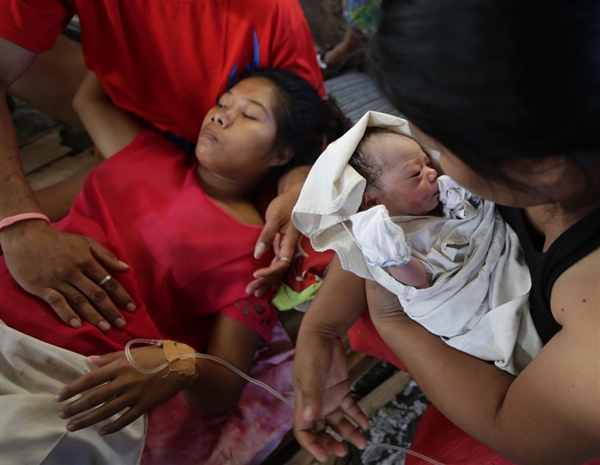
(Bullit Marquez/AP/NBC News) Bea Joy Ortega and her Mother Emily
(Bullit Marquez/AP/NBC News)
Bea Joy Ortega and her Mother Emily

As Typhoon Hayian struck the Philippines this last weekend I, like so many others, sent my prayers flying that the people would be safe.  Of course not everyone was.  People in the millions have had everything they know ripped from them by this storm, which so many say is the largest ever to form.  More than 10,000 people have lost their lives.  The survivors have little food or water, and no shelter.  As people from all over the world respond with aid the people of the Philippines, as people try to leave the islands for safer places a miracle occurs.  A woman gives birth in an airport. Bea Joy Ortega is born after her Mother Emily swims to safety.  A baby is always a sign of hope, a gift of promise.  In the hardest of times with death all around life still grows and makes her presence known.

I know there will be those who will say the people of the Philippines must have done something horrible to deserve this act of G-d.  I know there will be those who say G-d only does such acts to punish the evil deeds people do.  Well I say Bologna!  G-d doesn’t punish innocent people in such brutal ways.  No one ever deserves to be in the middle of a disaster.  We are not uneducated people who have to ascribe to everything that goes wrong in our lives, or the life of our planet, to some mysterious force we happen to call god.  G-d is much bigger than that.  G-d was with Emily holding her up and helping her swim to a safer place to give birth to a miracle, Bea Joy.

G-d was with each victim who died during the storm and heard their cries of fear and cried with them.  The G-d I know is with them still, in the lines waiting for food and water, in the hearts of mothers and fathers who hold their surviving children and family members, in the hearts of those who come bringing food, water, and medicines.  The G-d I know is in the hearts of people across the world reaching out with their donations.  G-d is in bodies of the volunteers, giving them strength and courage with support and comfort.

No G-d has not abandoned the Philippines rather G-d is in every hand that offers help in some way to a people who are in. So this Prayerful Tuesday I ask that each of you offer up a prayer of your own for the Philippines. G-d will hear and deliver those prayers.

This week the following prayer was posted on Facebook by Christians Tired of Being Misrepresented, a prayer that in the midst of disaster we hear the voice of G-d even in the worst of places and most difficult of times. I offer it to you as my prayer. It is a prayer of peace, a reminder that G-d is not punishing or delivering vengeance, rather G-d is there in your pain and sorry and when you are still you will hear G-ds voice and feel G-ds presence.

God Speaks to Man

I speak to you. Be still – Know I am God.
I spoke to you when you were born. Be still – Know I am God.
I spoke to you at your first sight. Be still – Know I am God.
I spoke to you at your first word. Be still – Know I am God.
I spoke to you at your first thought. Be still – Know I am God.
I spoke to you at your first love. Be still – Know I am God.
I spoke to you at your first song. Be still – Know I am God.
I speak to you through the grass of the meadows. Be still – Know I am God.
I speak to you through the trees of the forests. Be still – Know I am God.
I speak to you through the valleys and the hills. Be still – Know I am God.
I speak to you through the Holy Mountains. Be still – Know I am God.
I speak to you through the rain and snow. Be still – Know I am God.
I speak to you through the waves of the sea. Be still – Know I am God.
I speak to you through the dew of the morning. Be still – Know I am God.
I speak to you through the peace of the evening. Be still – Know I am God.
I speak to you through the splendor of the sun. Be still – Know I am God.
I speak to you through the brilliant stars. Be still – Know I am God.
I speak to you through the storm and the clouds. Be still – Know I am God.
I speak to you through the thunder and lightning. Be still – Know I am God.
I speak to you through the mysterious rainbow. Be still – Know I am God.
I will speak to you when you are alone. Be still – Know I am God.
I will speak to you through the Wisdom of the Ancients. Be still – Know I am God.
I will speak to you at the end of time. Be still – Know I am God.
I will speak to you when you have seen my Angels. Be still – Know I am God.
I will speak to you throughout Eternity. Be still – Know I am God.
I speak to you. Be still – Know I am God.

[God Speaks to Man – Essene Gospel of Peace]

Ruth Jewell, ©November 12, 2013

Prayerful Tuesday, November, 5, 2013

Open My Eyes That I Might See


Autumn Glory
Autumn Glory

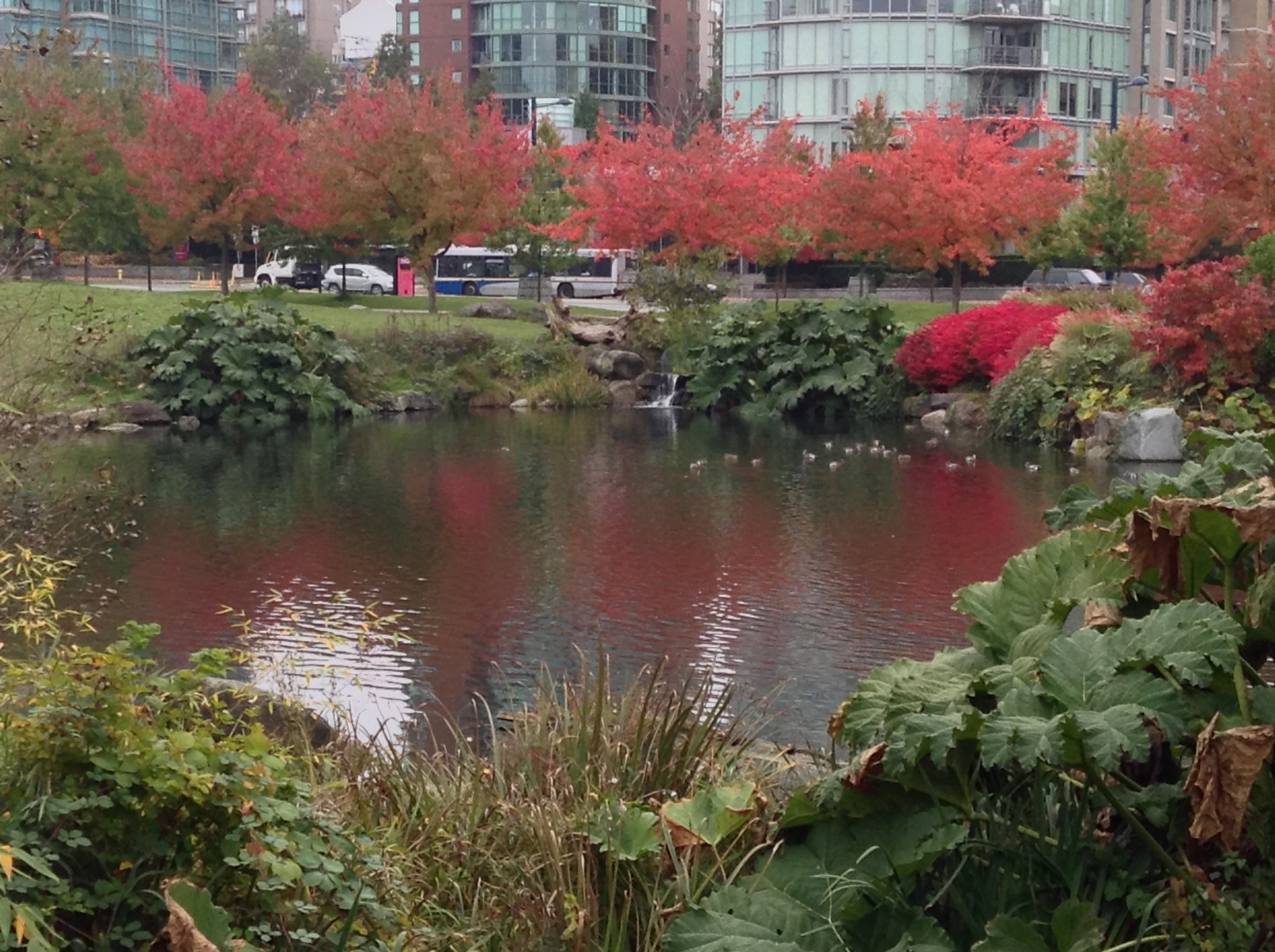
Last week John and I took a train ride to Vancouver, BC and while we hoped for some sun it was even cloudier there that at home.  As we walked through Stanley Park I was afraid all my pictures would be gray and drab and then I saw this one.  Yes, if the day had been bright and sunny I suppose this picture would have been brighter. But, the trees in their autumn finery reflecting in the pool made a light all their own.  I just had to “open” my eyes to see it.

Today for Prayerful Tuesday I am inviting you to open your eyes and open your hearts and minds as we practice Visio Divina using the above picture. There is no set time frame for the guided prayer, but I do suggest at least 15 minutes and up to thirty minutes.

  1. As your prayer begins, take a few moments to open your heart and mind to God.
  2. When you are ready, slowly look and notice the image, taking your time to let feelings and thoughts come to you as you take in forms, colors, lines, textures, and shapes.
  3. What does it look like, or remind you of?
  4. What do you find yourself drawn to?
  5. What do you like and not like?
  6. What are your initial thoughts?
  7. What feelings are evoked?
  8. At this point in your prayer simply notice your responses without judgment or evaluation. If you don’t like the image, or the feelings it evokes, notice that this is your initial response and continue to stay open to the image and the prayer.
  9. If you have an immediate idea as to what the image means, again, simply acknowledge that this is your initial response and stay open to “the more” as the prayer unfolds.
  10. As you expand your prayer, return to the image with an open heart and mind. What new thoughts, meanings, and/or feelings arise for you; what initial impressions have expanded deepened.
  11. Explore more fully the meanings that have risen up within you, and the feelings associated with the image and its colors and forms.
  12. Be aware of any assumptions or expectations you bring to the image. No how you responded to the image — delight, disgust, indifference, confusion — prayerfully ponder the reason for your various responses and what they might mean for you.
  13. As you go deeper into your prayer, open yourself to what the image might reveal to you.
  14. What does it and the Holy Spirit want to say, evoke, make known, or express to you as you attend to it in quiet meditation?
  15. Become aware of your feelings, thoughts, desires, and meanings brought up by the image: how they are directly connected to your life.
  16. Does the image hold an important meaning or value for you: does it remind you of an important event or season, or suggest a new or different way of being?
  17. What desires and longings are evoked in your prayer?
  18. How do you find yourself wanting to respond to what you are experiencing?
  19. Offer a prayer to G-d in ways that the image evokes: gratitude, supplication, wonder, lament, confession, dance, song, praise, etc.
  20. As bring your prayer to close, bring to mind or jot down in a journal (whatever way is most helpful for you) the insights you want to remember, any actions you are invited to take, wisdom you hope to embody, or any feelings or thoughts you wish to express and remember.

Close your prayer by resting for a moment in God’s grace and love.  May you see with newly open eyes, heart and mind many new images of G-d in the coming week.

Ruth Jewell, ©November 5, 2013, Picture taken by Ruth Jewell 2013.10.22, prayer practice of Visio Divina adapted from a workshop given by Rev. Nancy Gowler Johnson.

Prayerful Tuesday, October 15, 2013


IMG_0429b


Playing with the Spirit

In the past month I have begun the InterPlay Life Practice Course. For those of you who have never heard of InterPlay I can only described it as a time to play with my body/spirit/heart/mind all at the same time and it is a blast! Of course the founders of InterPlay have a much longer definition, that in brief, is a system and practice that allows you to lean slowly at your own pace to love being an embodied being by bringing into one whole Mind/Body/Spirit/Heart. But for me the term “it’s a blast” works best. (If any of you are interested in the longer definition please visit http://www.interplay.org and there you will find all kinds of information and also where you might find an InterPlay play group of your very own.) Within my small community of new friends and playmates I am discovering what it means to free myself from the confines of “ought and should” for the openness of the possible within me and I find it extremely freeing and uplifting. In the freedom to dance and song, alone and in community I am discovering a new me. Well not really a new me rather let me say the real me, the one who laughs, and sings, and dances, and prays, and cry’s and morns, and laments, and worries, and creates, and brings to fruition all of the pieces that make up the being I am, in this body, in this place in time, the real Ruth is beginning to step forward. My steps are tentative and small right now, but I am hopeful that in the very near future they will become leaps and bounds of joy.

I realize all of this probably makes little sense to all of you, heck it still isn’t making much sense to me. But I hope that in the coming months I will be able to clarify the joy I am feeling and be able to share just a little with you. I realize I can’t just give you my experience, but maybe I will be able to open the door for one or two of you, inviting you into a space where you too may explore your true being. It might not be with InterPlay, it might be in some other way that allows you to open your being to new light, and I hope you will share that with us here at the Begin Again, Cloaked Monk blog, or here on my blog, A Quiet Walk.

So, today as a way to begin anew, I invite you to join me in a body prayer for morning:

1. I invite you to stand, if you are able to, if you are near a window or have access to the outside that would be wonderful, but not necessary.

2. Stand for a moment and breathe deeply, taking air in and letting it out slowly.

3. Now take another breath, this time noticing how cool the air is as it enters your lungs and how warm it is when you exhale.

4. Take a third breath and follow it into your lungs, noticing how your lungs expand to hold the fresh air. Imagine that you are seeing the exchange of oxygen that fuels your body for the waste product of carbon dioxide. Let yourself find joy in the workings of your body.

5. Now raise both hands to your chest placing them palm to palm in a prayer position. As you do so offer a prayer of thanksgiving for your health and well being.

6. Now raise your arms up over your head, stretching out to reach for the sky and offer a prayer of supplication for someone who lies on your heart.

7. Lower your arms and return your hands to a praying position. Bend head, and/or body, slightly and offer the following, “may the peace of the Holy Spirit be with me and those I love this day, Namaste.”

8. Stand still for just a moment to allow yourself to return to your day.

And so my prayer for all of you this day is; “May the peace of the Holy Spirit be with each and every one of you this day, Namaste.”

Ruth Jewell, ©October 15, 2013

One Body

DSCF0716

1 Corinthians 12:12-13: 12For just as the body is one and has many members, and all the members of the body, though many, are one body, so it is with Christ. 13For in the one Spirit we were all baptized into one body—Jews or Greeks, slaves or free—and we were all made to drink of one Spirit.

This last week I have been giving a great deal of thought to the importance of all of the parts of the body. And, it has given me completely new insights on Paul’s words in 1 Corinthians 12:12-31. You see I had a blocked gland removed from the underside of my tongue on Thursday and I have learned just how dependent I am on every part of my body. I mean you try drinking, talking, even breathing without using your tongue for awhile and you will understand what I mean! However, given what has been happening in our nation’s capital it seems ironic that it is my tongue that is giving me a problem.

But enough of the gory details! Paul of course is writing to his wayward community in Corinth, which has a few problems getting along with each other. Does that sound familiar? Paul is telling his young Corinthian faith community they need each other because all of them are important and all are equal in the eyes of Christ. Not unlike the conflict we’ve been seeing in our nation’s capital this past week and I am afraid it will take another Apostle Paul for a resolution to this crisis to be resolved.

What might Paul tell our community today? Well one line he might repeat is “the body does not consist of one member but of many” and that each of the members is needed to perform some task that sustains the whole body. No part of the body could say “I do not belong to the body,” the tongue cannot say “I am in pain, so let the eye take my place,” trust me that isn’t going to happen. Just as the fireman cannot say to the man whose house is on fire I am to important to get my hands dirty, therefore I will not help you. That man’s house will burn down you can be pretty certain of that.

Today in Washington DC and in the rest of this country we have people who are saying just that. “I am to important to feed the hungry, or clothe the poor, or help the sick and elderly, or do anything that would make me see you as important in G-d’s eyes. I have my house with all of my barns stuffed with grain and produce that I have worked for and if you can’t take care of yourself, well that’s not my problem.” What these so called “important” people forget is that someone else prepared the ground, sowed the grain, harvested it and stacked it in his barn, they didn’t do it themselves. Just as in Jesus’ story of the rich man with all those full barns, G-d will come and say “Fool! This night your soul is required of you; and the things you have prepared, whose will they be?” (Luke 12:20) and it will be too late.

Paul told his community, “the members of the body that seem to be weaker are indispensable, and those members of the body that we think less honorable we clothe with greater honor, and our less respectable members are treated with greater respect: whereas our more respectable members do not need this.” (1 Corinthians 12:22-23) Paul’s words ring with the same authority today as they did in the First Century, for those we hold in low esteem in our community are the ones who are harvesting our food, making our clothes and building our houses. Just because they don’t wear a suit and tie, or nice dresses doesn’t make them less valuable to the whole body of our communities. I would love to see the Speaker of the House in the fields of California harvesting lettuce; it would do him and the rest of our politicians good to do some really hard labor. There perspective on what is important would change dramatically, that is if they survive the 14-18 hour, 7 day a week job. Let them live for a year as an elderly person on Medicare and Social Security trying to make ends, trying to pay for food, rent and medical care on the little they have. Or, they could choose to take care of a family whose child has cancer or some other debilitating disorder. Let’s see if they could do any better with the medical bills and all the rest of the needs of a family on $50,000 a year.

Each of the “unimportant people” are part of the body of this country, and of the body of G-d. In fact according to G-d they are more important than those who sit in the “great halls of government.” For G-d tells us all “do not abuse any widow or orphan,” (Exodus 22:22) or “oppress a resident alien.” (Exodus 23:9) But those verses are conveniently forgotten.

We are all part of the body of G-d, of creation and the creator. We are all part of our country and world, whether you are a business person, a working person, a widow, a widower, orphan, or an immigrant to this country or any country. Each and every one of us is important to the wellbeing of us all and the Creator’s purpose for us as a whole people. No one is more important than the other; we all have our tasks to do in this life that will lead us into the next life. This week I learned a lesson that every part of the body is important no matter how insignificant I might think it is.

The tongue can be an instrument for good will, or a sword that hurts and divides us all. My tongue hasn’t always been a good instrument. Just like ever one else there here have been times when I have said hurtful things to others and I can’t take those words back, as much as I might wish too. Yet I have also spoken words of kindness and caring that I hope in the eyes and ears of G-d outweigh the bad.

This week has made me aware of the incredible gift of all parts of the body, the seemingly insignificant, and the ones that I erroneously hold in high honor. We all have the power to be good gifts of the body, the body of our country and world, and the body of the Spirit. No matter how insignificant each of us seems to be each is important to the functioning of this grand creation gifted to us by the creator. Paul ends his short discourse on gifts of the body with the words: “But strive for the greater gifts. And I will show you a still more excellent way.” Each of us has the potential within to do even greater things than we do. It takes each of us to encourage those gifts in each other such that we all prosper, just as the Creator wants.

Ruth Jewell, ©October 5, 2013

Prayerful Tuesday, October 01, 2013

DSCF0561 a

A Prayer for Peace

October 1, 2013, the heading in the paper read, “GOV SHUTDOWN.” Today is Prayerful Tuesday and right now I am not feeling very prayerful, angry, frustrated but not prayerful. I want to run to Washington DC and ask our elected representatives what are you thinking, to shout angry words at them, I want to right them angry letters, I want to tell them there are more people in our country that need the Affordable Care Act than they are willing to poll or listen to. I want to … “sigh” … I don’t know what I want.

Prayer, how will prayer get me, all of us, through this time of crisis? Well, prayer offers us a time to look within and discover that even in the greatest of trials we are not alone. Even when we feel completely abandoned the Divine Spirit surrounds us and guides, all we have to do is to take a deep breath, wait, and listen. It is in the stillness of our hearts that our fears are known, our anger is known, and our guilt is known. John Phillip Newell wrote the following chant for Chanting For Peace (CD available from http://www.materialmedia.net):

Wait, wait, wait for God.
Be strong and let your heart take courage.
Wait, wait, wait for God.

Waiting is hard, listening is even harder and sometimes I don’t know if I am up to it. To my regret I am all too often rash in speech and action. But Peace, Prayer, waiting, listening before I open my mouth or put to paper is what I am called to do. So today I offer this prayer”

A Psalm for Peace

Oh LORD, I wait upon you;
in this time of sorrow hear my cry.
My plea for my people is a just one,
for they are being assaulted by
those who would rob them
of peace and comfort.
Deliver us from our enemies,
who surround us, granting us
courage and strength of heart and being
to stand and speak your words of peace and justice.
Our world calls upon you, O GOD,
for we know you will answer us.
May we behold your face and feel your love
reflected in the face of our brothers and sisters,
in the morning light, the evening star,
the living earth and breathing sea.
May we, O LORD, Great Creator of all,
be the light that shines out and
brings peace to our hearts and world.

Ruth Jewell, ©October 1, 2013