Hand Drawing a Labyrinth Meditation – Prayerful Tuesday

Drawing a Cretan or Classical Labyrinth

Note: the artist is making a right hand labyrinth, instruction are for a left hand labyrinth. 
The method is the same; the difference is the starting point,
which is from the top left hand short angle line to the top long center line.

I love walking a labyrinth, whether in an indoor or outdoor setting. It is one of the best ways to find the stillness within I need to hear the voice of the Divine.  But sometimes I am nowhere near a labyrinth, so in that case I will use a finger labyrinth. But I don’t always carry one with you, so, what I do is draw my own labyrinth. Drawing a labyrinth can also be a meditative act, which can be done anywhere or anytime I have a few moments to spare.

I have provided the following instruction for drawing the Classical (or Cretan) Labyrinth, which is the simplest to draw.   As you sit down with your paper, take a deep breath to center yourself.  Offer a prayer of intention and begin to draw.  As you make your seed pattern and connect each of the lines and dots give yourself to the process, letting the growing Labyrinth enter into your prayers and meditation.  When you are finished use your finger or pencil too “walk” your labyrinth just as you would with any finger labyrinth.  When you have “exited” offer a prayer of thanksgiving and gratitude for these moments of stillness.

Instructions for Drawing Classical (Cretan) Labyrinth

The best way to draw a labyrinth is to begin with a pencil and paper (you might want to include eraser?) We do not know who found it out or invented it, but this method is ingeniously simple and with practice easy to repeat.

It is very important to place your pattern such that you have sufficient space paper for the following steps. Draw the pattern into the lower half of your sheet of paper just slightly left of the center line, making sure you leave enough space on the right and left side and above.

First you draw the basic seed pattern that consists of 4 dots in a square. Inside draw an equal-leg cross. And into each of the 4 small squares resulting I draw a small angle.
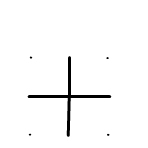
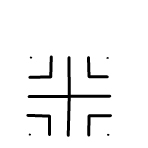
Fig. 1
Fig. 1


Fig. 2. Seed Pattern


Next you will begin to connect the dots and lines, in sequence, from the left to the right, clockwise all in arc-shaped lines as shown in Fig 3 and Fig. 4
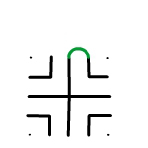
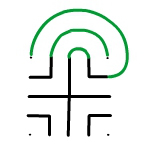
Fig. 3
Fig. 3 The First Arc


Fig. 4
Fig. 4 Three of the Equally Spaced Arcs

Begin with the middle line (see Fig. 3 above) this is the center.

Now connect the next free end of the line on the left side to the free dot on the right side with an arc equal distant from the first arch (Fig. 4).  Continue drawing arcs from left to right.  After all of the left side lines and dots have been connected there should be a gap between the bottom left short angle line and the bottom long center line, that is the entrance. Your Labyrinth should look like Fig. 5, if it doesn’t simply start over. Using your finger or a pencil  to “walk” your completed Labyrinth.

Fig. 5 The Finished Labyrinth


May your find the stillness within as you walk the labyrinth in it’s many and diverse ways.
Ruth Jewell, ©September 30, 2014

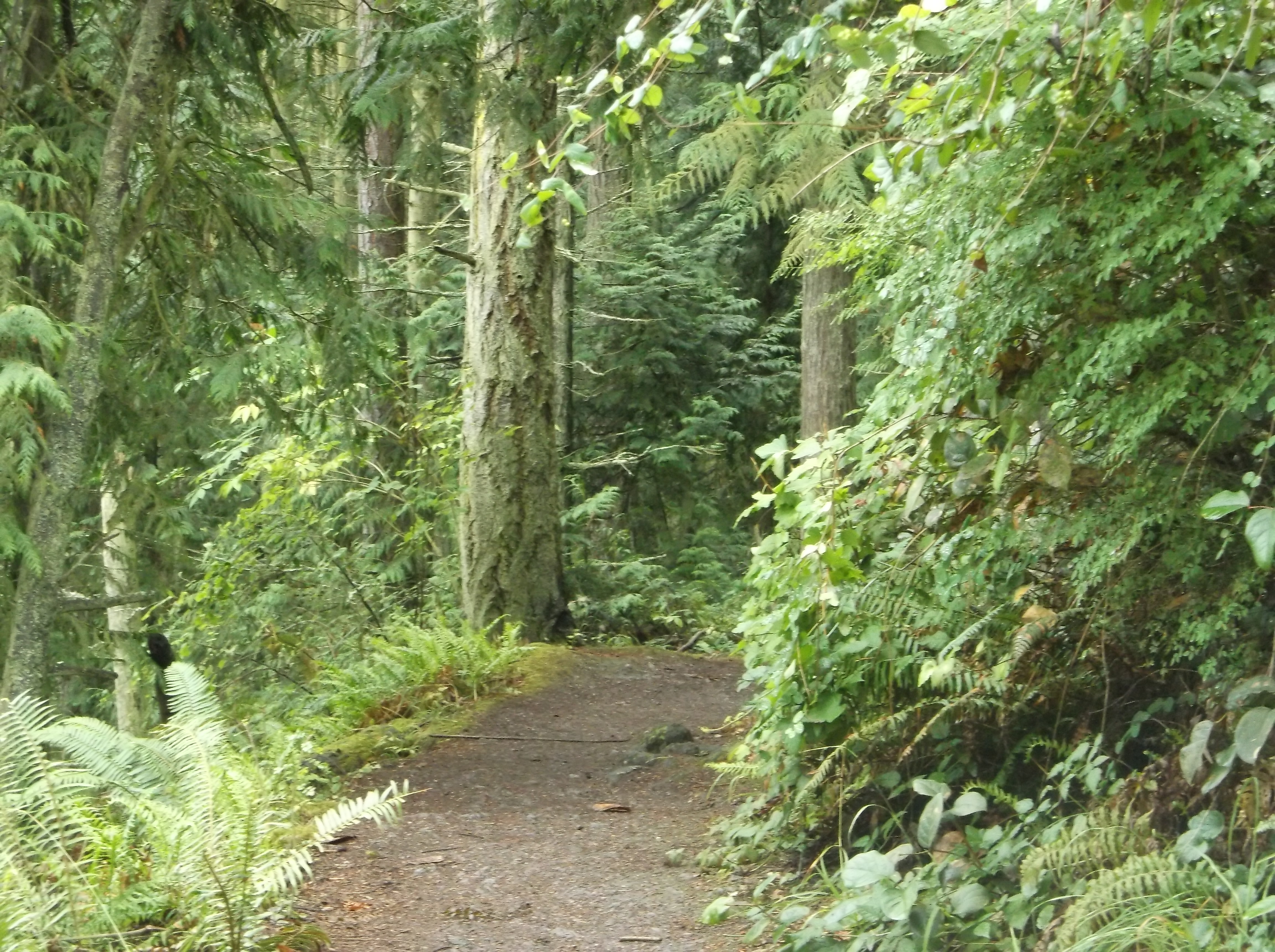
A Woodland Path, Visio Divina

Luke 6:12 During that time, Jesus went out to the mountain to pray, and he prayed to God all night long.

Deception Pass, August 15, 2014


God speaks to us in many ways–through relationships, our experiences, sacred texts such as the Bible and many more. Today I am asking you to “read” a photograph using the practice of Visio Divina, Latin for divine seeing, which is praying with images to listen to God’s words. Todays focus of our pray is a picture of a woodland path.  Using the following four steps explore the images and emotions that the picture brings up for you.  Let the God speak to you through those images and remembered experiences.

  1. Slowly gaze at the picture, taking a first glance noting the colors, places and things.  Remain with the image for one to two minutes.If you would like, jot down a few words about the image.
  2. Take a second, deeper, look. Where is there movement? What relationships do you see? Engage your imagination.Where are you in the in the picture? What do you see from that perspective? What do you think lies around the corner? Do you want to continue on the path? Would you walk this path alone or would you rather have a friend along? Why? What deeper meaning emerges?
  3.  Respond to the image with prayer. Did the image remind you of an experience, person or issue for which you’d like to offer thanksgiving or intercession? Offer that prayer to God.
  4. Find your quiet center. Breathe deeply. Relax your shoulders, arms and legs. Rest in this quiet. Let God pray in you. God prays beyond words.

Divine Mother surround us in the love of your embrace
Divine Father guide us through the trials of  life
Divine Brother walk with us in light and shadow
Divine Sister Spirit breathe your strength into our hearts
In the midst of the Divine Grace we spend our days

Ruth Jewell, ©August 20, 2014

Praying with Art – Prayerful Tuesday

Romans 6:1b-11
Romans 6:1b-11

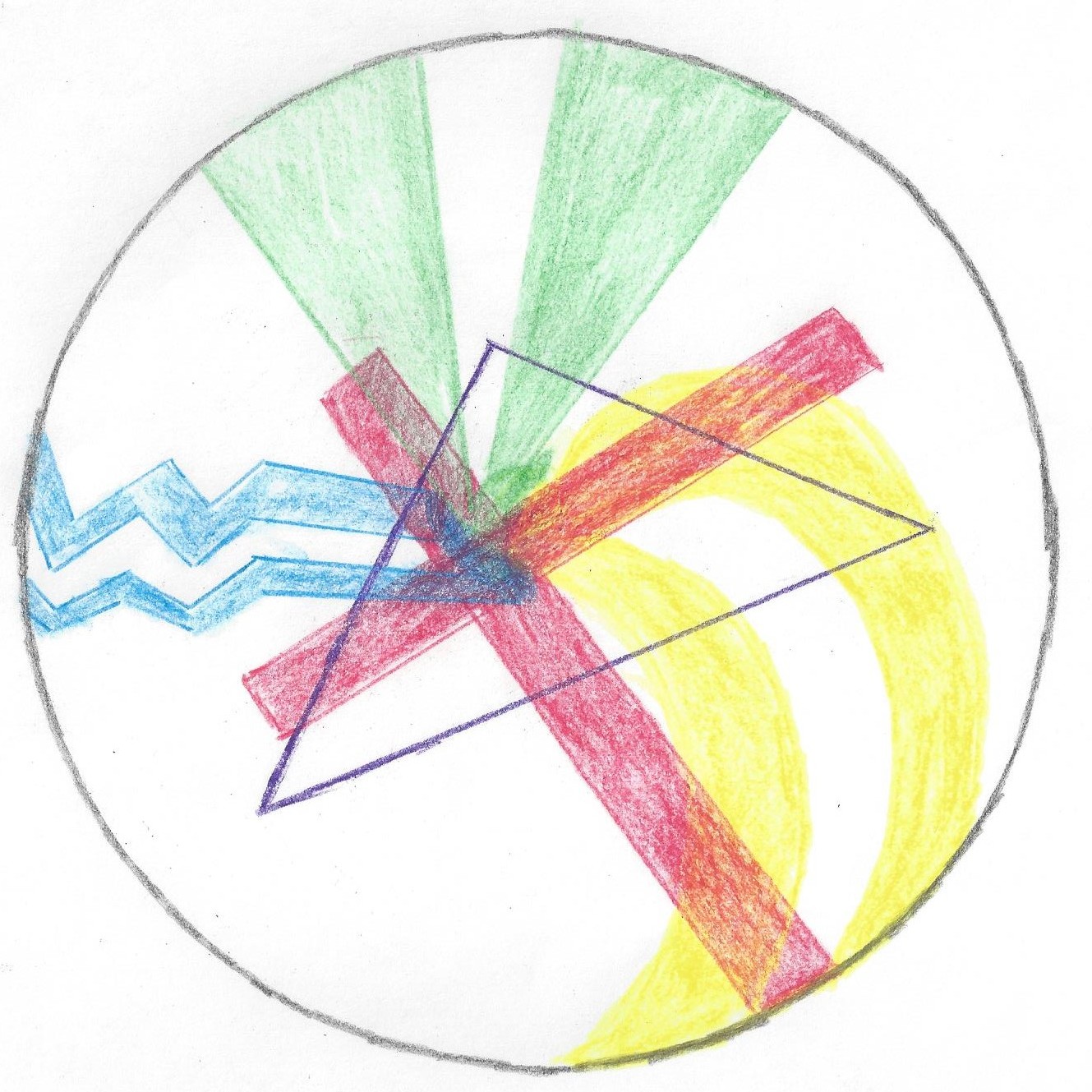
I am preaching next Sunday and the first step in the preparation for my sermon is to pray my scripture using Lectio Divina. The last step in my Lectio Divina is to write in my journal what I hear in the scripture. Often I will draw a Mandala as a visual image of what I hear and the Mandala above is my representation of Romans 6:1b-11, which is my text for next Sunday.

Lectio Divina is one of my favorite practices to delve into a particular scripture and I often add the process of drawing a Mandala when the scripture is long or very visual.  I find the resultant drawing adds another layer to my spiritual practice. I draw circular Mandalas for my reflections; I find the confined space of the circle helps me focus on the most important aspects of hearing.  But, prayers through art can take any form that reflects your own personal prayers.  Therefore pen and ink drawings, soul collage, painting, sculpting anything that lets you express through your artistic and creative senses will help you find a new richness in your prayers, and you don’t have to be an expert to enjoy putting the color and form of your prayers onto paper. Trust me I’m no Rembrandt and if I can do it anyone can.  Just give yourself permission to play and be open to what happens.

This week I suggest trying prayer through art.  Using 1 Corinthians 12:12-13 try praying with art.

Begin your prayer using the steps of Lectio Divina:

  • Reading/listening: read the passage to yourself twice.  Listen for the word or phrase that catches your attention.  Silently focus on that word or phrase, allowing it to sift through your heart and mind.
  • Meditation: As you focus on your chosen word pay attention to your feelings and thoughts, what images, thoughts, or memories does the word or phrase bring to mind.
  • Responding: What desires has your prayer brought, is there something you need to work on, or does your prayer lead you something you are grateful for.  Sit in silent prayer and listen as God forms your prayer in your heart.
  • Resting: Having heard the word or praise that has drawn you closer to God and having felt a response to the prayer allow yourself to rest in silence.  As you continue to sit in silence pick up your paper and pen or pencil and if an image has come forth in your prayer try putting it down on paper.  When you feel the prayer has ended express your gratitude to God with a “Thank You”, or, “Amen”

Remember you are not looking for a drawing of perfection rather you are expressing your feelings and thoughts as a visual image and whatever it is it will be your image, beautiful in all aspects.

Peace to all this week

Ruth Jewell, ©June 10, 2014