Intention as a Spiritual Practice – Prayerful Tuesday


Brokenbread

Matthew 5:13-20: (NRSV) 

 13You are the salt of the earth; but if salt has lost its taste, how can its saltiness be restored? It is no longer good for anything, but is thrown out and trampled underfoot.
   14You are the light of the world. A city built on a hill cannot be hid. 15No one after lighting a lamp puts it under the bushel basket, but on the lampstand, and it gives light to all in the house. 16In the same way, let your light shine before others, so that they may see your good works and give glory to your Father in heaven.
17Do not think that I have come to abolish the law or the prophets; I have come not to abolish but to fulfill. 18For truly I tell you, until heaven and earth pass away, not one letter, not one stroke of a letter, will pass from the law until all is accomplished.
   19Therefore, whoever breaks one of the least of these commandments, and teaches others to do the same, will be called least in the kingdom of heaven; but whoever does them and teaches them will be called great in the kingdom of heaven. 20For I tell you, unless your righteousness exceeds that of the scribes and Pharisees, you will never enter the kingdom of heaven.

I am preaching on Matthew 5:13-20 next Sunday, February 9th, and as I have read and re-read this scripture I have discovered Jesus is talking about a spiritual practice, the spiritual practice of intention.  Everything Jesus did was intentional. He started every day knowing he was going to do the will of the Father, his Father, his Abba.  In this portion of his Sermon on the Mount he is trying to teach all of us we must be intentional about our actions in the world.  It isn’t good enough to say we believe in justice and kindness, rather we are commanded to actually get up out of our chairs and actively walk with God as God continually creates our world and DO justice and kindness. So my spiritual practice for this week is “Intention as a Spiritual Practice.”

You are probably saying right now “well duh” everyone knows that.  If we all know that we are to do justice, kindness, and mercy then why don’t we?  It is because it is easy to say we are going stand up to injustice but it is much harder to actually get out there and get your hands dirty.  So I am going to give you a few suggestion that are simple everyday things you can do just to get you started and in the habit of living an intentional life.

In his book Everyday Spiritual Practice, Simple Pathways for Enriching Your Life Scott Alexander explains why a spiritual practices is different from a casual hobby, and “the answer is intentionality, regularity, and depth . . . what shapes your efforts into an everyday spiritual practice is your commitment to making the activity a regular and significant part of your life.”[1]
In addition an everyday practices doesn’t have to be complicated, take a great deal of time, or be physically or economically challenging, it just has to be done every day.

Alexander’s book offers many different activities from the very simple to the more difficult and I am going to suggest only a couple of the less difficult ones to get you started.  I also suggest you find Alexander’s book and read some of the practices if these do not appeal to you.

Everyday Spiritual Practice number 1 is probably the simplest of all to start but can be a hard one to carry out.  Every morning when you arise from sleep say the following:  “Today I will offer kindness to each person and creature I meet this day.”  Then follow through, no matter how frustrated you become during an event.  My suggestion is to repeat your intention several times during the day until the act of offering kindness becomes second nature to you.

Everyday Spiritual Practice number 2 involves caring for the world we live in.  Begin each day with the following state: “I will conserve energy by turning out the lights when I leave a room.” Or you might use recycling, bicycling and/or use city transportation instead of driving as your goal.  What you do is important but it doesn’t have to be difficult and if your way to care for the earth is to eat more foods from the lower end of the food chain instead of taking a bus to work, good for you.

Ok just one more to begin.  Everyday Spiritual Practice number 3 involves the relationships we have with others.  Repeat throughout your day: “I will treat those I live, work, and play with with the respect and kindness they deserve as family members, co-workers, friends, for all are my brothers and sisters of God.”

You might be saying these don’t feel very spiritual to me.  But, what I am saying is that to BE a spiritual being and the being God desires us to be is to approach everything we do, every moment, every day as if we were doing it for the one we call God because in reality we are.

Jesus tells us “as you do it for the least of these you do it for me.”  So when you offer a heartfelt word of thanks to the harried checkout clerk in Safeway you are behaving as Jesus would want you behave and who knows maybe, just maybe, that was Jesus and you didn’t know it.

You see the Spiritual Practice of Intention is basic to walking in the Way of Jesus. Whether you are preparing dinner for your family, taking a casserole to someone who is ill or grieving, or stopping to help a homeless person by offering them half of the sandwich you are carrying all of those are Spiritual Practices. When we place the love of the Divine in front row of the action we are doing a spiritual practice.  Jesus said “let your light shine before others” and how we do that is by gifting our light to those who are struggling in darkness.  Our light will not diminish by giving it away; it grows brighter because more people are shinning with its glow.

Ruth Jewell, © February 4, 2014


[1] Alexander, Scott W.(editor): Everyday Spiritual Practice, Simple Pathways for Enriching Your Life, Skinner House  Books, Boston, MA 1999 Pg. 5

Prayerful Tuesday, November, 5, 2013

Open My Eyes That I Might See


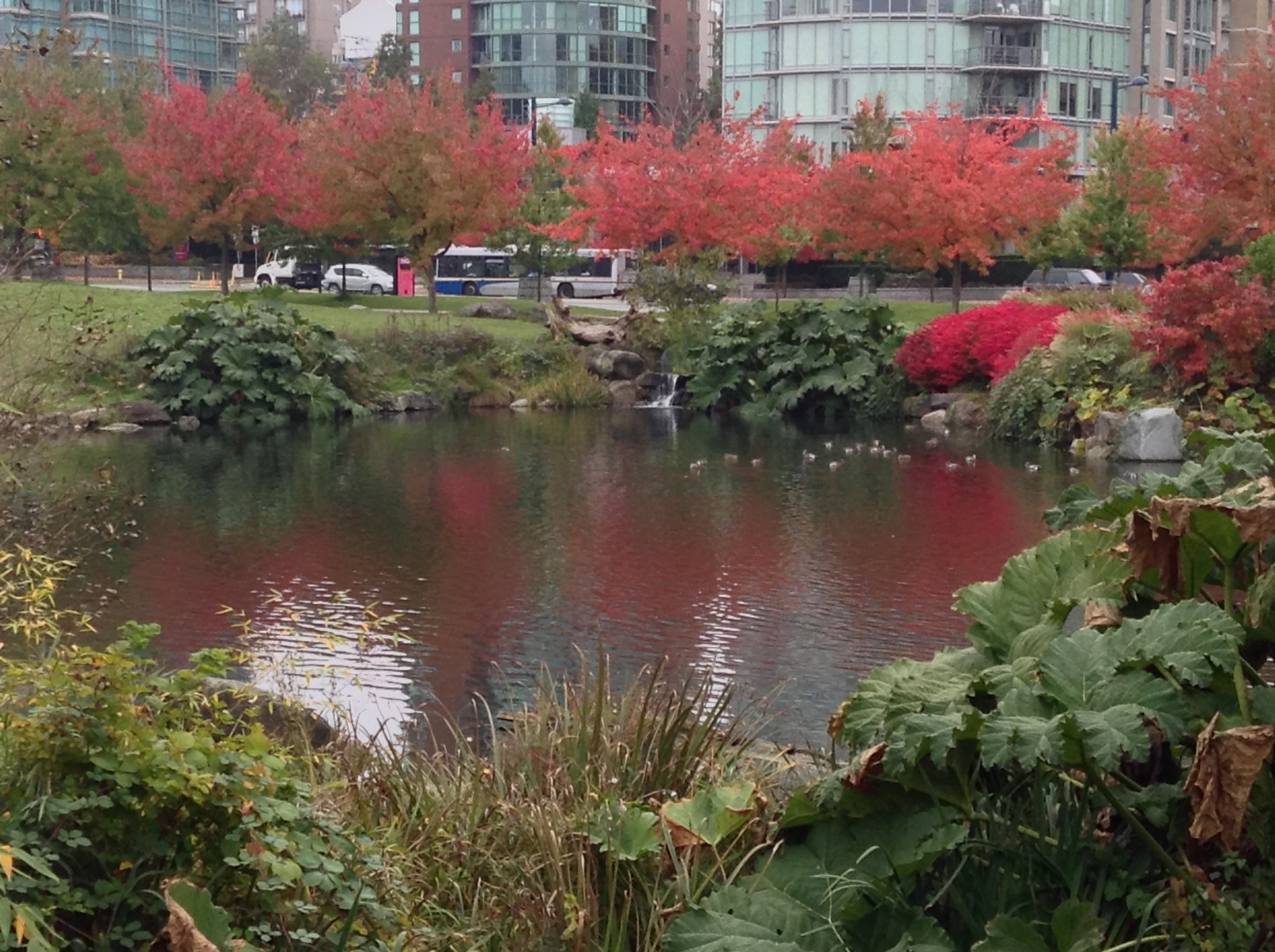
Autumn Glory
Autumn Glory

Last week John and I took a train ride to Vancouver, BC and while we hoped for some sun it was even cloudier there that at home.  As we walked through Stanley Park I was afraid all my pictures would be gray and drab and then I saw this one.  Yes, if the day had been bright and sunny I suppose this picture would have been brighter. But, the trees in their autumn finery reflecting in the pool made a light all their own.  I just had to “open” my eyes to see it.

Today for Prayerful Tuesday I am inviting you to open your eyes and open your hearts and minds as we practice Visio Divina using the above picture. There is no set time frame for the guided prayer, but I do suggest at least 15 minutes and up to thirty minutes.

  1. As your prayer begins, take a few moments to open your heart and mind to God.
  2. When you are ready, slowly look and notice the image, taking your time to let feelings and thoughts come to you as you take in forms, colors, lines, textures, and shapes.
  3. What does it look like, or remind you of?
  4. What do you find yourself drawn to?
  5. What do you like and not like?
  6. What are your initial thoughts?
  7. What feelings are evoked?
  8. At this point in your prayer simply notice your responses without judgment or evaluation. If you don’t like the image, or the feelings it evokes, notice that this is your initial response and continue to stay open to the image and the prayer.
  9. If you have an immediate idea as to what the image means, again, simply acknowledge that this is your initial response and stay open to “the more” as the prayer unfolds.
  10. As you expand your prayer, return to the image with an open heart and mind. What new thoughts, meanings, and/or feelings arise for you; what initial impressions have expanded deepened.
  11. Explore more fully the meanings that have risen up within you, and the feelings associated with the image and its colors and forms.
  12. Be aware of any assumptions or expectations you bring to the image. No how you responded to the image — delight, disgust, indifference, confusion — prayerfully ponder the reason for your various responses and what they might mean for you.
  13. As you go deeper into your prayer, open yourself to what the image might reveal to you.
  14. What does it and the Holy Spirit want to say, evoke, make known, or express to you as you attend to it in quiet meditation?
  15. Become aware of your feelings, thoughts, desires, and meanings brought up by the image: how they are directly connected to your life.
  16. Does the image hold an important meaning or value for you: does it remind you of an important event or season, or suggest a new or different way of being?
  17. What desires and longings are evoked in your prayer?
  18. How do you find yourself wanting to respond to what you are experiencing?
  19. Offer a prayer to G-d in ways that the image evokes: gratitude, supplication, wonder, lament, confession, dance, song, praise, etc.
  20. As bring your prayer to close, bring to mind or jot down in a journal (whatever way is most helpful for you) the insights you want to remember, any actions you are invited to take, wisdom you hope to embody, or any feelings or thoughts you wish to express and remember.

Close your prayer by resting for a moment in God’s grace and love.  May you see with newly open eyes, heart and mind many new images of G-d in the coming week.

Ruth Jewell, ©November 5, 2013, Picture taken by Ruth Jewell 2013.10.22, prayer practice of Visio Divina adapted from a workshop given by Rev. Nancy Gowler Johnson.

One Body

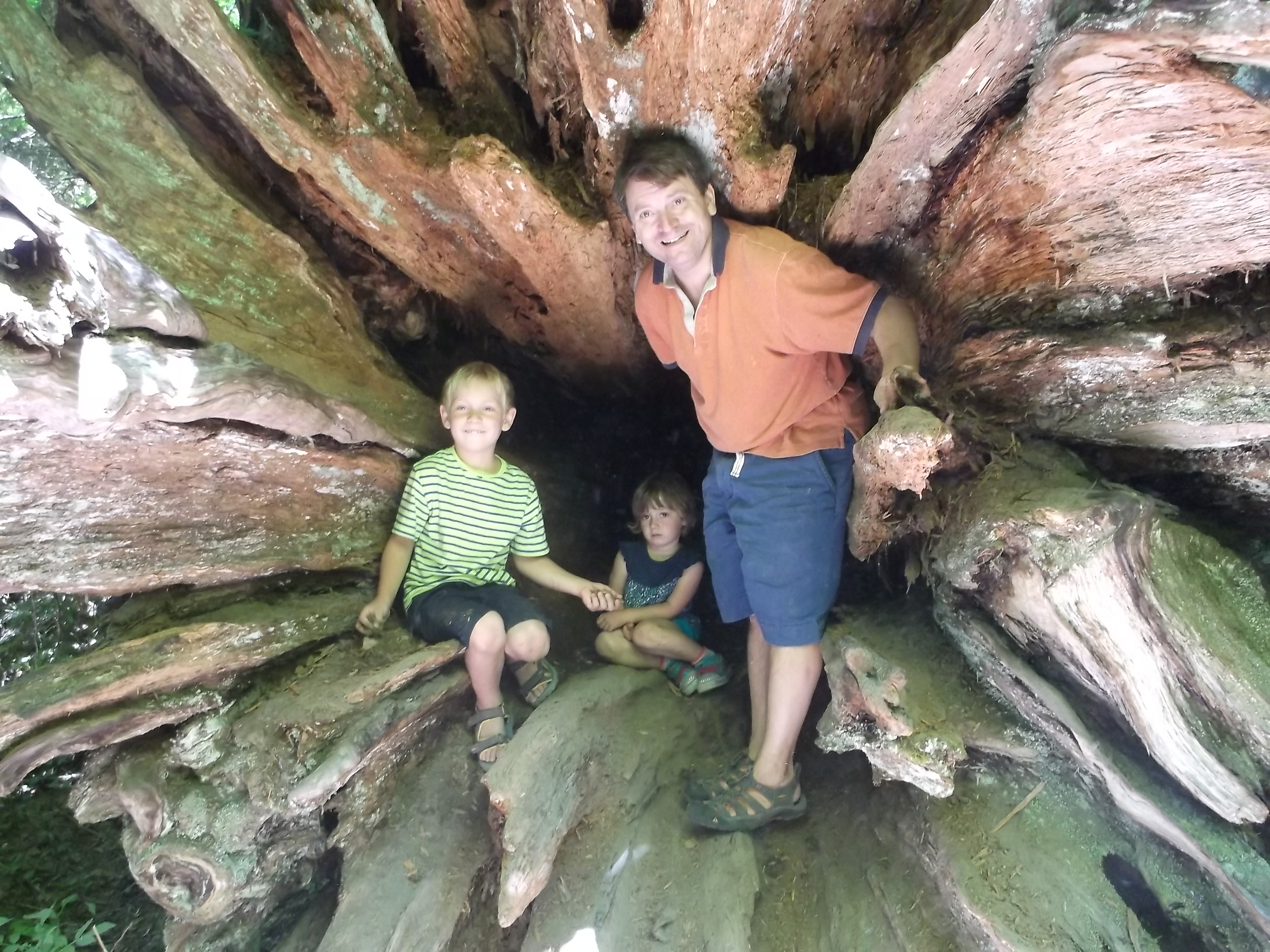
DSCF0716

1 Corinthians 12:12-13: 12For just as the body is one and has many members, and all the members of the body, though many, are one body, so it is with Christ. 13For in the one Spirit we were all baptized into one body—Jews or Greeks, slaves or free—and we were all made to drink of one Spirit.

This last week I have been giving a great deal of thought to the importance of all of the parts of the body. And, it has given me completely new insights on Paul’s words in 1 Corinthians 12:12-31. You see I had a blocked gland removed from the underside of my tongue on Thursday and I have learned just how dependent I am on every part of my body. I mean you try drinking, talking, even breathing without using your tongue for awhile and you will understand what I mean! However, given what has been happening in our nation’s capital it seems ironic that it is my tongue that is giving me a problem.

But enough of the gory details! Paul of course is writing to his wayward community in Corinth, which has a few problems getting along with each other. Does that sound familiar? Paul is telling his young Corinthian faith community they need each other because all of them are important and all are equal in the eyes of Christ. Not unlike the conflict we’ve been seeing in our nation’s capital this past week and I am afraid it will take another Apostle Paul for a resolution to this crisis to be resolved.

What might Paul tell our community today? Well one line he might repeat is “the body does not consist of one member but of many” and that each of the members is needed to perform some task that sustains the whole body. No part of the body could say “I do not belong to the body,” the tongue cannot say “I am in pain, so let the eye take my place,” trust me that isn’t going to happen. Just as the fireman cannot say to the man whose house is on fire I am to important to get my hands dirty, therefore I will not help you. That man’s house will burn down you can be pretty certain of that.

Today in Washington DC and in the rest of this country we have people who are saying just that. “I am to important to feed the hungry, or clothe the poor, or help the sick and elderly, or do anything that would make me see you as important in G-d’s eyes. I have my house with all of my barns stuffed with grain and produce that I have worked for and if you can’t take care of yourself, well that’s not my problem.” What these so called “important” people forget is that someone else prepared the ground, sowed the grain, harvested it and stacked it in his barn, they didn’t do it themselves. Just as in Jesus’ story of the rich man with all those full barns, G-d will come and say “Fool! This night your soul is required of you; and the things you have prepared, whose will they be?” (Luke 12:20) and it will be too late.

Paul told his community, “the members of the body that seem to be weaker are indispensable, and those members of the body that we think less honorable we clothe with greater honor, and our less respectable members are treated with greater respect: whereas our more respectable members do not need this.” (1 Corinthians 12:22-23) Paul’s words ring with the same authority today as they did in the First Century, for those we hold in low esteem in our community are the ones who are harvesting our food, making our clothes and building our houses. Just because they don’t wear a suit and tie, or nice dresses doesn’t make them less valuable to the whole body of our communities. I would love to see the Speaker of the House in the fields of California harvesting lettuce; it would do him and the rest of our politicians good to do some really hard labor. There perspective on what is important would change dramatically, that is if they survive the 14-18 hour, 7 day a week job. Let them live for a year as an elderly person on Medicare and Social Security trying to make ends, trying to pay for food, rent and medical care on the little they have. Or, they could choose to take care of a family whose child has cancer or some other debilitating disorder. Let’s see if they could do any better with the medical bills and all the rest of the needs of a family on $50,000 a year.

Each of the “unimportant people” are part of the body of this country, and of the body of G-d. In fact according to G-d they are more important than those who sit in the “great halls of government.” For G-d tells us all “do not abuse any widow or orphan,” (Exodus 22:22) or “oppress a resident alien.” (Exodus 23:9) But those verses are conveniently forgotten.

We are all part of the body of G-d, of creation and the creator. We are all part of our country and world, whether you are a business person, a working person, a widow, a widower, orphan, or an immigrant to this country or any country. Each and every one of us is important to the wellbeing of us all and the Creator’s purpose for us as a whole people. No one is more important than the other; we all have our tasks to do in this life that will lead us into the next life. This week I learned a lesson that every part of the body is important no matter how insignificant I might think it is.

The tongue can be an instrument for good will, or a sword that hurts and divides us all. My tongue hasn’t always been a good instrument. Just like ever one else there here have been times when I have said hurtful things to others and I can’t take those words back, as much as I might wish too. Yet I have also spoken words of kindness and caring that I hope in the eyes and ears of G-d outweigh the bad.

This week has made me aware of the incredible gift of all parts of the body, the seemingly insignificant, and the ones that I erroneously hold in high honor. We all have the power to be good gifts of the body, the body of our country and world, and the body of the Spirit. No matter how insignificant each of us seems to be each is important to the functioning of this grand creation gifted to us by the creator. Paul ends his short discourse on gifts of the body with the words: “But strive for the greater gifts. And I will show you a still more excellent way.” Each of us has the potential within to do even greater things than we do. It takes each of us to encourage those gifts in each other such that we all prosper, just as the Creator wants.

Ruth Jewell, ©October 5, 2013

More than Enough


Suzie
Suzie

Matthew 25: 40 And the king will answer them, “Truly I tell you, just as you did it to one of the least of these who are members of my family, you did it to me.”

Saturday John and I welcomed a new family member into our home.  A small stray dog rescued by the Sonoma County Animal Shelter.  She is a 5-year-old Chihuahua who is also completely blind.  For someone she was simply a throw away life, to John, me and my cousin, who brought her up from California, she is a delight; sweet-tempered and loving.

As John and I prepared for her arrival I began to reflect on how privileged I am.  How privileged all of us are.  We have enough to eat, nice clothes to wear, clean drinking water, and warm homes that shelter us.  We are, for the most part, healthy and able to get around without assistance. In general we all have friends who welcome us, even if we do not have family.   We have all been well-educated, never experiencing or having very little experience of being prevented from learning, or doing whatever we choose to do.

We walk our streets without fear of being shot by snipers, or being killed by daily shelling or in the crossfire of combatants.  We know where our children are and have no fear about sending them to school or leaving them alone.  We can shop for anything in the world; shoes, clothes, and food in quantities the rest of the world finds totally amazing. We think nothing of ordering from Amazon a new electronic gadget or, in my case, books of every kind.  Do you realize the poorest of us in Snohomish and King Country has more than those that live in Darfur?  The poorest in this country would be considered wealthy by many in third world countries.

Right now our government is deciding whether to intervene in Syria and my honest prayer is “please let’s not do this.”  But the issue of this intervention is way more complicated than just not wanting to because I am “tired of war” and “I don’t want to open a new front that will suck more of our much needed funds away.”  I am not the one being shelled, I am not the one being poisoned, and I am not the one in the cross-hairs.  My heart goes out to those caught in a war zone and am frustrated because there is so little I can do to help except send my prayers.

I realize I am embarrassed by my riches.  What makes me worth more than those in Syria, or homeless of Nicklesville Tent City, or refugees in Darfur?  So my prayers this week have been extremely troubled.  How do I make a difference?  How do I help the poorest in this country and the rest of the world?  How do I follow in the steps of the one I choose to follow?  I am afraid, uncertain, confused, and unsure. I am overwhelmed by the enormity of what the heart of my heart calls me to do.  My prayers and my small offerings seem inadequate.  But that is what I have to offer.  There is a line from a poem by John Phillip Newell that I practically like, “Be strong and let your heart take courage.”  That is what I am trying to do. I can’t do a lot but my little bit just might be helpful.

Adopting Suzie, one of G-d’s children thrown to the side of the road, is a small thing. And in all that I have been blessed with I have more than enough to live my life. Sharing out of what I have been blessed with only adds to my riches in a new way.  Therefore, I vow to give out of all I’ve been blessed with by doing many small things and maybe if we all did small things they would add up to a collective big thing.   All we have to do is everyday give a small thing out of our great abundance and maybe, just maybe, we might change the world.  For me one of those small things is to never stop praying because it may seem inadequate at the time but calling out to G-D in heartfelt sincerity and surrender is never a waste of my time and leads me to actions that benefit others.  Life is full of choices and I choose to be more giving of the blessings I’ve received.

In the short-term none of what I do may change how the homeless are treated, whether injustices are set right, or whether or not we go to war.  In the long-term it will be only G-d who will remember how a lost heart was pointed to a better path. My small offering will be just one more strand strengthening the ever-growing fabric of life.  I find that to be amazing and astounding and more than enough to keep me going.

Ruth Jewell, ©September 9, 2013

Fall Blessing

Stillness
Stillness

Prayerful Tuesday
September 3, 2013
We are at that strangely wonderful place, between summer and fall. The temperature feels like summer, but, the air and light tells us that fall is just beyond the next horizon. The grand harvesting of vegetables is well on its way, with too many zucchini and not enough ripe tomatoes. Fresh Washington apples are appearing in the stores and those lovely peaches are becoming rarer. Oh how I will miss this summer!

But time rolls on to the next season and the joys of copper colored leaves and yellow pumpkin faces crookedly grinning at me from front porches. Each season has its own joys and Fall calls us to a time to celebrate the abundance of G-d’s world while preparing us for the rest and renewal of winter.

On this Prayerful Tuesday I invite you to join with me in reflecting where you have felt G-d’s presence in the past summer, how are you feeling the joys of G-d today, and what hopes do have for the future. Take just a few moments today and contemplate what it is that fills you with remembrance of pleasures past, joys of the moment, and hope for future renewal.

Fall Blessing

The blessings of sun and moon be on you,
the blessings of gentle rain be on you,
the blessings of earth be on you,
the blessings of good company be on you.
On you and all that walks this land
the gift of love and light
the gift of grace and spirit
the gift of rest and stillness
the gifts of heaven, earth, sea and sky,
the gifts of G-d’s abundance
on you and all creation.

Ruth Jewell, ©September 3, 2013