
Sermon, Queen Anne Christian Church
February 9, 2014
I was supposed to preach yesterday, but because of snow all of the streets to the church were closed. You see Queen Anne Christian Church is at the top of Queen Anne Hill and the wise DOT decided it was too dangerous for people to drive up either side of the hill, therefore church was cancelled. So instead I will offer my sermon here. Enjoy
Matthew 5:13-20 (NRSV)
13 “You are the salt of the earth; but if salt has lost its taste, how can its saltiness be restored? It is no longer good for anything, but is thrown out and trampled underfoot.
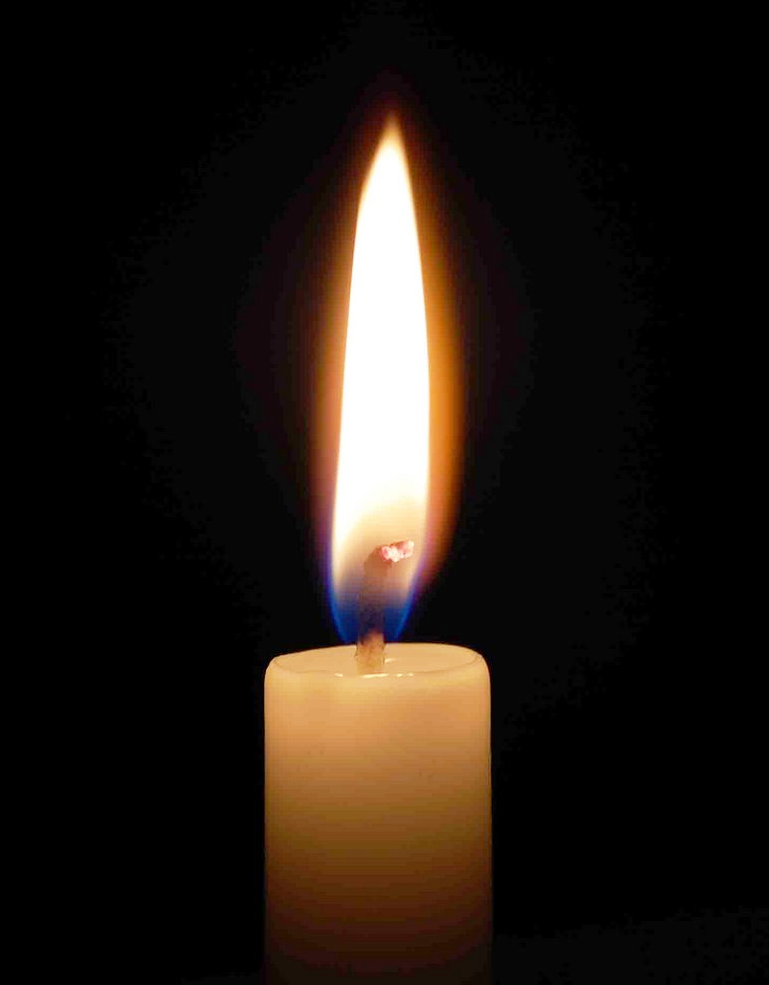
14 “You are the light of the world. (Isa. 49:6) A city built on a hill cannot be hid. 15 No one after lighting a lamp puts it under the bushel basket, but on the lamp stand, and it gives light to all in the house. 16 In the same way, let your light shine before others, so that they may see your good works and give glory to your Father in heaven.
17 “Do not think that I have come to abolish the law or the prophets; I have come not to abolish but to fulfill. 18 For truly I tell you, until heaven and earth pass away, not one letter, [a] not one stroke of a letter, will pass from the law until all is accomplished. 19 Therefore, whoever breaks[b] one of the least of these commandments, and teaches others to do the same, will be called least in the kingdom of heaven; but whoever does them and teaches them will be called great in the kingdom of heaven. 20 For I tell you, unless your righteousness exceeds that of the scribes and Pharisees, you will never enter the kingdom of heaven.
In one of the early classes I took with Father Raschko at STM there was this long discussion about the differences between each of the 4 Gospels. You know, Mark was written first, then Matthew and Luke, who used Mark as a blue print, and John was last and totally different. Now Father Raschko is a Mark scholar and he loves Mark. The Gospel of Matthew is OK, but in the words of Father Raschko Matthew was out to correct all of the mistakes Mark had made. I, in my first or second year enthusiasm decided to sit down and compare them to see if he was right. Silly me
I have to admit after reading both of them I discovered I loved the Gospel of Mark. I mean there is that whole messianic message mystery thing he has going on. You get to the end, all the endings, and it says go back to the beginning, it’s a mystery and who doesn’t love a mystery. But I found I truly loved the Gospel of Matthew.
Matthew doesn’t write about mystery, well not the way Mark does anyway. He writes about an itinerate Jewish Rabbi, he places Jesus within the historical and cultural landscape of God’s very own people. In Matthew’s Gospel he connects the Hebrew Scriptures and the peoples own history to what Jesus did to fulfill the scripture. He writes about doing: about being intentional as a follower of Jesus. In a lot of ways the Gospel Matthew is a Do-It-Yourself manual for how to become a follower of Jesus. Matthew connects the actions of Jesus to the law and the prophets. He expected his own community of first century Christians to do the same.
In today’s scripture Jesus gives an introduction to what the mission of his disciples and followers will be. With the words “you are salt, and you are light” He identifies the ground rules for someone who wishes to become one of his followers. Jesus doesn’t say you should be salt, or you might be light, no, he is telling his disciples, the crowd and us, we are salt and we are light for the communities we live in. It was the disciples and now it is you and I that is to add the goodness into the lives of those we meet, provide balance and savoriness in our communities, just as salt does for the foods we eat. It is us, you and me, who are to intentionally disrupt the status quo and care for the dispossessed, and those who are hungry and ill. We are to work for justice and show mercy, and be peacemakers, other words we are to stand up for what we believe with no expectations of ever being rewarded. Just as salt does its job without announcing its presence in the food we eat we are to do all these things not to bring ourselves recognition but because that is just what we are supposed to do. Just as salt is hidden within our food bringing brightness and goodness to the final product, Jesus wants us as his followers to hide within the community and bring brightness and goodness to the world around us. To do otherwise means we have lost our saltiness and not helpful to the work needed by the Kingdom of God.
Jesus then recalls the prophet Isaiah who says:
I will give you as a light to the nations,
that my salvation may reach to the end of the earth.” (49:6b)
Jesus tells his disciples “you are the light of the world, to both Jew and Gentile, and you can’t hide the light. We too are to let the light shine. This means we are not just salt and supposed to care for others, fight for justice, extend mercy and be peacemakers without an expectation of a reward we are to be the mirror that reflects God’s light into the darkness we humans so frequently to gather within and around us. We are to reflect the graciously given gift of God’s light within ourselves to illuminate the darkness in our own souls. To recognize and open the dark spaces within our souls so that we are better able to reflect God’s light outward to those around us so they too may live in Gods loving light.
We are to let the light shine without focusing the light on ourselves. We are to care for those around us and to carefully walk with God, not in front, but alongside. We have to take all the good acts we see being done in the world and go one step farther. And that means it is not in what we say we do, it is in what we DO that is important. Jesus wants us to be intentionally active in whatever way we are called to be, not sitting on the couch or watching others. We are to be the advocate for the voiceless, the homeless, and the dispossessed. It also means just like a mirror we are only the glass that reflects the glory of God and the Kingdom of God. We are to be behind the light being the lens that focus’ the beam on who those needing the light.
We are to be advocates for social justice, advocates for the hungry, the homeless, the incarcerated, and advocates for peace but we are to say “we have done nothing; it is God working through us that has done these things.” This is where those Matthew called “scribes and Pharisees” got it wrong. Yes they did good works but they made sure everyone knew it. God’s command is we are to do good acts because it’s the right thing to do, not inflate our own ego’s
Today we have modern “scribes and Pharisees” who do the same thing and sometimes I’m one of them. The hardest thing for me to do is setting aside my own ego and let God stand in front of me, you see I don’t always like taking a back seat. I must admit that I am all too often a card carrying member of the Pharisee club and I am not proud of that. I am sure I am not alone in being a member we are, after all, humans, who make choices sometimes there are good ones and sometimes not so good. It is a good day when I intentionally start it with the words “today I am the mirror, I am the salt.
Ruth Jewell, © February 10, 2014




 A Quiet Walk