Seeking God’s Face

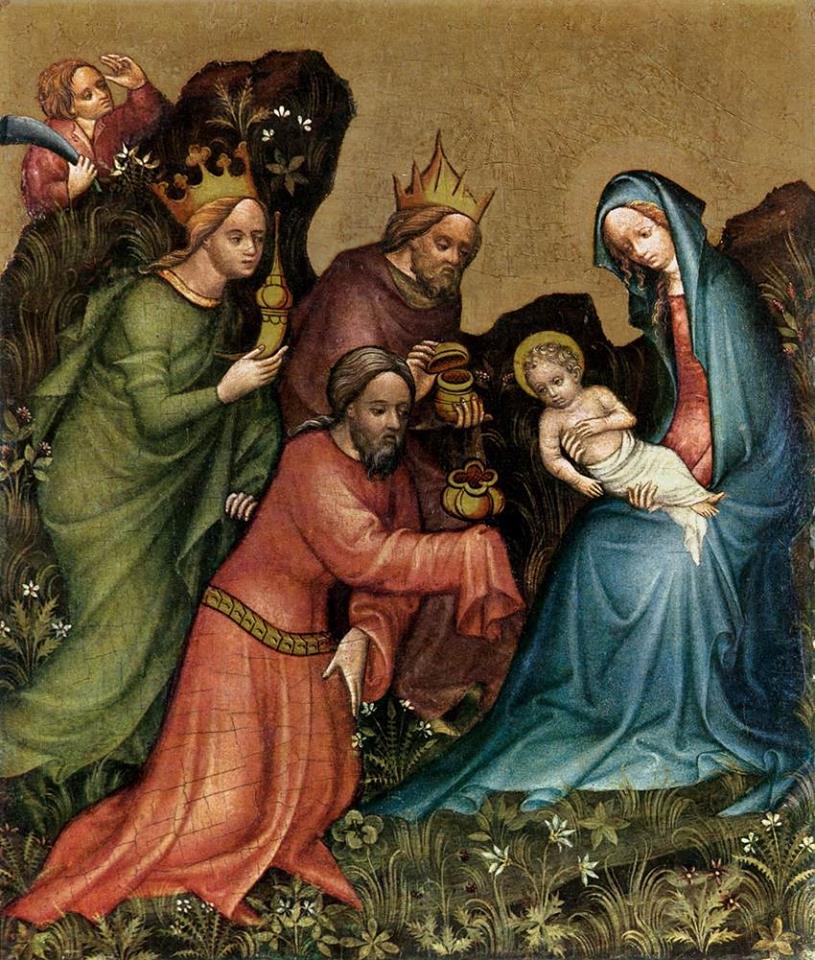
Master of Vienna, Adoration (1410), FB Page The Celtic Christian Tradition

Sermon – Epiphany Sunday
January 5, 2014
Queen Anne Christian Church Seattle, WA

Matthew 2:1-12 (Common English Bible [CEB])

Coming of the magi

1After Jesus was born in Bethlehem in the territory of Judea during the rule of King Herod, magi came from the east to Jerusalem. They asked, “Where is the newborn king of the Jews? We’ve seen his star in the east, and we’ve come to honor him.”

When King Herod heard this, he was troubled, and everyone in Jerusalem was troubled with him. He gathered all the chief priests and the legal experts and asked them where the Christ was to be born. They said, “In Bethlehem of Judea, for this is what the prophet wrote:

You, Bethlehem, land of Judah,
by no means are you least among the rulers of Judah,
because from you will come one who governs,
who will shepherd my people Israel.”

Then Herod secretly called for the magi and found out from them the time when the star had first appeared. He sent them to Bethlehem, saying, “Go and search carefully for the child. When you’ve found him, report to me so that I too may go and honor him.” When they heard the king, they went; and look, the star they had seen in the east went ahead of them until it stood over the place where the child was. 10 When they saw the star, they were filled with joy. 11 They entered the house and saw the child with Mary his mother. Falling to their knees, they honored him. Then they opened their treasure chests and presented him with gifts of gold, frankincense, and myrrh. 12 Because they were warned in a dream not to return to Herod, they went back to their own country by another route.

Greek derivation of Magi, (Strongs Hebrew, Chaldee, and Greek Dictionary)

3097. magos mag’-os  (of foreign origin (7248); a Magian, i.e. Oriental scientist; by implication, a magician:–sorcerer, wise man, [interpreter of dreams, prophet].   (plural, could refer to a male or female wise person)

The story of the Magi is such a familiar story. We have heard this story so many times before and I am sure all of us are able to repeat it without difficulty, at least the surface story.   I was confronted with this simple story, which is anything but simple, when I chose to meditate on it for Epiphany Sunday’s Sermon. Sitting in silence, letting the words of Matthew settle into my subconscious I realized there is so much more to this tale than I first believed. There are also way too many questions to address in a single sermon.  If you ever wanted to experience an abundance of graces just read this story carefully.   I could go into the fact that the gender and number of the Magi is never mentioned in the scripture and that the Magi were gentiles; or the Magi don’t visit the stable, they come to the home of Joseph and Mary; and because the story of the killing of the Bethlehem’s children that follows the Magi’s visit lead scholars to believe Jesus could have been as old as 2. And, that’s just few of the questions I found in these 12 verses of Matthew Chapter 2.  What did intrigue me, and what I will discuss, was never addressed by all of the learned theologians I perused. What I wanted to know was the reason these learned gentiles come in search of a child, a child born to a carpenter and his wife.  And, what unknown gifts still hides in this story for me, and all of us, beyond the pretty tale of rich strangers visiting a destitute baby?

First of my questions was what did the Magi expect to find when they arrived in Jerusalem.  Since they came to the city of the kings of Judea they must have expected to find the child born there, and to parents with more than a lineage to David. My guess is they had expected to find a somewhat wealthy family, or at least fairly well off.  After all they were looking for a King and you normally don’t find one living in the home of working class people. They must also have been confused and terribly disappointed that no one knew what they were talking about. I mean, the birth of a King is big news isn’t. Doesn’t everyone celebrate the birth of a King? It isn’t until King Herod calls them for an audience do they learn that the prophets foretell the birth of “the anointed one,” “the Christ,” was to happen in Bethlehem.  I have no doubt they left somewhat confused. But, eventually they find the baby living in the home with his mother and father. They even bring gifts, and while Mary might have preferred diapers, the gifts they gave were costly and fit for a King.  (By the way Bethlehem and the gifts are never mentioned again, why? Another question to confound me.)

They were seeking a child, an infant King, someone who would turn the Roman world upside down and I can only imagine their surprise at finding the child in such humble circumstances. They brought gifts Herod would have drooled over, gold, frankincense, myrrh.  Wonderful gifts but not really practical for the family they found, well the gold was probably most welcome.  But frankincense and myrrh those aren’t baby gifts.  Frankincense and myrrh were used to perfume oils and ointments for the purification of worship spaces and the anointing of the dead.

Now I know what Matthew was implying by the gifts: Gold was the symbol of Jesus’ kingship, frankincense the symbol for the priestly role Jesus would be called to live, and myrrh a foretaste of what he would endure at the end of his life.   But I think these gentile scholars brought something else and it has been bequeathed to us today and our children. The Magi brought the gift of “seeking God’s face.”

God has always welcomed us and longed for our inquisitive search for the face of the Divine, and She encourages us to reach for her Holy arms.  One of David’s Psalms says it well:

30 I will praise God’s name with song;
I will magnify him with thanks
31     because that is more pleasing to the Lord than an ox,
more pleasing than a young bull with full horns and hooves.
32 Let the afflicted see it and be glad!
You who seek God—
let your hearts beat strong again
— Psalm 69:30-32 (CEB)

And in the Book of Acts Paul tells the Athenians “27 God made the nations so they would seek him, perhaps even reach out to him and find him. In fact, God isn’t far away from any of us.” (Acts 17:27)  No God is never far away, we are.  And, seeking the face of God is one of the joys of creation we should do more often.

The Magi were the first to seek God’s face in its incarnated form, the face of a child.  For Matthew the Magi represent the mission Jesus gives his disciples to reach out to all peoples but especially gentiles, and those born within the great humble mass of humanity, in all its lovely diversity; poor and rich, young and old, all genders, all races, and all people.

For me the Magi represent the longing to see God in the face of my beloved, my grandchildren, best friend, and all creation.  I too want to see the incarnated God, I too long to see the ever present being in the first light of dawn, and I do see it in the face of my beloved when he first opens eyes in the morning.  The Magi have passed this longing down to us and I am grateful for the gift and grateful to pass it on to the next generation.

The Magi’s gift of presence to a child in a humble home was passed on to us through Jesus’ presence in his life, death and resurrection.  Now it is our mission to be present to the incarnated child born to humble parents.   To recognize and honor the incarnation born in each of us, through our gifts to the world whatever they may be; caring for each other, the environment, our nation, and our world.  It is up to us to be the Magi of today and visit the child in a humble home, to offer the gold of our love, to purify our mistakes with the frankincense of compassion; and to anoint those who pass on to the next world with the myrrh of God’s blessings and praise.   In a Judean desert David writes:

God! My God! It’s you—
I search for you!
My whole beingthirsts for you!
My body desires you
in a dry and tired land,
no water anywhere.
Yes, I’ve seen you in the sanctuary;
I’ve seen your power and glory.
My lips praise you
because your faithful love
is better than life itself!
So I will bless you as long as I’m alive;
I will lift up my hands in your name.
— Psalm 63:1-4 (CEB)

So too are we called to offer our praises to God, honor the child that lives today, in each one of us, and in all of creation.  Seek the face of God in all you meet, child, adult, male or female, and all of God’s marvelous creation.  Look in the eyes of your loved ones, your companion animals, see the face of God looking back.  Amen

Ruth Jewell, ©January 7, 2014


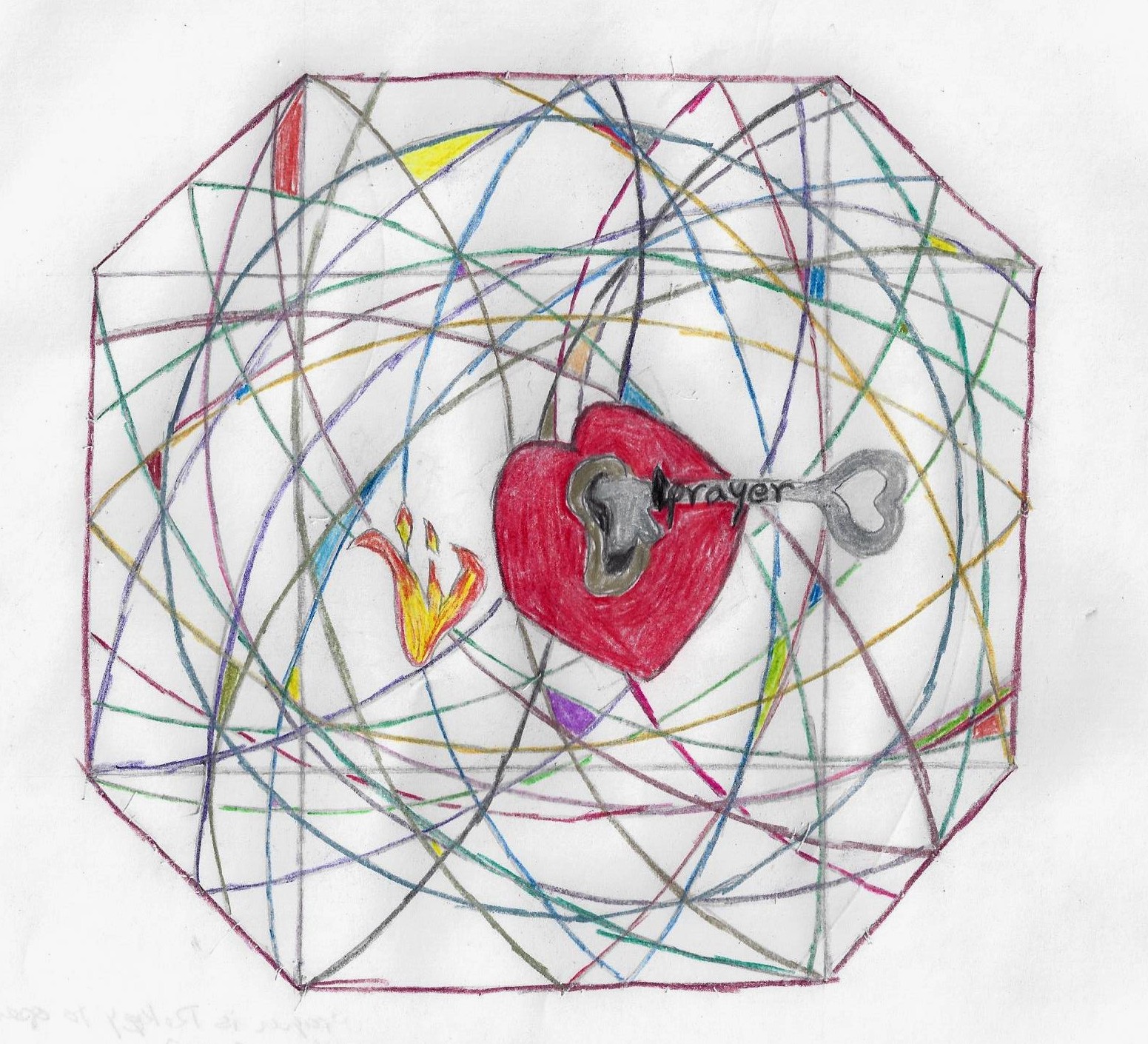
It Was In Prayer

Prayer is the KeySermon preached at Queen Anne Christian Church, January 13, 2013

Acts 8:14-17    14 Now when the apostles at Jerusalem heard that Samaria had accepted the word of God, they sent Peter and John to them. 15The two went down and prayed for them that they might receive the Holy Spirit 16(for as yet the Spirit had not come upon any of them; they had only been baptized in the name of the Lord Jesus). 17Then Peter and John* laid their hands on them, and they received the Holy Spirit.

Luke 3:15-22     15 As the people were filled with expectation, and all were questioning in their hearts concerning John, whether he might be the Messiah, 16John answered all of them by saying, ‘I baptize you with water; but one who is more powerful than I is coming; I am not worthy to untie the thong of his sandals. He will baptize you with* the Holy Spirit and fire. 17His winnowing-fork is in his hand, to clear his threshing-floor and to gather the wheat into his granary; but the chaff he will burn with unquenchable fire.’

18 So, with many other exhortations, he proclaimed the good news to the people. 19But Herod the ruler,* who had been rebuked by him because of Herodias, his brother’s wife, and because of all the evil things that Herod had done, 20added to them all by shutting up John in prison.

21 Now when all the people were baptized, and when Jesus also had been baptized and was praying, the heaven was opened, 22and the Holy Spirit descended upon him in bodily form like a dove. And a voice came from heaven, ‘You are my Son, the Beloved; with you I am well pleased.’

As I was reading the many different stories of Jesus’ baptism this past week I was reminded of my own baptism and the story surrounding it.  I was 10 years old when I attended the class that would prepare me, and my entire Sunday school class, for baptism.  While I had attended church all my young life, for me, this baptism was more about how cool it would be to suddenly become “Holy” and have all my sins forgiven. I mean my thoughts were, “Wow all of my sins were going to be forgiven, even the ones mom and dad didn’t know about, how cool was that.”  

I wasn’t disappointed when the sky didn’t open up and I didn’t hear a voice or see a dove, but I was disappointed that I didn’t “feel” any different. I didn’t feel as if I had been forgiven.  However, knowing, at the wise age of 10, that I should feel something I was afraid to say anything because everyone else seemed so darned happy.  It would be another 20 years before I felt I was beginning to understand what baptism meant and felt a tug to renew that commitment and asked to be re-baptized.  This time I knew that something was different; I just didn’t know what it was. It would take another 20 years of trying to live a good life, failing most times, but, sometimes coming close before I experienced what I call an intervention by the Holy Spirit and had a new enlightenment about what it meant to be part of a faith community. 

At the time this happened I was at a very difficult place in my life and my “ah-ha” moment was the most dramatic event to ever happen to me.  It changed how I viewed myself and everyone and everything around me in relation to how I envisioned my life with God, Spirit and Christ.   Now, events like that do not happen every day or for every person. But, I am grateful for what I experienced and feel blessed to have been given something I feel is special and I try to live into the promise given me that day. 

You are probably calculating in your mind “let see 10+20+20=50, she was fifty when baptism finally made sense!”  All I can say is I’m a really slow learner.  But yes, I didn’t I understand what it meant to be baptized until I was well into my adult years. Your own stories may say you understood before, during or right after you entered and exited the waters of baptism.  Every person is different and the Spirit picks the time it will act, we don’t tell the Holy Spirit.  Nor do we pick the moment when all of it comes together.  In my tradition of the Christian Church (Disciples of Christ) Baptism is believer’s baptism by immersion, just as it was for Jesus.  That means we are supposed to know why we do it and for most part I think most of us do, for some of us it just takes a little longer. As Luke tells the story it didn’t come together even for Jesus until after he was baptized and in prayer.

You know we have heard the stories of Jesus’ baptism so often we don’t actually ‘hear’ it when it is read.  It is actually only in Mark and Matthew where we have a retelling of John baptizing Jesus.  How many of you unconsciously substituted Mark’s or Matthew’s story in the above Luke scripture when you read it and missed the focus of Luke’s telling of the story? 

First of all Luke does tell us Jesus was baptized. He doesn’t actually say it was John the Baptist, although most likely it was. But in Verse 3:21, Luke’s story of Jesus’ baptism is almost an afterthought.  Jesus was baptized with all of those who came to the Jordan River.  He was baptized just like any other person seeking repentance and forgiveness.  Nothing special, it was an act of commitment and faith just like every person coming to John at the Jordan River.  What is highlighted is that sometime after the baptism when Jesus was in prayer the Spirit descends upon him “like a dove” and he hears God’s voice say “You are my Son, the Beloved; with you I am well pleased.”  

Luke doesn’t focus much on the commitment, repentance and forgiveness of the act of baptism.  Instead his focus is on the baptism of the Spirit, just as John tells his audience in Verse 16; “… He will baptize you with the Holy Spirit and fire.”  Jesus’ baptism is with the Holy Spirit and the Spirit decides when that will happen, and, for Luke prayer plays a huge role in when the Holy Spirit comes. 

In the first scripture reading from Acts we read that a Samaritan Community had been baptized but “the Spirit had not yet come upon … them,”  so Peter and John travel to Samaria pray for the Holy Spirit and lay “their hands on them, and they received the Holy Spirit.”  Jesus was in prayer, Peter and John prayed and the Holy Spirit came.    Does this mean that the Spirit will always come in response to prayer … ah … probably not? As I said the Spirit picks the moment when it gives enlightenment, not us.

But Luke’s focus on the act of prayer is the key to our spiritual doors; prayer has a special place in Luke’s Gospel.  The Evangelist tells us Jesus is constantly going away to be in prayer, he prays with his disciples, he prays for the sick, the lame, and the possessed.  Jesus prays in the garden and on the cross. Jesus’ entire life is a model of a life lived in prayer and the relationship with his Abba that prayer fostered.  For Luke the most important thing Jesus taught his disciples was prayer.  The way to talk to and build relationship with God is in prayer.

Luke continues his theme of prayer in his second book, the Acts of the Apostles. Following Jesus’ ascension the disciples returned to Jerusalem and devoted their time to prayer.   They prayed when they replaced Judas with Matthias.  When the Holy Spirit descends on them they were all sitting together, my guess is they were praying, as that would have been their practice.  The first converts were taught by the Apostles to pray and when the community became too great to lead by themselves, they appointed Stephen and Philip to do community management, so they, the Apostles, could devote themselves to teaching, baptizing and prayer. 

I am not saying that Luke ranked baptism as second to prayer, for he doesn’t. Baptism is and will always be the first sacrament. For us Disciples baptism is one of only two sacraments we have, the other being the Lord’s Supper.  However, Luke is explaining to his community of Gentile converts that it takes the two together, baptism plus prayer, to fully understand the commitment made in Christ’s name.  He is also trying to explain to his community that the Holy Spirit does not always come in direct response to baptism.  Sometimes it comes before or after baptism, it is the Spirits choice.  Paul experiences Christ and the Spirit on the road to Damascus and is baptized after that dramatic event.  As Luke describes Paul and as Paul writes in his letters the act of prayer is an important part of being in a Christian Faith Community.  Baptism is the commitment to God and community often in response to prayer.  Baptism plus prayer is the key that opens the door of our heart, into that inner place of the Spirit and shows us the way to live a life that is Christ filled, God filled and Spirit filled. 

One isn’t more important than the other, in fact, we need both for the key to work, but some of us have locks where the Spirit connects with us first and then we are baptized, sometimes it’s the other way around and sometimes it’s all at the same moment.  It is a little like an analogy I picked up from my biologist research days using DNA, RNA and enzymes in comparing how they work in our bodies to how our spiritual DNA, RNA and enzymes might work in our spiritual bodies.

Our Spiritual DNA determines the shape of the RNA and how it will fit together with the enzymes in our bodies.  Each has to be a specific shape in order for both to fit together like a lock and key.  The enzyme only fits one way in each person and when it does the two together create something new and important to keep us living.  I don’t know which of the two, baptism or pray, is the RNA and which the enzyme. I do know that how they fit together in each of us is a specific characteristic for each individual.  Both parts are needed in order for the spiritual life to come awake. 

Luke knows baptism is important; everyone who comes to Christ is baptized.  Everyone who is baptized will have their own experience of Spirit, often whether they recognize it as such or not. The Holy Spirit often speaks so quietly that only a quiet new awareness begins to guide us without our knowing why.  Prayer is the tool used by the Spirit to teach us the meaning of baptism and how to be in relationship with God, Christ and Holy Spirit. 

How we respond to baptism will be an individual act, how the Spirit guides us is the result of prayer.   We can’t have one without the other if we are to live into a Faith Filled Community of God.  Baptism is the recognition of our humanness, our humanity and our commitment to something greater than who we are.  Prayer is the part that leads to our understanding of what our humanity and commitment means.  The two together are the Key that unlocks the door to the Kingdom.

Ruth Jewell, ©January 13, 2013

The Innkeeper, a Christmas Story

innkeeperJacob was in a delighted panic, there were more people in his Inn than he had ever had before.  While giving thanks to the Romans would be condemned by the Temple authorities he was certainly thankful for this emperor’s whim.  Now if only he could find time to sit down to enjoy all of those shekels he was collecting.  Sara, his wife, was busy in the kitchen cooking a meal for their paying guests and for their own abundant family who weren’t paying because his wife wouldn’t let him charge them.  Family, sometimes you can’t live without them but tonight he would like to try.

Now Jacob loved his kind and gentle Sara, but sometimes her kindness was irritating. After all Jacob had to provide for his family. His son, Isaiah, had only just reached manhood, although he was a big help to him tonight.  Isaiah was carrying water to all of the paying guests (let his relatives get their own) and taking care of the animals.  Jacob’s two girls were busy in the kitchen with their mother and while Elizabeth was still a little small she was working just as hard as her older sister, Rebecca.  Over all Jacob was very happy, his Inn was full and he had a box full of money. He should not only be able to pay the tax collector (May YHWH rain fire down on his head!) but also have sufficient money for the next several months.  There might even be enough left over to put a little aside for his daughters dowries.

Jacob was suddenly shaken out of his revere by a call from his son.

“Father, there are two more in the courtyard.”

Jacob threw up his hands and ran out to tell them that he had no more room and that they should move on.   When Jacob opened the door a tall man greeted him. A very pregnant young woman was perched on a donkey behind him.  Jacob had to admit she looked very tired and uncomfortable.

“Excuse me, my wife and I would like a room to spend the night.  If you don’t have a room a corner would do.  Mary, my wife, is expecting and she is very tired.  We have money to pay and I will take care of the donkey myself.”

“I’m sorry we don’t have any rooms,’ Jacob said, “and to be honest with you I don’t think there are rooms free anywhere else in Bethlehem right now.  This mandated census has filled all the Inns.  My suggestion would be that you go up into the hills above the city and find a cave.  At least it would be out of the wind.  Good night to you.”

“Jaaa…cob, Isaiah tells me there is a woman with child out there”.

Jacob turned around and groaned as he faced his wife Sara.   “Sara we don’t have any room! Where would we put them?”  Taking one look at his wife’s face he said “Oh no! I am not giving up my bed! I am tired and will need to get some sleep tonight if I am to deal with all of these people tomorrow!”

Sara patiently looked at her red-faced husband; she knew he wasn’t as hard-hearted as some thought he was, he just had to be nudged once in a while.  “Well we can’t turn out a pregnant woman (may the LORD bless her child!), she looks like she is going to deliver any time now!  This census is bringing people out on the roads that shouldn’t be there!  Don’t you dare send them to the caves!  She’s pregnant Jacob, there are thieves up there and they will be robbed or worse!  Do you really want that on your hands?  Jacob, money isn’t everything.”

Jacob groaned again.  “Well, where do you propose we put them?”

“Isaiah”, Sara called, “get me some blankets and a lamp.  Jacob, the stable has a corner that is warm and dry, and you won’t charge them either!”

The man at the door had been looking on as the Innkeeper and his wife argued and now said, “Please, we will be glad to pay, we have some of our own supplies, we just need a place to rest.”

“No,” Jacob sighed, “Sara’s right, we can’t charge you for a night in the stable.  Isaiah will take you around the back and help his mother get you settled.”  Isaiah ran up with the bedding.  “Take them around to the stable and fix the stall on the west wall, it’s the driest and warmest.  Then come back and help Rebecca take some warm food and wine out to our guests.”

The gentlemen started to protest, “No, sir, it is the least we can do.  If you need anything during the night just knock on the door at the back, Isaiah will be sleeping there tonight and he will do what he can.”

The man looked very relieved, “thank you all so very much, you are very kind.  This is Mary’s first child and we have traveled so very far today.  My name is Joseph and I am a carpenter, if you need anything repaired or need any work done while we are here I will be glad to do it.”   Talking softly to his young wife, who turns and smiles her thanks at the innkeeper, Joseph turns, takes the donkey’s lead and follows Isaiah.

Sara looks lovingly at her husband. “You old softy, I knew you couldn’t turn them away.”

“Go, woman, and prepare some food for these people.  At least I’ll be able to get that back room lintel fixed.  Oh yes, I’ll take him up on his offer, he is an honorable man and I won’t embarrass him, go, go!”  Jacob looks outside as he turns to close the door, “my goodness it is bright outside, almost like daylight, there must be a full moon.”

©Ruth Jewell, November 29, 2009

Blessings and Peace to all this Christmastide!

This story was written for the 2009 Christmas Eve Service and I offer it here to all of you as my Christmas Gift.

The One Body

Ephesians 4:1-16, 1 Corinthians 12

Last week I received an e-mail, not a strange event in and of itself, but this was a message written to one person who then passed it on to me and a number of others because the sender felt the content was both interesting and important. Has that ever happened to you? Have you ever received an e-mail that has passed around from person to person? I would bet you have! Now just suppose all of the other e-mails sent out were lost and only my message survived. Anyone coming after me and reading my e-mail would think “ah, this is a letter to Ruth, and for that reason my name becomes attached to that e-mail forever. Well that is what most theologians believe happened to the Letter to the Ephesians. It is believed this was a circular letter sent out to many congregations but the only one to survive is the one directed to the congregation in Ephesus.

Now that doesn’t change the fact that what is written Ephesians is any less important, but it does mean every community Paul was writing to was having issues about what it meant to be unified as the body of Christ. It also means this letter has a lot to say to us as Christians in the 21st century about how we are called to be unified as One in the Body of Christ.

I have always loved the idea of being part of a body, a community, and all the metaphors derived from a body image. A number of years ago now I enjoyed a skit, written by one of my former pastors, about the rebellion of body parts. The outline of the skit was the foot became tired of taking orders from the head and quit listening to it, then the hand and the rest of the bodies parts decided that they too weren’t going to listen to the head. Well to make a long story short the body kept falling down, smacking itself about, couldn’t get anywhere and was starving because it couldn’t eat. It wasn’t until all the parts began to listen to the head that the body started going places. Places important, you know like the dinner table or reaching out and helping someone else to their place at the table. Of course we all laughed at such a silly sight and thought how clever our pastor was for writing this play. But the important message wasn’t about how silly the premise was rather it was the message we all need to have a coordinating force in our lives, a message provided by Paul in 1 Corinthians 12 and right here in Ephesians 4:1-16.

In this scripture from Ephesians Paul is pleading, well actually begging us, to lead a worthy life holding each other in unity, with all the love and compassion, strength and gentleness we can create. What my pastor was trying to demonstrate is we can’t do that without Jesus at the head of this gangly entity we call the body of Christ. We as members of this Body are give gifts to use in building up the many parts that comprise our lives together as community, but we can’t use them without each other. Now I know I’m not an actual a foot, nor are any of you real hands of a strange kind of body. But, in a way we are those very parts and Paul identifies how those parts work, in Ephesians 4 and in 1 Corinthians 12.

You know we are fortunate to be have both of these scriptures because the two together call us to use the gifts given to us by the spirit to “equip the saints for their ministry,” live a life worthy of walking in the way of Christ, growing up in the spirit, and no longer being children, but rather mature members of the entire body of Christ. Wow that’s a big job and it would be difficult for any one person to do all of those tasks to keep the body growing. But no one person has to, or is supposed to do it all by themselves. That’s the beauty of being part of the community, the body of Christ, we work together. Paul is telling all of the churches, Ephesus included, and all who have come along since the first century that working together to bring about the Kingdom of God is way more fun and a lot easier than going it alone. If Paul had had a computer he would be sending e-mails like crazy.

Let me read to you a little from 1 Corinthians 12:

“14 Indeed, the body does not consist of one member but of many. 15 If the foot were to say, ‘Because I am not a hand, I do not belong to the body’, that would not make it any less a part of the body. 16 And if the ear were to say, ‘Because I am not an eye, I do not belong to the body’, that would not make it any less a part of the body. 17 If the whole body were an eye, where would the hearing be? If the whole body were hearing, where would the sense of smell be? 18 But as it is, God arranged the members in the body, each one of them, as he chose. 19 If all were a single member, where would the body be? 20 As it is, there are many members, yet one body. . . .

26 If one member suffers, all suffer together with it; if one member is honored, all rejoice together with it. 27 Now you are the body of Christ and individually members of it. 28 And God has appointed in the church first apostles, second prophets, third teachers;”

Just as in Ephesians 4 Paul identifies the spirit given gifts to those who follow in the path of Jesus. And, each of those gifts together is important for the body to open up the Kingdom of God to the world. We may no longer be able to see the gifts of apostle or prophet among us but we do have evangelists, which we now call missionaries, and they still go out to those who haven’t heard the good news and through the example of their lives demonstrate what it means to be a Christian.

We still have pastors and teacher who work hard, here at home, to teach the gospel story, guide those whose faith are just forming, and try to keep our communities safe places to worship and praise God. I love William Barclay’s description of pastors and teachers found in commentary The Letters to the Galatians and Ephesians; Pastors and Teachers . . .

“(are the) shepherd(s) of the flock of God … who bears God’s people on (their) heart(s), who feeds them with the truth, who seeks them when they stray away, and who defends them from all that would hurt their faith. And (that) duty is laid on every Christian that (they) should be … shepherd(s) to all (their) brethren.” (additions in parenthesis are mine)

That is our task, that is our call, does it mean we are all going to do it in the same way, no it doesn’t. Each of us has our own specific job to do amongst the whole body and if we don’t live into the gifts given to us, then whole body suffers. It also means that we together, the people of our local Churches, Regional Churches, the National Churches and the Global Churches must work together to be the Body of Christ in the world today and that includes uniting in spirit with the many other Christian Traditions. It also means welcoming all to our table people from all traditions just as Jesus did when he welcomed all to his table and to do it in joy and laughter, in pain and in sorrow.

In just over a month I will be starting a semester of study at the Ecumenical Institute at Bossey Switzerland. The Ecumenical Institute is the educational arm of the World Council of Churches and I am honored to be chosen for this experience of a of a life time. John and I will be living in community and learning how to joyfully join in celebration and worship with individuals from Christian traditions from all over the world. So you see the words of Paul in 1 Corinthians and Ephesians has a special meaning for me. I am going to put what I’ve learned here in this culture into practice in a new culture.

But none of us has to move as far as John and I are going just to practice Paul’s words or the way of Christ. We do it in our neighborhoods, the communities around us by living and speaking what we believe. Paul says in verses 14-16

14 We must no longer be children, tossed to and fro and blown about by every wind of doctrine, by people’s trickery, by their craftiness in deceitful scheming. 15 But speaking the truth in love, we must grow up in every way into him who is the head, into Christ, 16 from whom the whole body, joined and knitted together by every ligament with which it is equipped, as each part is working properly, promotes the body’s growth in building itself up in love.

It is up to us to show what we are made of, to be the body, to be the movement of wholeness, to do as Jesus would, in our everyday lives. That is all that is asked of us, it seems simple doesn’t it, but it isn’t and we can’t do it alone. We can do it only if we are united in the love of God, Christ, and Spirit; we can do anything when we work together as the one body of Christ.

Ruth Jewell ©August 9, 2012

Meditation on Luke 24:36-48

A Sermon Offered to Queen Anne Christian Church, Seattle, WA
April 22, 2012

Luke 24:36-48

36While they were talking about this, Jesus himself stood among them and said to them, “Peace be with you.” 37They were startled and terrified, and thought that they were seeing a ghost.38He said to them, “Why are you frightened, and why do doubts arise in your hearts?  39Look at my hands and my feet; see that it is I myself. Touch me and see; for a ghost does not have flesh and bones as you see that I have.” 40And when he had said this, he showed them his hands and his feet. 41While in their joy they were disbelieving and still wondering, he said to them, “Have you anything here to eat?”  42They gave him a piece of broiled fish, 43and he took it and ate in their presence.44Then he said to them, “These are my words that I spoke to you while I was still with you—that everything written about me in the law of Moses, the prophets, and the psalms must be fulfilled.” 45Then he opened their minds to understand the scriptures, 46 and he said to them, “Thus it is written, that the Messiah is to suffer and to rise from the dead on the third day, 47and that repentance and forgiveness of sins is to be proclaimed in his name to all nations, beginning from Jerusalem.48You are witnesses of these things.

Before I begin this meditation I’d like to ask you to take a journey with me back in time.  Back to that Sunday night, with scared Disciples and experience with them the presence of the risen Christ.

So, get comfortable and close your eyes, . . . take a deep,  slow, breath. Now . . . imagine you are one of the Disciples the evening of the resurrection. . . . The room is small and close, . . . the smell of smoke from the cooking fire and broiled fish fill the room. . . . Everyone in the room is excited, . . . fearful, . . . and joyful . . . but also bewildered at the day’s events.  Everyone is talking at once, . . . each voice getting louder than the next in an attempt to be heard. . . .  When suddenly a voice they know so well says . . . “Peace be with you” and there . . . stands Jesus. . . . Silence

How do feel?

What is going through you mind right now?

After all you all saw Jesus’ body laid in the tomb and on Friday and Saturday you thought your movement was at an end with Jesus’ death. Then this morning Mary and the other women have come and said Jesus is risen from the dead, and Cleopas and his friend have returned from Emmaus saying Jesus broke bread with them.   Now, here in this locked, small, smoky, room Jesus stands in front of you.

And Jesus isn’t just standing there he is walking among you, he’s showing his hands and feet and now he’s sitting down and asking for food to eat.  Jesus, the risen Christ, is eating with you!

Tell me you aren’t amazed, . . . that your eyes aren’t as big as saucers,

That your mouth isn’t on the floor,

That, you aren’t a little afraid of what is to come,

tell me that!  . . .

OK it is time to return and reflect, Slowly open your eyes and take a deep breath, your home now in the 21st century.

You know even 2000 years later this story has the power to shake me up, what about you?  I mean if I were one of the Disciples that Friday would have been the worst day of my life. Terrified, of what has happened I would have been in shock and grief.   Saturday morning reality would have begun to set in, I would be beginning to have some fear for my own skin and start asking the questions of “what do we do now, go home and pick up our lives where they left off, preferably before the Romans and temple authorities come after us?”   I’m mean they aren’t in this small locked room because of a crowd of loyal followers outside, they’re in this room hiding in fear of their lives.

So much has changed for this small band of faithful women and men.  One day they are shouting Hosanna and 6 days later they are grieving for the death of a friend, leader and hoped for Messiah.  That’s a lot to comprehend in such short time. It had barely sunk in that Jesus wasn’t there for them anymore and what kind of danger they were in, only to have this miracle happen!  Jesus is alive and Jesus is telling them they are to be the witnesses that spread the Good News, the Gospel!

Have any of you ever been on this crazy kind of merry-go-round life where everything is going just fine, even extraordinarily fine?  Then the world crashes around you and you have to get your life back on track somehow. So you begin to dig your way out only to have God give you another spin on your wild ride. Has that ever happened to you?  It has to me, that’s for sure. When I read this scripture last week I was reading through the glasses of what I thought my life would be, only to have it turned upside down.

Last October I was so excited about graduating this June and being finished with graduate school.  Looking forward to moving on to new things, spending some down time with my family and working with Laurie and Sandy on some great ideas for education and spiritual formation for Queen Anne and our region.  Wow I thought maybe all this will have some meaning after all.

What was I thinking? I had forgotten that none of what I do in this life is about me, it’s about God!  In November God let me know that I wasn’t in control of this show and to stop thinking I was.

My mother used to have this cute little picture over her bed of a little chipmunk holding a daisy with the caption “Be patient, God’s not finished with me yet,” and now I know what that means.  God is not finished with me yet, I still have work to do and things to learn so God told me, “don’t think you can rest on your laurels, . . . ain’t gonna happen.”

That’s what happened to the Disciple (not that I’m putting myself in the same class as those in the upper room), But they, too, thought everything was going just fine and they would rule the world. Then their world is turned upside down and they thought the end of their ride had come. But God comes along and gives them another spin.  Jesus has risen from the dead to offer new life to old ways of thinking and God says “don’t think you can rest on your laurels, ain’t gonna happen.”

In the three days before the resurrection, days of terror and grief the Disciples had given up, and understandably so.  Now just when they are barely getting their wits back Jesus returns and says “you have more work to do, more things to learn.”  He opens their minds to a new reality and finally they understand what Jesus had been trying telling them for all those years. Now they understood what the women had been talking about … ah … wait a minute . . .what did you say Jesus?  We’re to be witnesses for all of this, your teaching, resurrection, everything! We’re to spread the Good News of the Kingdom, that’s a big job.

And Jesus tells them that yes it’s a big job but He and Abba Father would not give it to them if they couldn’t handle it. And that is the good news for us, God doesn’t give anyone more than they can do, But, God does push us to our limits in order for us to reach our potential as spiritual beings.  All of us are being pushed to look at new ways of worship, thinking, being church, at being faithful to the teaching of Jesus.

Each of us (me included) are being pushed to rethink what it means to be follower, companion, and co-creator with God, and not of God.  If there is anything I’ve learned in seminary it is we aren’t to be passive followers just doing what we are told. Nor are we to put God on shelf and only bring God out on Sunday morning.  We are to work alongside God, Jesus and Holy Spirit, just as the Disciples did so long ago, in order to spread the Good News that Jesus taught.

It is not about us; it is about God, Jesus and Holy Spirit and we are to be witnesses, just like the 12, to all we have experienced as partners and friends of God, not servants.

I do not know where I am headed, I dare say you don’t either, nor do we as Faith Communities know, all we can do is go with Gods flow, which is all God is asking,

We can say no, we won’t go, we won’t work with you, but trust me God is incredibly persistent.  You most likely will come around one way or the other.  God cares too much for us, and for what we have to do, to give up on us.

So don’t be surprised on the day you think you have your life all wrapped up in a nice little bow that God shows up and returns you to the merry-go-round and gives it a mighty spin.

All I can say is just enjoy the ride.

Ruth Jewell, ©April 22, 2012

Meditation on Genesis 9:8-17

Many years ago a little girl was critically injured when she accidentally pulled a deep fat fryer down on top of her.  As the child’s father picked her up and rushed to a sink to cool the burning oil a face appeared just over his shoulders.  A golden face that said “hush I promise everything will be alright” and the little girl believed it was so.  Through years of pain, ridicule, and self-doubt, the little girl remembered that promise and learned promises are kept and life can be good.

Promises, we make them every day of our lives, some we keep, some we have no intention of keeping, and some are just too important not to keep.  In this morning’s scripture we learn God, too, makes promises and God goes so far as to place a marker in the sky, a rainbow, to remind God, not humans, but God, that a promise was for keeping.

What is interesting about this beautiful bow placed in the sky is it’s not about a promise that humans keep, but one kept by God with all of creation, humans, animals, everything that lives, grows, walks, swims, and fly’s to never again destroy the world by flood.  It is not a sign that humans changed after the flood, it’s the sign that God changed.

Oh, I know, I’ve heard the arguments of the unchanging God that rules the universe, but here in these words I’m telling you that God adapted to a creation that just wasn’t going to fit into the box God wanted.

The story of the flood is the tale of a broken heart, God’s heart.   God’s creation has not turned out as God expected and the reader of the flood story is invited to look deeply into the heart of God and recognize there is no anger there only grief at how God’s beloved creation has separated itself from its Creator.  It is God who says “I failed” and it is God that is troubled by the evil heart of humankind.  This is a heart to heart look between humankind and God and how what happens between humans and God touches both hearts.

But our story today is not about the flood it’s about after the flood, the waters of chaos have subsided, the animals have returned to the earth. Noah is wondering what to do next, especially with all of those rabbits he now has since he failed separate the two he started with, and then God speaks.

“Noah”

“Yes God”

I’m going to make promise to you, all of your descendents, and all of the Earth for all time”

“A promise God, to us, what could you promise us? Aren’t we supposed to promise you?”

“No this is my promise.  I am going to promise that I will never again destroy the earth with a flood, and to show you that I will keep my promise I will disarm and hang my unstrung bow in the sky.  This bow will appear after every rain storm and when I see it I will remember my promise to you and all creation. This is my everlasting promise that I make between me and all creation and never again will I send the waters of chaos to destroy the Earth.”

God the great all-powerful, all-knowing, divine being, puts a boundary on the God self and makes a promise. At the same time makes this promise God binds God’s self to an imperfect creation in a way that depends on God developing a relationship with creation.  God has changed from an all-powerful God to a protector, a patient, and loving self-giving God. A God who has invested everything God has in a creation that God recognizes will most likely never be the creation of God’s dreams.   This is a God who takes an interest in the lives of the created and prays that someday all creation will be co-creators with God in a universal cosmos.

Yet even knowing creation is not what God expected God doesn’t abandon the creation God loves so much.  Instead God becomes the guide and patient teacher.  Intervening when necessary to pull the beloved creation back the path God hopes will lead it back to the Garden God once planted.

Throughout history God has cajoled, threatened, punished, forgiven and blessed the creation made in God’s likeness.  What happens to the people God cares so much about God knows happens to all creation but God offers forgiveness, blessings, and grace all in the hope that someday God’s greatest creation will finally wake up to the presence of life freely given.

God’s self-giving reached its climax 2000 years ago in the life of a poor carpenter.  In Jesus life, suffering, death, and resurrection is the renewal of the promise that new life is possible when we Re‑member with God. Lent is our journey in that process, a time to remember God’s vulnerability along with our own. A time to remember God wants a relationship with us. And to grow that relationship all we have to do is care for each other and all of creation.  I know that sounds simple to do, but this will the hardest journey you will ever make, for you will have to break open your own hearts and recognize your part in the separation from your Creator. It is a long journey and it will take many Lent’s to accomplish, but it’s a trip worth taking.

The burnt, scarred little girl has been making that journey all her life. Sometimes she gets close to breaking open her heart to God and sometimes she walks away. But she’s not giving up, the stakes are too high.  What keeps that little girl moving is the knowledge she isn’t alone on the trip. She has had many travel companions who come and go in her life-giving her support and comfort on the path. But, most of all she knows that a promise was made many years ago that “everything would be alright” and she believed.

God made a promise to Noah and all of creation for all time, God has kept that promise.  God made a promise to a little girl, and God has kept that promise.  God keeps promises, to Noah, his descendents, all of creation, a little girl, to each of you and to us all.  Forgiveness, Blessings and Grace are the results of those promises.  The path to God is there, and God waits for all of us to follow it.

Ruth A Jewell, ©February 26, 2012

Called by God

1 Samuel 3:1-11, 15-20 (NRSV)

Now the boy Samuel was ministering to the Lord under Eli. The word of the Lord was rare in those days; visions were not widespread.

2 At that time Eli, whose eyesight had begun to grow dim so that he could not see, was lying down in his room;3the lamp of God had not yet gone out, and Samuel was lying down in the temple of the Lord, where the ark of God was.4Then the Lord called, ‘Samuel! Samuel!’* and he said, ‘Here I am!’5and ran to Eli, and said, ‘Here I am, for you called me.’ But he said, ‘I did not call; lie down again.’ So he went and lay down.6The Lord called again, ‘Samuel!’ Samuel got up and went to Eli, and said, ‘Here I am, for you called me.’ But he said, ‘I did not call, my son; lie down again.’7Now Samuel did not yet know the Lord, and the word of the Lord had not yet been revealed to him.8The Lord called Samuel again, a third time. And he got up and went to Eli, and said, ‘Here I am, for you called me.’ Then Eli perceived that the Lord was calling the boy.9Therefore Eli said to Samuel, ‘Go, lie down; and if he calls you, you shall say, “Speak, Lord, for your servant is listening.” ’ So Samuel went and lay down in his place.

10 Now the Lord came and stood there, calling as before, ‘Samuel! Samuel!’ And Samuel said, ‘Speak, for your servant is listening.’11Then the Lord said to Samuel, ‘See, I am about to do something in Israel that will make both ears of anyone who hears of it tingle.

 15 Samuel lay there until morning; then he opened the doors of the house of the Lord. Samuel was afraid to tell the vision to Eli.16But Eli called Samuel and said, ‘Samuel, my son.’ He said, ‘Here I am.’17Eli said, ‘What was it that he told you? Do not hide it from me. May God do so to you and more also, if you hide anything from me of all that he told you.’18So Samuel told him everything and hid nothing from him. Then he said, ‘It is the Lord; let him do what seems good to him.’

19 As Samuel grew up, the Lord was with him and let none of his words fall to the ground.20And all Israel from Dan to Beer-sheba knew that Samuel was a trustworthy prophet of the Lord.

Sermon Queen Anne Christian Church
January 15, 2012
Ruth Jewell

The experts have many wonderful insights about this particular story of Samuel, how he represents new life in a troubled community and a trustworthy and faithful servant of God.  They say he and Eli model how we, as followers of God, should receive God’s message: to speak it out, never hide the word, and accept that Gods plan is good.

But as I read this scripture over and over again, something else kept tugging at my heart.

Now, I respect the theological wisdom of the scholars, but, I am going to go with what lies on my heart and maybe at the same time you and I will get to know each other just a little better. This small part of the bigger story is about God calling to Samuel and confiding in him, not sending him out, actually God does not tell him to do anything, … God just wanted to talk.

That I think is a significant moment in history, God needed someone God could trust to tell of the plans for Israel.  And little Samuel was in the perfect place, can’t you just picture him: asleep next to the Ark of the Covenant, with his small arm cradling his head, safe in the presence of God.   What a sweet, sweet image.  Yet Samuel will not stay that small innocent child for long and God knows it.  So God calls Samuel and begins to get to know the person who will become God’s priest, and the kingmaker of Israel.

Now I am not, nor will I ever be, in the same league as Samuel and probably you all would say the same thing, but God does wants to get to know us.   That means God wants to know everyone from the littlest ones, to the teenagers, and all the way up to us adults, all of us.  Sometimes God calls do not to give us a task to do, but to tell us God loves us.  And, sometimes God calls us home, to rest our weary spirits in the arms of the Divine Creator.

But this story also reminds me of the times, when like Samuel, I heard God’s voice and didn’t understand, when I ignored the call or when I simply said go away and don’t bother me. Haven’t we all done that at some time or other?

Sometimes it’s because we are busy with our lives, sometimes it’s because we just don’t want to hear, and sometimes it’s because we don’t understand that it’s God calling.

God had to call Samuel three times before Eli was awake enough to understand what was happening and help Samuel respond to God.  And, like Samuel we often need another person to help us interpret what God is trying to do tell us.  I now recognize there have been many people in my life who have spoken words that helped me recognize God’s voice, especially in times when I seemed to have the hardest time hearing anything.  I can’t speak for anyone else; I can’t tell anyone else’s story of their call.

But, I can tell you a very small part of my greater story I know it’s not exactly like Samuels but then I’m not Samuel. Your story when you tell it won’t be like mine or Samuel’s and that’s the beauty of the world of stories every story is different, every story adds a new pixel to the great web page of life.  So if you will allow me I would honestly like to tell just a small part of my story of how God called me.

It all began eight years ago when I had a gut feeling (i.e. God knocking on my heart), I needed to follow a path towards a more spiritual life and to share that experience with others.  I actually followed that call and received training and a certification as a Labyrinth Facilitator. I discovered I loved leading labyrinth worship services, walks and retreats, it provided me with a way of sharing my love for the Divine, God, and Creator in all of Gods manifestations.

But, every time I held one someone would say I needed to go and receive further training, I however, kept saying “nooooo, this is enough, I’m have a good time, and I don’t need anything else, besides I’m too old and not smart enough to go back to school.”

Ah, but then I was about to turn 60 and I decided to hold a special transformative service on the labyrinth instead of a birthday party.  So in the year I spent planning the service I did a lot of thinking, and I thought, and I thought.  I talked to God.  I spent time on our back deck watching the ships travel up and down the sound, I listened to friends, and family and finally said “OK, I will give this graduate school thing a try.” I would pursue a degree in the Masters of Arts in Transformative Spirituality (called MATS), which I thought would be useful in my growing labyrinth ministry.  I wasn’t going to do anything fancy, just expand my own understanding and knowledge base.

God though was still calling and I still didn’t understand.

Five years ago when I began attending Seattle University I was excited to be learning all kinds of things, new ways to read scripture, learning philosophy, and biblical history, but those darn pesky instructors refused to acknowledge I was only in the MATS program.  Every time I talked with one of them they’d ask “you’re in the MDiv program aren’t you,” and when I’d say no “I’m MATS,” they’d say “wrong program.”  I kept telling God I didn’t want to be ordained, I was too old, I wanted to do other things, John and I wanted to do other things, didn’t matter, the questions kept coming.

Finally after 2 years of questions, I spoke with my advisor and she told me to really sit down and be still, to listen with my heart instead of my mind.   Essentially she gave me the advice Eli gave to Samuel “Speak Lord, for your servant is listening.”   Well the rest is history; John and I, together, are off on this madcap journey that we have no idea where it’s leading us.  And just as Samuel was told by Eli that he needed to tell all and not hide anything, I am learning to do the same.  I am also learning to accept that God’s plans are good even if I don’t know what they are.   So I guess I’m a little like Samuel as I continue to grow up.

It took a whole lot of people holding the phone and saying “God Calling” before I understood that I needed to sit down and listen, not chatter, not ask for help, not even offer prayers, JUST LISTEN to what was being spoken in my heart, and just like Samuel I’ve spent a few sleepless nights wondering what John or Laurie might think.

Now there is one lesson I’ve learned in the last five years and that is …

“God does not have a retirement plan.”

In case you hadn’t noticed Noah was 600 years old when he built the ark, Sara gave birth to Isaac in her 80’s or 90’s and when Abraham was 100, and Elizabeth was past her childbearing years when John was born, I’m just glad God only wants me ordained.

So, God can call anytime and anyone, God might have called Samuel and David as children but obviously God picks anyone who fits the bill. This story of Samuel is only one part of a larger story and my story is only part of my larger story in fact, both stories are part of the same story of God’s relationship with us humans and all of the of today’s stories will continue far into the future, just with new characters and new adventures and you are all part of that story.

You too have stories to tell of your calls by God, many I’m sure are more exciting than mine or Samuels. Some will be to a call to pastoral ministry,  other calls will be to other roles God wants you to play; teacher, salesman, airplane engineer, mother, housewife, lawyer, writer, so many roles, so many opportunities to be a trustworthy servant and partner with God.  God called Samuel as a child, and maybe he does represent new life for a troubled community, I happen to think our young people are nicely filling the role of new life in our community.

But Samuel doesn’t really serve God until he is older and wiser, so, my thought is that God wants us to be more than just children, yes we always will be children to our parents, but God also wants us to grow up and be co-partners, co-creators of a our lives, communities, world, and universe and we can’t do that until we learn to listen when God speaks.

When God called Samuel he didn’t tell him to do anything, except listen, to sit and hear God’s voice. How can we be trustworthy prophets, healers, advocates if we don’t HEAR the voice of God?  Once we hear that voice we are given the choice of working with or turning our backs on God, that’s called free will.

But, in the last nearly 65 years I’ve learned God is very, very, persistent and doesn’t give up on anyone. If you are needed to work with God, God will call back, day after day after day. If the line is busy God will call again, if you don’t answer God will call again, and if you can’t understand the language God speaks God gets you an interpreter.

Where are you being called, is your line busy, are you home to answer the phone.  Are you so busy texting you don’t bother to pick up on God’s message, or do you need an interpreter, well don’t worry, God will figure it out and you may choose one way or other.  However I pray you will respond with life rather than death and so I offer this final prayer to share with you.

Lord, you call to me, “(I invite each of you to please speak your name)!”  May my answer be, “Speak Lord, for your servant is listening.”  Amen

Ruth Jewell, ©January 15, 2012


Scripture Meditation: Luke 2:36-40

Queen Anne Christian Church
January 1, 2012

36 There was also a prophet, Anna the daughter of Phanuel, of the tribe of Asher. She was of a great age, having lived with her husband for seven years after her marriage, 37then as a widow to the age of eighty-four. She never left the temple but worshipped there with fasting and prayer night and day. 38At that moment she came, and began to praise God and to speak about the child* to all who were looking for the redemption of Jerusalem.

39 When they had finished everything required by the law of the Lord, they returned to Galilee, to their own town of Nazareth. 40The child grew and became strong, filled with wisdom; and the favour of God was upon him.

Who is this woman Anna and what does she have to do with the circumcision and naming of Jesus.  She is mentioned only once in scripture and the only information we have about her is in these three verses, not a lot to go on.  We don’t even know if Anna really existed, she may be a creation of Luke because the role Anna plays is important in the telling of his story.

When I read these few sentences something stuck out for me.  Here is woman who is living in the temple, praying night and day, fasting night and day, and considered a Prophet, a woman!  In a culture where women had only marginally better status than the household’s donkey this is amazing.  But, Luke does give her great status within the Jewish culture; first of all he names her of the Tribe of Asher who was the seventh son of Jacob, so she has social credibility with temple authorities.  Her husband’s name, Phanuel, which means “Face of God”, seems to foreshadow the very life she has lived all her years in the temple, praying and fasting, focusing her entire life on God.   Her act of devotion and obedience to God appears to be exemplary, and she also appears to be one of kind.   While it isn’t unheard of in scripture, after all there were women judges in the Hebrew Scriptures so women traditionally did play an important role in prophecy, but the impressions we receive from the Christian Scriptures are that a woman’s role had diminished to simple household duties.

So why would Luke even bring up this seemingly insignificant woman?  After all she doesn’t play a role in the ceremony; in fact, she just seems to be at the right place, at the right time to meet Mary, Joseph, and Jesus.  It is her response to that event that Luke is emphasizing here.   Unlike Simeon, Anna doesn’t bless the child, or Mary and Joseph, she doesn’t offer advice, doesn’t even offer a warning about what they will endure.   Rather she understands only one thing her prayers, which she’d been offering for long years, had been answered, because Anna sees the Face of God in Jesus.  Even though this small child is only 40 days old she recognizes his importance to her people.  And, what does she do:  Anna immediately begins to praise God, and tell everyone she knows that she has seen the future of Jerusalem.  Anna, a woman, yes a well respected and honored woman but a woman, becomes the first to spread the Good News.   Anna becomes the voice of the voiceless in the culture of her day.  She’s not telling the Chief Priest, or any other temple big wig, she’s telling those “who were looking for the redemption of Jerusalem,” Anna is telling the ones who had suffered the most under the rule of the Romans and even under their own Jewish authorities.

Anna lived in the temple, she knew how it was run, she understood that many temple authorities were abusing their power, to gather wealth and power to themselves at the expense of the people God had placed in their care.  Yet in all that time Anna never lost her faith, she knew a change was coming and when she saw the first glimmer in the eyes of a baby she could not contain herself, she had to broadcast it.  Anna may not have known how the life of this newborn would alter the world she knew, actually rock the Jewish and Roman world to its core, but that didn’t matter, it didn’t matter because she saw  hope in the eyes of a child, It didn’t even matter that she had no knowledge as to what kind of hope was coming, she simply had to tell what she saw.

Today we start a New Year, a year of promise and yes a year of change.  Traditionally the symbol of the New Year is a child, representing new life and new opportunities for the coming year.  Unfortunately we have come to see the New Year promises as only political, economic and material, but I wonder how Anna would see them.  Would she see hope in the latest gadget to buy, would she make a New Year’s Resolution to lose weight, or to pray more?  I don’t think so, I think she would look into the eyes of the New Year’s Child and see hope of different kind.  A hope of a better tomorrow, redemption of the New Jerusalem, a hope that draws us closer to a relationship with God and God into a closer relationship with us.  Anna never knew what would take place 30 years later, just as we don’t know what will happen in the year, or years,  to come.  That didn’t stop her from being the first to shout out that hope was at hand, and it shouldn’t stop us from shouting out the same thing today.

Today we are some 20 centuries past the birth of Jesus, and yes a lot has happened within the church we aren’t particularly proud of, but, there is also a lot that we should be exclaiming with praise.  Anna was shouting that change was coming and a good change at that, if people listened.  Well I am shouting out that change is coming to us as well.  In the last 5 years I have worshiped and studied with people of many different denominations and there is one very important lesson all of us agree upon and that is Church as we have known it is undergoing a radical change.  Now I don’t mean individual churches, like Queen Anne, we are a part of the greater Church, but we are only one part.   I mean Church, the Greater Body of Christ, God and Holy Spirit. I mean the Church made up of every tradition, whether followers of Christ, Islam, YHWH, Buddha, or any other expression of God that draws people into relationship with the Creator.  If Anna were here today she’d be shouting from the rooftops that how we worship, the ways we express our spirituality, and how we care for the ‘other’ are evolving into a new expression of God in creation.  She would be saying, I see the future in the young and old alike who have awakened to discover they want more than what those of the Baby Boomer Generation have grown comfortable with.  Anna would be telling you, no long will the 1 or 2 hours on Sunday Morning be enough, that a time is coming when all will take their awakened spirituality and apply it to their lives, to live in a new way, where Sunday Morning, or Wednesday Evening, or Tuesday at noon becomes a time to celebrate lives enriched by a living faith. But, the real job, the real life, of being co‑creators’ with the Great Spirit comes in our everyday living together.

Simeon warned Mary and Joseph to be prepared for heart break, and I think he would offer us that very same warning because we too will live through heart break.  It is never easy creating something new and alive.  There will be, there are right now, birth pangs.  Suffering will take place, all of us will have to walk through some dark places, shedding some old ways, adapting others, and creating new ones.  But  like Anna we cannot be worried about that, just as she only wanted to let the world know that something new is coming and to get ready, we too need to tell and help prepare the hearts, minds, and spirits of our fellow travelers for new life.  Anna didn’t know what the future would bring; she was only the harbinger, the robin, or first crocus of a new spring that would rock the World as she knew it.

We have just entered winter, yet deep in what looks like a lifeless ground there are stirrings of new life, ready to be born.  New green shoots will shoot up and spread their leaves and produce the fruit of a new world.  Within the hidden places of the earth there are animals sleeping and preparing for the spring, having their young that will grow up to become the next generation.  Our Churches are like that, we too are ready to send out shoots to grow into new green life, we too are ready to shelter the young so that they will grow into a new strong generation of Christ’s Body.  Luke ends this passage with the young family returning to Galilee where the “child grew and became strong, filled with wisdom; and the favor of God.”  Today we are  the ones to shelter, and fill with wisdom the young who will follow us and take up the new life of the Body of Christ.  More importantly we are the Anna’s of today, shouting out the first good news of a new spring.   It is up to us to shout out “I’ve seen the Face of God, hope is coming and it will be good.”

AMEN

©Ruth Jewell, January 1, 2012

What Does It Mean To Keep Awake?

Sermon: Queen Anne Christian Church, Seattle, WA
November 27, 2011, First Sunday of Advent
Scripture: Mark 13:24–37

The Coming of the Son of Man
24 ‘But in those days, after that suffering,
the sun will be darkened,
and the moon will not give its light,
25 and the stars will be falling from heaven,
and the powers in the heavens will be shaken.
26Then they will see “the Son of Man coming in clouds” with great power and glory.27Then he will send out the angels, and gather his elect from the four winds, from the ends of the earth to the ends of heaven.

28 ‘From the fig tree learn its lesson: as soon as its branch becomes tender and puts forth its leaves, you know that summer is near.29So also, when you see these things taking place, you know that he* is near, at the very gates.30Truly I tell you, this generation will not pass away until all these things have taken place.31Heaven and earth will pass away, but my words will not pass away.

32 ‘But about that day or hour no one knows, neither the angels in heaven, nor the Son, but only the Father.33Beware, keep alert;* for you do not know when the time will come.34It is like a man going on a journey, when he leaves home and puts his slaves in charge, each with his work, and commands the doorkeeper to be on the watch.35Therefore, keep awake—for you do not know when the master of the house will come, in the evening, or at midnight, or at cockcrow, or at dawn,36or else he may find you asleep when he comes suddenly.37And what I say to you I say to all: Keep awake.’

 These verses are some of the most difficult found in the Gospel of Mark. It’s not just the fact this it is apocalyptic in nature, but it is stuffed with meaning, which may or may not have meaning for us in the 21st century.   It is also an odd start to Advent, no angels, no shepherds, just a warning, crazy stuff huh. So, we are going to have to wade through the imagery and history to find what is meaningful for us today.  I wish I had more than 10 minutes or so because there is so much in this scripture and it’s really interesting, but I’m sure you don’t so I will be brief.

The fact of the matter is Jesus isn’t talking about the second coming at all here because He almost immediately says that no one will know when that will happen, not even him!  Mark is writing to a community that needs to flee the Jewish revolt, which began in 66-65 of the Common Era and resulted in the destruction of the temple in 70 of the Common Era.  So much of the imagery Jesus speaks here is related to Jesus’ own prophecy of that event, which came true.  Mark is telling his community that this war isn’t theirs, it’s not the beginning of the end, so Mark’s community needs to “get out of Dodge” before they become enmeshed in the destruction.   What is important to recognize is Jesus is fine without knowing,  it is useless to speculate about the second and Jesus knew God has ensured that history, his and ours, was headed somewhere, we have to be patient and let it unfold.  And, that is the first clue to finding meaning in this scripture; patience.

Let’s take another look, in Mark 13:30-31 Jesus says “Truly I tell you, this generation will not pass away until all these things have taken place. Heaven and earth will pass away, but my words will not pass away.”  Now that surely sounds like the second coming.  Well let’s think about that for a moment, if Mark is warning his community to leave Jerusalem,  telling them that the war wasn’t their war, nor the Messiah’s war, does it not make sense that what Mark is saying is this war will end before they do, Jerusalem may pass away but the words and deeds of Jesus won’t.     Again Mark, through Jesus’ words, is telling his community to be patient.  How do we know that, well in verse 32 Jesus says “But about that day or hour no one knows, neither the angels in heaven, nor the son, only the Father.”  Well if no one knows, not even Jesus or the angels, and the lack of that knowledge doesn’t bother Jesus then we need to stop worrying about the whens and start living the way we are intended.   All we have to do is “be alert,” when the time is right, it will happen.   But what does it mean to be alert?

So what are we to do while we wait, oh ever so patiently, well Jesus has an answer for that as well in verse 34, Jesus always has an answer, well nearly always, sometimes Jesus lets us figure it out.  So here’s the story.  Your employer goes on an extended vacation and he tells you and your fellow workers that each of you have your tasks to complete while he, or she, is gone.  The employer doesn’t expect you to wonder when he or she will return, or to cut short your work days, or take a vacation yourself, the employer expects you to do your job and fulfill your contract.  The employer tells you that she doesn’t know when she will return, so you need to keep awake and do your job or otherwise you will be caught short when she does return.  And that is the second clue to what this scripture means to us, we have a task that needs to be completed before the coming of the Master.

So how do the clues of waiting and working fit us in this season of Advent?  Well first of all we aren’t supposed to sit in our rocking chairs and wait for the day to come,  whether that be Christmas Day or the Second coming.  We Christians have a mission to complete; our waiting is supposed to be active waiting not passive.  Jesus makes that clear when he says “each has his work.”   So just what are we supposed to do; well be a faithful witness and in Mark’s day, and ours, that points to social justice.  We need to be aware of the social justice issues of our day,  which by the way aren’t that different from when Mark’s Gospel was written.   How do I know that, well all I have to do,  and you too,  is LOOK at what Jesus DID, not so much what he said, for Mark, nor Matthew or Luke for that matter, does not record many of Jesus’ words but nearly every page has Jesus doing something.  Jesus heals the sick, chases out demons, feeds the hungry, and offers comfort where comfort is needed. He plays with children and shares his table with those the so-called righteous of his day lock out of their homes.  In other words he made a difference in his world and Jesus calls us to make a difference in our world. While we wait for the day the Kingdom of God is fully expressed WE are to do the best we can to prepare for it.  We are to keep AWAKE and not let the Master find us sleeping in our Lazyboy chairs with the remote in our laps.   We are to continue the ministry Jesus and his Disciples started, opening the doors of compassion, love, mercy and justice for those who have no voice in this world.

It’s not our place to speculate when the Master will return; it is our task to do the work of the Master while we wait for the Kingdom to be fulfilled. God has assured us that history is going places; Jesus was content with letting God take control, so we too must do the same.  Tomorrow will come, of that we have no doubt, and today is all we need to be concerned about.  Do you remember the old television show Mission Impossible?  Well just like the voice on the tape this is your assignment.  “This is your mission if you choose to accept it, take care of the poor, the hungry, the widow, and the stranger amongst you.  Have compassion for the voiceless, offer mercy to all, and let justice and kindness guide you as you walk with God.  This sermon will self destruct in 15 seconds.”

©Ruth Jewell, November 27, 2011

A Story of Openings

I was preparing to leave for class when I suddenly remembered I had the homily for the 8:30 am Morning Prayers, and I hadn’t written anything yet.  As I stood in my office, panic setting in, I grabbed my notebook, and a book on the interpretation of scripture and ran out the door.  I am fortunate, blessed even, in that I ride a bus from my home to the University of Seattle and that was all the time I had to write the homily, a 30 minute ride, but somehow a door opened for me as I rode in that day.  Here is what I offered November 8th at Morning Prayers.

A STORY OF OPENINGS

Matthew 15:21-28
The Canaanite Woman’s Faith

21 Jesus left that place and went away to the district of Tyre and Sidon. 22Just then a Canaanite woman from that region came out and started shouting, ‘Have mercy on me, Lord, Son of David; my daughter is tormented by a demon.’ 23But he did not answer her at all. And his disciples came and urged him, saying, ‘Send her away, for she keeps shouting after us.’ 24He answered, ‘I was sent only to the lost sheep of the house of Israel.’ 25But she came and knelt before him, saying, ‘Lord, help me.’ 26He answered, ‘It is not fair to take the
children’s food and throw it to the dogs.’ 27She said, ‘Yes, Lord, yet even the dogs eat the crumbs that fall from their masters’ table.’ 28Then Jesus answered her, ‘Woman, great is your faith! Let it be done for you as you wish.’ And her daughter was healed instantly.

This is a story opening doors not a story of how rude Jesus could be.  We can compare Matthew to the other three Gospels and Paul all we want but Matthew could care less about the other four writer’s audiences.  Matthew is talking to, writing to, a Jewish community and one more than likely in crisis.  And, because of the makeup of his community (we could say his social analysis) we need to ask what door he is opening.

In Matthew’s community the salvation Jesus offered came first and foremost to the Jew, but something is happening in this community that causes him (or her, we don’t know the author of this Gospel), in this story, to open the door to the Gentiles.  We do not know what that was, we can speculate but that is all it would be.  What I find interesting is how the cracked door may speak to us, today, in the 21st century.

So we have this woman doubly, maybe triply, taboo for Jesus, a Rabbi, to speak to in public.  Rabbis didn’t speak to women, most certainly not to Gentile a woman and probably not to a married woman. But this woman, a Gentile, approaches in an attitude of prayer and Jesus relents, telling her she
has “great faith.”  “Snick,” the door of salvation just opened to the “other.”

Two thousand years have passed since Matthew wrote those words and in all those years many still haven’t opened wide the door to the other.  Matthew is telling us today, just as he told his community that faith without action, without social justice is an unfulfilled faith. We all have individuals we would avoid, after all Jesus was avoiding the religious authorities by going into Gentile territory.  But Matthew was telling his community, and us, that Jesus and God have a plan for the “others” in our lives, just as God has one for us.

How much will it take to open wide the door?  How much will it take to let the
others in not just into our presence, but into our hearts?

Ruth Jewell, ©November 8, 2011