It Was In Prayer

Prayer is the KeySermon preached at Queen Anne Christian Church, January 13, 2013

Acts 8:14-17    14 Now when the apostles at Jerusalem heard that Samaria had accepted the word of God, they sent Peter and John to them. 15The two went down and prayed for them that they might receive the Holy Spirit 16(for as yet the Spirit had not come upon any of them; they had only been baptized in the name of the Lord Jesus). 17Then Peter and John* laid their hands on them, and they received the Holy Spirit.

Luke 3:15-22     15 As the people were filled with expectation, and all were questioning in their hearts concerning John, whether he might be the Messiah, 16John answered all of them by saying, ‘I baptize you with water; but one who is more powerful than I is coming; I am not worthy to untie the thong of his sandals. He will baptize you with* the Holy Spirit and fire. 17His winnowing-fork is in his hand, to clear his threshing-floor and to gather the wheat into his granary; but the chaff he will burn with unquenchable fire.’

18 So, with many other exhortations, he proclaimed the good news to the people. 19But Herod the ruler,* who had been rebuked by him because of Herodias, his brother’s wife, and because of all the evil things that Herod had done, 20added to them all by shutting up John in prison.

21 Now when all the people were baptized, and when Jesus also had been baptized and was praying, the heaven was opened, 22and the Holy Spirit descended upon him in bodily form like a dove. And a voice came from heaven, ‘You are my Son, the Beloved; with you I am well pleased.’

As I was reading the many different stories of Jesus’ baptism this past week I was reminded of my own baptism and the story surrounding it.  I was 10 years old when I attended the class that would prepare me, and my entire Sunday school class, for baptism.  While I had attended church all my young life, for me, this baptism was more about how cool it would be to suddenly become “Holy” and have all my sins forgiven. I mean my thoughts were, “Wow all of my sins were going to be forgiven, even the ones mom and dad didn’t know about, how cool was that.”  

I wasn’t disappointed when the sky didn’t open up and I didn’t hear a voice or see a dove, but I was disappointed that I didn’t “feel” any different. I didn’t feel as if I had been forgiven.  However, knowing, at the wise age of 10, that I should feel something I was afraid to say anything because everyone else seemed so darned happy.  It would be another 20 years before I felt I was beginning to understand what baptism meant and felt a tug to renew that commitment and asked to be re-baptized.  This time I knew that something was different; I just didn’t know what it was. It would take another 20 years of trying to live a good life, failing most times, but, sometimes coming close before I experienced what I call an intervention by the Holy Spirit and had a new enlightenment about what it meant to be part of a faith community. 

At the time this happened I was at a very difficult place in my life and my “ah-ha” moment was the most dramatic event to ever happen to me.  It changed how I viewed myself and everyone and everything around me in relation to how I envisioned my life with God, Spirit and Christ.   Now, events like that do not happen every day or for every person. But, I am grateful for what I experienced and feel blessed to have been given something I feel is special and I try to live into the promise given me that day. 

You are probably calculating in your mind “let see 10+20+20=50, she was fifty when baptism finally made sense!”  All I can say is I’m a really slow learner.  But yes, I didn’t I understand what it meant to be baptized until I was well into my adult years. Your own stories may say you understood before, during or right after you entered and exited the waters of baptism.  Every person is different and the Spirit picks the time it will act, we don’t tell the Holy Spirit.  Nor do we pick the moment when all of it comes together.  In my tradition of the Christian Church (Disciples of Christ) Baptism is believer’s baptism by immersion, just as it was for Jesus.  That means we are supposed to know why we do it and for most part I think most of us do, for some of us it just takes a little longer. As Luke tells the story it didn’t come together even for Jesus until after he was baptized and in prayer.

You know we have heard the stories of Jesus’ baptism so often we don’t actually ‘hear’ it when it is read.  It is actually only in Mark and Matthew where we have a retelling of John baptizing Jesus.  How many of you unconsciously substituted Mark’s or Matthew’s story in the above Luke scripture when you read it and missed the focus of Luke’s telling of the story? 

First of all Luke does tell us Jesus was baptized. He doesn’t actually say it was John the Baptist, although most likely it was. But in Verse 3:21, Luke’s story of Jesus’ baptism is almost an afterthought.  Jesus was baptized with all of those who came to the Jordan River.  He was baptized just like any other person seeking repentance and forgiveness.  Nothing special, it was an act of commitment and faith just like every person coming to John at the Jordan River.  What is highlighted is that sometime after the baptism when Jesus was in prayer the Spirit descends upon him “like a dove” and he hears God’s voice say “You are my Son, the Beloved; with you I am well pleased.”  

Luke doesn’t focus much on the commitment, repentance and forgiveness of the act of baptism.  Instead his focus is on the baptism of the Spirit, just as John tells his audience in Verse 16; “… He will baptize you with the Holy Spirit and fire.”  Jesus’ baptism is with the Holy Spirit and the Spirit decides when that will happen, and, for Luke prayer plays a huge role in when the Holy Spirit comes. 

In the first scripture reading from Acts we read that a Samaritan Community had been baptized but “the Spirit had not yet come upon … them,”  so Peter and John travel to Samaria pray for the Holy Spirit and lay “their hands on them, and they received the Holy Spirit.”  Jesus was in prayer, Peter and John prayed and the Holy Spirit came.    Does this mean that the Spirit will always come in response to prayer … ah … probably not? As I said the Spirit picks the moment when it gives enlightenment, not us.

But Luke’s focus on the act of prayer is the key to our spiritual doors; prayer has a special place in Luke’s Gospel.  The Evangelist tells us Jesus is constantly going away to be in prayer, he prays with his disciples, he prays for the sick, the lame, and the possessed.  Jesus prays in the garden and on the cross. Jesus’ entire life is a model of a life lived in prayer and the relationship with his Abba that prayer fostered.  For Luke the most important thing Jesus taught his disciples was prayer.  The way to talk to and build relationship with God is in prayer.

Luke continues his theme of prayer in his second book, the Acts of the Apostles. Following Jesus’ ascension the disciples returned to Jerusalem and devoted their time to prayer.   They prayed when they replaced Judas with Matthias.  When the Holy Spirit descends on them they were all sitting together, my guess is they were praying, as that would have been their practice.  The first converts were taught by the Apostles to pray and when the community became too great to lead by themselves, they appointed Stephen and Philip to do community management, so they, the Apostles, could devote themselves to teaching, baptizing and prayer. 

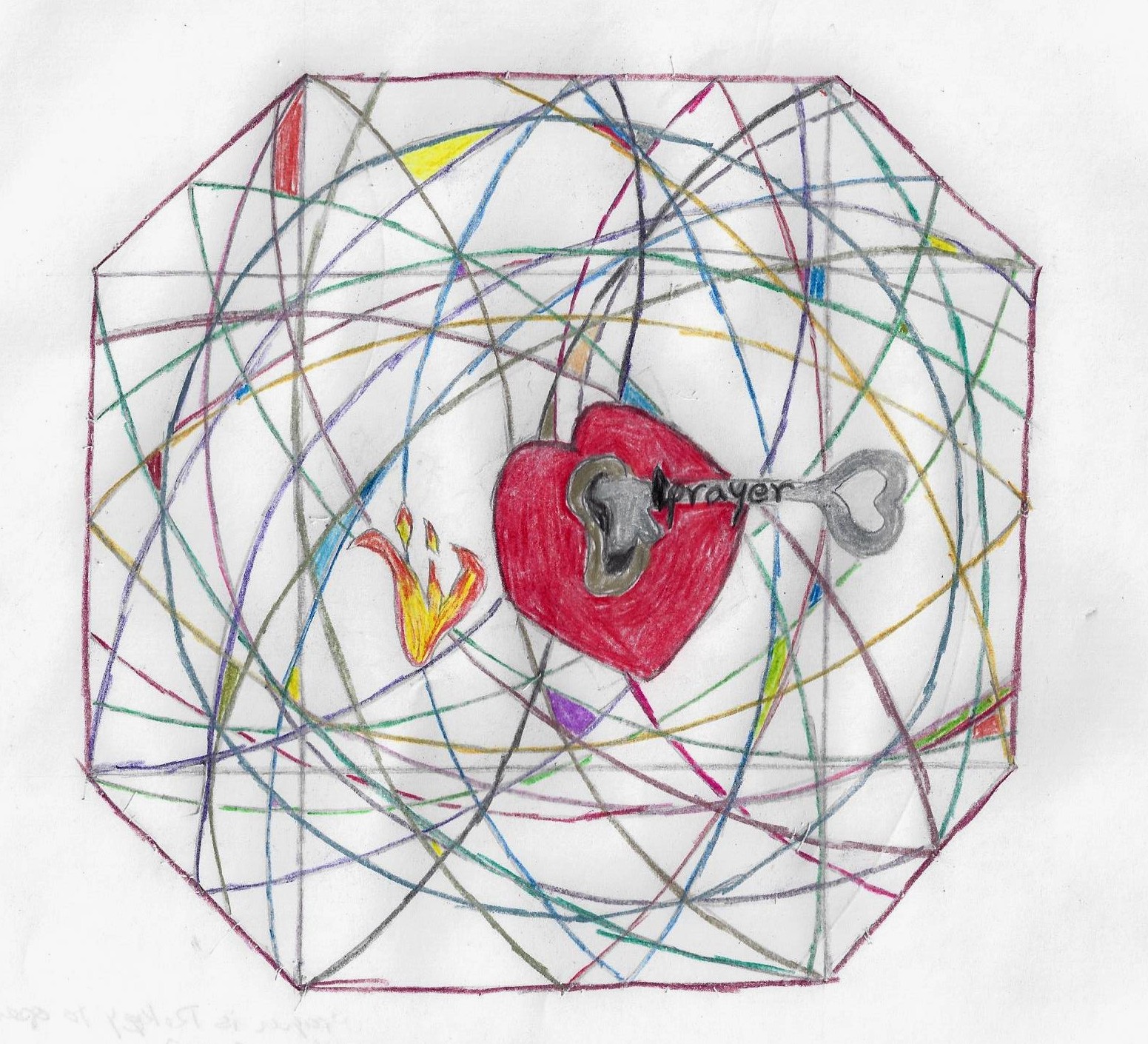
I am not saying that Luke ranked baptism as second to prayer, for he doesn’t. Baptism is and will always be the first sacrament. For us Disciples baptism is one of only two sacraments we have, the other being the Lord’s Supper.  However, Luke is explaining to his community of Gentile converts that it takes the two together, baptism plus prayer, to fully understand the commitment made in Christ’s name.  He is also trying to explain to his community that the Holy Spirit does not always come in direct response to baptism.  Sometimes it comes before or after baptism, it is the Spirits choice.  Paul experiences Christ and the Spirit on the road to Damascus and is baptized after that dramatic event.  As Luke describes Paul and as Paul writes in his letters the act of prayer is an important part of being in a Christian Faith Community.  Baptism is the commitment to God and community often in response to prayer.  Baptism plus prayer is the key that opens the door of our heart, into that inner place of the Spirit and shows us the way to live a life that is Christ filled, God filled and Spirit filled. 

One isn’t more important than the other, in fact, we need both for the key to work, but some of us have locks where the Spirit connects with us first and then we are baptized, sometimes it’s the other way around and sometimes it’s all at the same moment.  It is a little like an analogy I picked up from my biologist research days using DNA, RNA and enzymes in comparing how they work in our bodies to how our spiritual DNA, RNA and enzymes might work in our spiritual bodies.

Our Spiritual DNA determines the shape of the RNA and how it will fit together with the enzymes in our bodies.  Each has to be a specific shape in order for both to fit together like a lock and key.  The enzyme only fits one way in each person and when it does the two together create something new and important to keep us living.  I don’t know which of the two, baptism or pray, is the RNA and which the enzyme. I do know that how they fit together in each of us is a specific characteristic for each individual.  Both parts are needed in order for the spiritual life to come awake. 

Luke knows baptism is important; everyone who comes to Christ is baptized.  Everyone who is baptized will have their own experience of Spirit, often whether they recognize it as such or not. The Holy Spirit often speaks so quietly that only a quiet new awareness begins to guide us without our knowing why.  Prayer is the tool used by the Spirit to teach us the meaning of baptism and how to be in relationship with God, Christ and Holy Spirit. 

How we respond to baptism will be an individual act, how the Spirit guides us is the result of prayer.   We can’t have one without the other if we are to live into a Faith Filled Community of God.  Baptism is the recognition of our humanness, our humanity and our commitment to something greater than who we are.  Prayer is the part that leads to our understanding of what our humanity and commitment means.  The two together are the Key that unlocks the door to the Kingdom.

Ruth Jewell, ©January 13, 2013

A Cloud of Witnesses

My Cloud of Witnesses

Hebrews 12:1 Therefore, since we are surrounded by so great a cloud of witnesses, let us also lay aside every weight and sin that clings so closely, and let us run with perseverance the race that is set before

13:2  Do not neglect to show hospitality to strangers, for by doing that some have entertained angels without knowing it.  (NRSV)

Last Sunday at Queen Anne Christian Church, Christian Church (Disciples of Christ), we celebrated All Saints Day by remembering all those who have gone before us to their reward.  Now in the Disciples church All Saints day is not usually a day we celebrate.  It’s not that we don’t remember those who have gone ahead of us but we Disciples often pick other days to remember them, such as Memorial Day, Thanksgiving Sunday, Veterans Day, or a day that holds meaning for a particular congregation.  Queen Anne does this on the Sunday following November 1st and this year that day was Sunday November 4th.

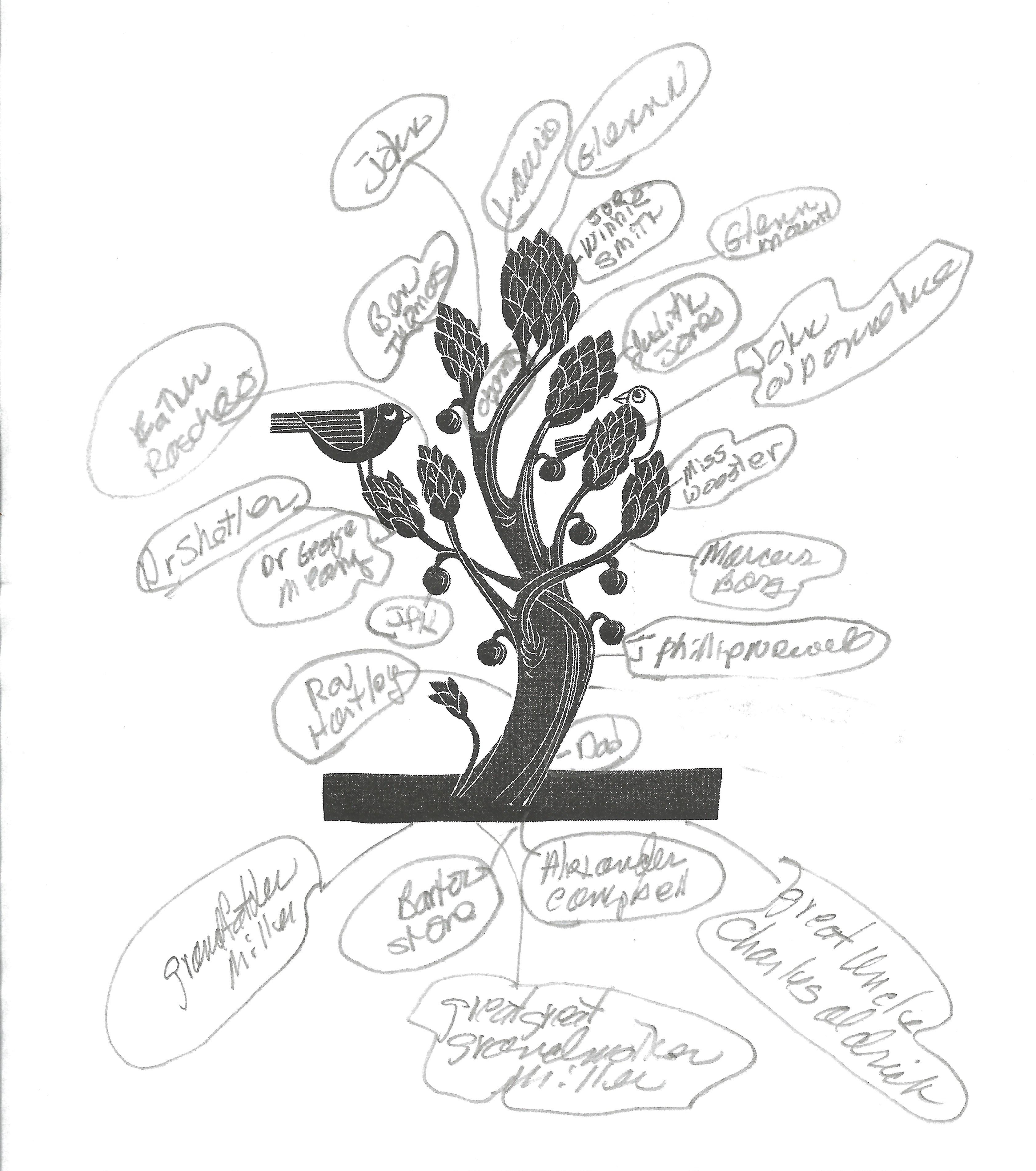
I don’t want you to think I’m making light of this memorial, I’m not.  I just want you to understand that for many Disciples the remembrance of our passed on saints is anytime we call them to mind and recognize their influence in our lives.  Pastor Laurie demonstrated that belief in a unique way during her sermon.  She handed out slips of paper with a picture of a tree on it and asked us to draw leaves that represented the saints in our lives, past and present.  With pencil or pen in hand all of us began diagramming who in our lives had the most influence.  As I was writing mine the above 2 verses of Hebrews came to mind, mainly because I was so amazed at the number of people I considered part of my “cloud of witnesses” and “saints.” 

I of course had to put my father at the base of the tree because he was my first real spiritual teacher, but, along with him there is the minister that first allowed me to really question my theology and not give me answers.  There are the surgeons who treated me and saved my life when I was 6 when I was severely burnt, nor can I forget my first grade teacher Miss. Wooster, who was handicapped and warmly welcomed into her class this little girl who was swathed in bandages.  These saints were the first to model the act of being compassionate and merciful; they wouldn’t be the last.

On my tree are the names of my elderly neighbors who taught me the joy of just being alive.  Winnie and Joe took life as it came, the good and the bad, and made the most of the time they had on earth.  They were a generous couple who shared their lives with me, my husband and any dog that walked into their lives.  In fact I don’t believe either of them ever met a dog they didn’t like.  Winnie’s motto was “dogs rule” and in her house they did. 

I added authors I’ve never met but have read and learned so much from.  At the roots of my tree there are the Founders of my tradition Alexander Campbell and Barton Stone whose theology of ecumenism has rung through my life like a bell and is the corner stone of my faith.  There theology was passed down to me through my Great-great grandparents, Great Uncle, grandparents, and parents and now my time has come to pass it on, like a torch.  Farther up the tree are authors, teachers, friends and people I can no longer name but remember their teachings.  There are political leaders too such as John F. Kennedy whose life and death left a great impression on me and next to him is President Obama who tries to be as forthright as he can in very difficult situations and I recognize his courage can also be a model for me. There are so many more it is impossible to name them all and the tree just isn’t big enough. 

The author of Hebrews tells us we are surrounded by a cloud of witnesses and that we need to remember to be gracious and liberal with our hospitality because we never know when the stranger will be one of our saints who teach us something new.  But I think there is something we often don’t think about and that is the influence we have on others.  What if by our hospitality we have changed the stranger and we become the saint.  Have you ever thought you could be a witness to the love of G-d? 

Modesty, shyness or social convention often keeps us from thinking we might be a “saint” for someone else.  In fact we are often taught to take little notice of how we help others because we aren’t supposed to take credit or be proud of what we do.  Remember the old chestnut “pride goeth before the fall?” Pride was one of the 7 deadly sins and was to be controlled at all cost.  But Jesus never taught that, in fact he wanted people to be models of his “new way” of living and you can’t do that if you hide.   Jesus says don’t put your light under a bushel rather place it on a hill for all to see.  The fact of the matter is, it takes hard work and practice to be hospitable to unpleasant people in difficult situations but it is that kindness and mercy that starts the change in the other and it began with you. 

All of the people on my tree didn’t think they were saints or witnesses, but they were.  They modeled a way of life I wanted to emulate.  They may not have ever heard of Hebrews or Micah but they lived their lives as if they did and that’s what is important.  I meet people every day, sales clerks, teachers and fellow students, the homeless and how I treat them is a reflection of what I learned from my cloud of witnesses.  I learned a smile and a thank you to store clerk can make their day; that offering my lunch to someone who is hungry on the street will fill a hungry place within.  My witnesses and saints have taught me to be generous, kind, and merciful; giving me a way to walk with G-d that is serving me well and hopefully a good witness for someone else.

Who are your witnesses and saints?  Can you fill out your own tree with people past and present who have made a difference in your life?  Can you make another tree where your presence has made a difference in someone else’s life? 

Think about and let me know.

Ruth Jewell, ©November 6, 2012

NOTE: I don’t know where the links in the posting come from. I didn’t ask for them and I am trying to figure out how to get rid of them. I just wanted you to know I didn’t authorize them in any way.

The One Body

Ephesians 4:1-16, 1 Corinthians 12

Last week I received an e-mail, not a strange event in and of itself, but this was a message written to one person who then passed it on to me and a number of others because the sender felt the content was both interesting and important. Has that ever happened to you? Have you ever received an e-mail that has passed around from person to person? I would bet you have! Now just suppose all of the other e-mails sent out were lost and only my message survived. Anyone coming after me and reading my e-mail would think “ah, this is a letter to Ruth, and for that reason my name becomes attached to that e-mail forever. Well that is what most theologians believe happened to the Letter to the Ephesians. It is believed this was a circular letter sent out to many congregations but the only one to survive is the one directed to the congregation in Ephesus.

Now that doesn’t change the fact that what is written Ephesians is any less important, but it does mean every community Paul was writing to was having issues about what it meant to be unified as the body of Christ. It also means this letter has a lot to say to us as Christians in the 21st century about how we are called to be unified as One in the Body of Christ.

I have always loved the idea of being part of a body, a community, and all the metaphors derived from a body image. A number of years ago now I enjoyed a skit, written by one of my former pastors, about the rebellion of body parts. The outline of the skit was the foot became tired of taking orders from the head and quit listening to it, then the hand and the rest of the bodies parts decided that they too weren’t going to listen to the head. Well to make a long story short the body kept falling down, smacking itself about, couldn’t get anywhere and was starving because it couldn’t eat. It wasn’t until all the parts began to listen to the head that the body started going places. Places important, you know like the dinner table or reaching out and helping someone else to their place at the table. Of course we all laughed at such a silly sight and thought how clever our pastor was for writing this play. But the important message wasn’t about how silly the premise was rather it was the message we all need to have a coordinating force in our lives, a message provided by Paul in 1 Corinthians 12 and right here in Ephesians 4:1-16.

In this scripture from Ephesians Paul is pleading, well actually begging us, to lead a worthy life holding each other in unity, with all the love and compassion, strength and gentleness we can create. What my pastor was trying to demonstrate is we can’t do that without Jesus at the head of this gangly entity we call the body of Christ. We as members of this Body are give gifts to use in building up the many parts that comprise our lives together as community, but we can’t use them without each other. Now I know I’m not an actual a foot, nor are any of you real hands of a strange kind of body. But, in a way we are those very parts and Paul identifies how those parts work, in Ephesians 4 and in 1 Corinthians 12.

You know we are fortunate to be have both of these scriptures because the two together call us to use the gifts given to us by the spirit to “equip the saints for their ministry,” live a life worthy of walking in the way of Christ, growing up in the spirit, and no longer being children, but rather mature members of the entire body of Christ. Wow that’s a big job and it would be difficult for any one person to do all of those tasks to keep the body growing. But no one person has to, or is supposed to do it all by themselves. That’s the beauty of being part of the community, the body of Christ, we work together. Paul is telling all of the churches, Ephesus included, and all who have come along since the first century that working together to bring about the Kingdom of God is way more fun and a lot easier than going it alone. If Paul had had a computer he would be sending e-mails like crazy.

Let me read to you a little from 1 Corinthians 12:

“14 Indeed, the body does not consist of one member but of many. 15 If the foot were to say, ‘Because I am not a hand, I do not belong to the body’, that would not make it any less a part of the body. 16 And if the ear were to say, ‘Because I am not an eye, I do not belong to the body’, that would not make it any less a part of the body. 17 If the whole body were an eye, where would the hearing be? If the whole body were hearing, where would the sense of smell be? 18 But as it is, God arranged the members in the body, each one of them, as he chose. 19 If all were a single member, where would the body be? 20 As it is, there are many members, yet one body. . . .

26 If one member suffers, all suffer together with it; if one member is honored, all rejoice together with it. 27 Now you are the body of Christ and individually members of it. 28 And God has appointed in the church first apostles, second prophets, third teachers;”

Just as in Ephesians 4 Paul identifies the spirit given gifts to those who follow in the path of Jesus. And, each of those gifts together is important for the body to open up the Kingdom of God to the world. We may no longer be able to see the gifts of apostle or prophet among us but we do have evangelists, which we now call missionaries, and they still go out to those who haven’t heard the good news and through the example of their lives demonstrate what it means to be a Christian.

We still have pastors and teacher who work hard, here at home, to teach the gospel story, guide those whose faith are just forming, and try to keep our communities safe places to worship and praise God. I love William Barclay’s description of pastors and teachers found in commentary The Letters to the Galatians and Ephesians; Pastors and Teachers . . .

“(are the) shepherd(s) of the flock of God … who bears God’s people on (their) heart(s), who feeds them with the truth, who seeks them when they stray away, and who defends them from all that would hurt their faith. And (that) duty is laid on every Christian that (they) should be … shepherd(s) to all (their) brethren.” (additions in parenthesis are mine)

That is our task, that is our call, does it mean we are all going to do it in the same way, no it doesn’t. Each of us has our own specific job to do amongst the whole body and if we don’t live into the gifts given to us, then whole body suffers. It also means that we together, the people of our local Churches, Regional Churches, the National Churches and the Global Churches must work together to be the Body of Christ in the world today and that includes uniting in spirit with the many other Christian Traditions. It also means welcoming all to our table people from all traditions just as Jesus did when he welcomed all to his table and to do it in joy and laughter, in pain and in sorrow.

In just over a month I will be starting a semester of study at the Ecumenical Institute at Bossey Switzerland. The Ecumenical Institute is the educational arm of the World Council of Churches and I am honored to be chosen for this experience of a of a life time. John and I will be living in community and learning how to joyfully join in celebration and worship with individuals from Christian traditions from all over the world. So you see the words of Paul in 1 Corinthians and Ephesians has a special meaning for me. I am going to put what I’ve learned here in this culture into practice in a new culture.

But none of us has to move as far as John and I are going just to practice Paul’s words or the way of Christ. We do it in our neighborhoods, the communities around us by living and speaking what we believe. Paul says in verses 14-16

14 We must no longer be children, tossed to and fro and blown about by every wind of doctrine, by people’s trickery, by their craftiness in deceitful scheming. 15 But speaking the truth in love, we must grow up in every way into him who is the head, into Christ, 16 from whom the whole body, joined and knitted together by every ligament with which it is equipped, as each part is working properly, promotes the body’s growth in building itself up in love.

It is up to us to show what we are made of, to be the body, to be the movement of wholeness, to do as Jesus would, in our everyday lives. That is all that is asked of us, it seems simple doesn’t it, but it isn’t and we can’t do it alone. We can do it only if we are united in the love of God, Christ, and Spirit; we can do anything when we work together as the one body of Christ.

Ruth Jewell ©August 9, 2012